Full HTML article body
The race to build more powerful AI infrastructure just accelerated on multiple fronts simultaneously. This week delivered a remarkable convergence: AMD entered production on the world’s most advanced semiconductor, the 2nm EPYC Venice chips, while Claude Opus 4 achieved a 7-hour autonomy, and Gemini 2.5 Pro introduced its Deep Think mode. These breakthroughs signal a major leap in AI infrastructure.
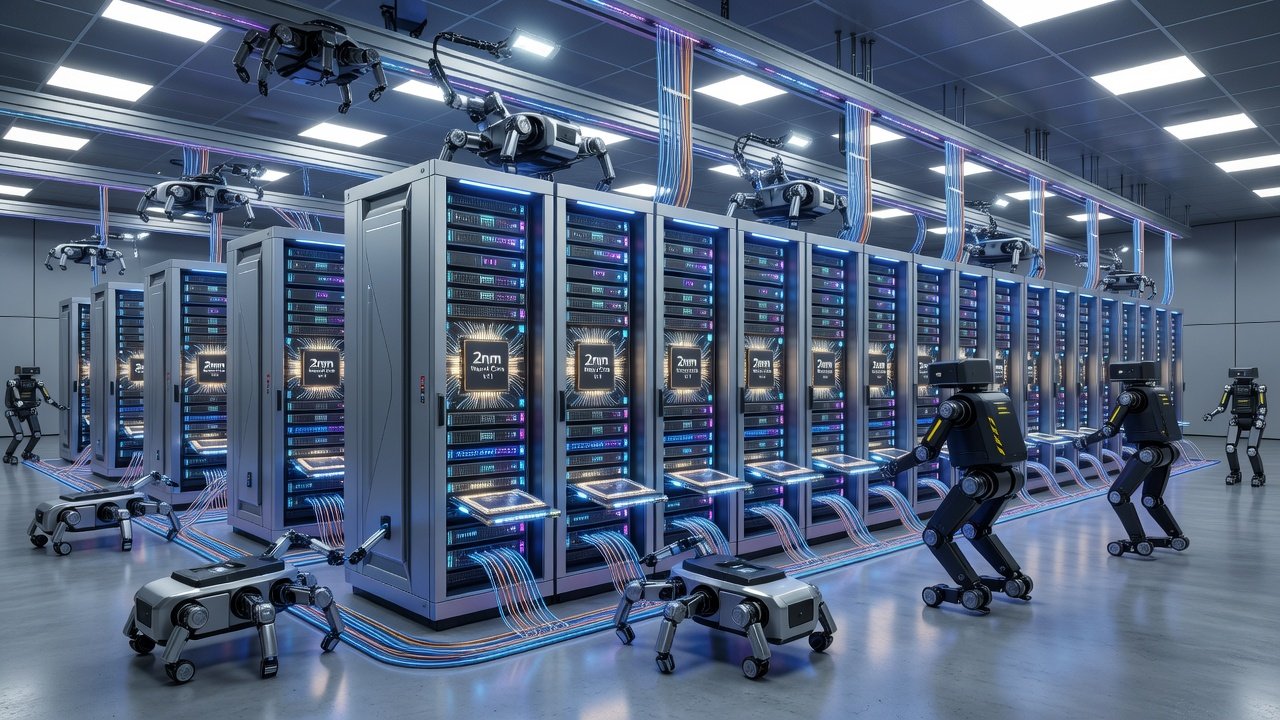
AMD’s Venice chips represent a significant advancement in processing power on the world’s most advanced manufacturing node. The chips are designed to handle the increasing demands of AI workloads, providing unprecedented performance and efficiency. This leap in technology is expected to enable a new generation of AI applications that require more computational power than ever before.
On the other hand, Claude Opus 4’s 7-hour autonomy showcases the potential of AI in robotics and autonomous systems. This level of operational endurance opens up new possibilities for deployment in various sectors, from logistics to healthcare, where long-lasting performance is crucial.
Meanwhile, Gemini 2.5 Pro’s Deep Think mode introduces a new paradigm in AI decision-making, allowing systems to analyze and interpret data more effectively. This mode enhances the AI’s ability to learn from its environment and make informed decisions, further pushing the boundaries of what AI can achieve.
As these technologies converge, the implications for industries are profound. Companies are now equipped with tools that can process vast amounts of data, make real-time decisions, and operate autonomously for extended periods. This shift not only enhances operational efficiency but also opens up new avenues for innovation.
In conclusion, the advancements in AI infrastructure, marked by AMD’s 2nm chips, Claude Opus 4’s autonomy, and Gemini 2.5 Pro’s Deep Think mode, represent a significant milestone in the evolution of artificial intelligence. As these technologies continue to develop, we can expect to see even more transformative changes across various sectors.