Full HTML article body
The AI hardware stack is being rebuilt from the silicon up. From NVIDIA’s latest edge computing platform to TSMC’s 1nm node, AMD EPYC Venice, and OpenAI models on AWS, key tech shifts are explained.
NVIDIA’s Jetson T4000: Physical AI Moves to the Edge
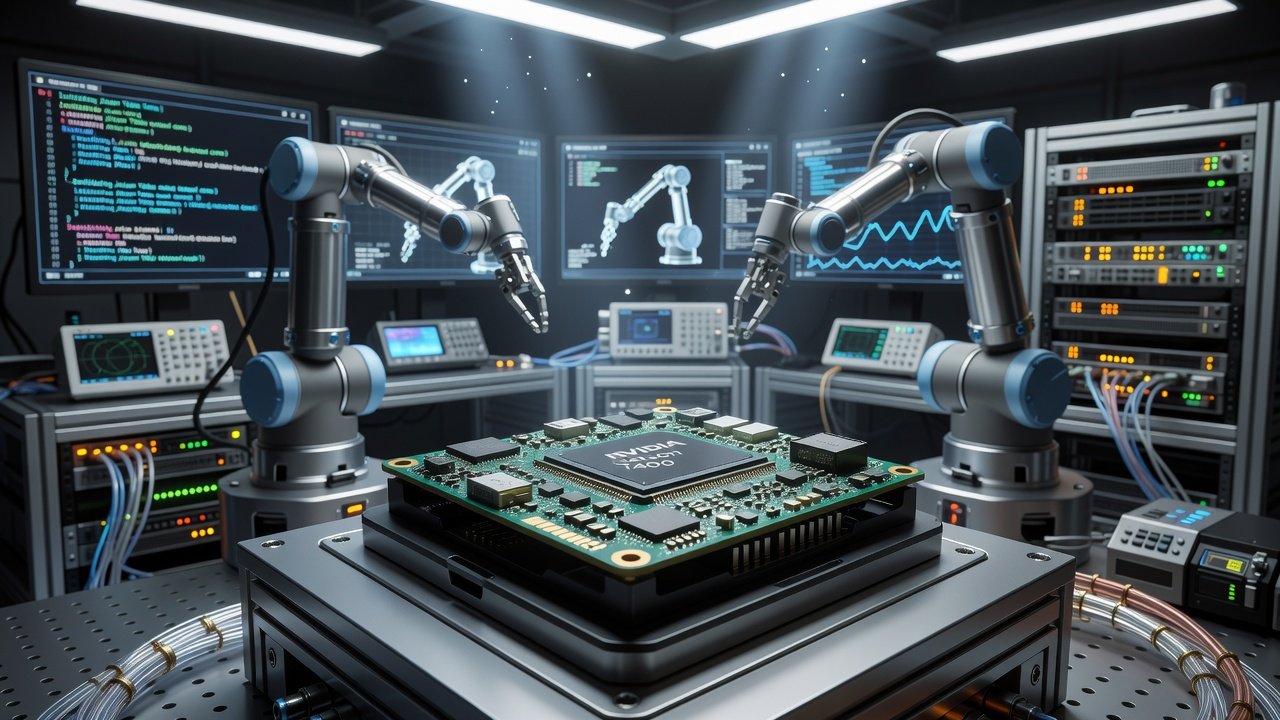
The standout announcement out of CES 2026 is NVIDIA’s Jetson T4000 module, which delivers 1,200 TFLOPS of AI compute power for edge robotics. Built on the latest 1nm process, this module enables unprecedented performance for AI applications.
AI is advancing on every front, and the week’s news paints a clearer picture: the infrastructure underpinning AI is advancing on every front, and the week’s news paints a clearer picture of the future of AI hardware.
That matters because cloud latency has been a major bottleneck for real-time applications. A robot armed with a manufacturing floor AI can make decisions in real-time, while the cloud can only provide insights with a delay.
As AI continues to evolve, the hardware that supports it must also adapt. The Jetson T4000 addresses this directly. This module is designed to handle the demands of real-time AI processing, making it a game-changer for industries relying on robotics.
In addition to NVIDIA’s advancements, TSMC’s 1nm node is set to revolutionize chip manufacturing. This new process will allow for more transistors on a chip, leading to increased performance and efficiency.
As we look to the future, the combination of NVIDIA’s Jetson T4000 and TSMC’s 1nm technology will likely reshape the landscape of AI hardware, making it more accessible and powerful than ever before.