Full HTML article body
The foundation of AI infrastructure is being rebuilt from the ground up — and the pace is accelerating. In a single news cycle, Google released an open standard for AI agents, NVIDIA revealed an upgrade to the edge, and TSMC announced it is on track for 1nm semiconductor production by 2028. Taken together, these developments do not exist in isolation — they outline a coherent architectural shift in how AI will be deployed, powered, and scaled across industries.
Google’s ARDS Standard: Building the Plumbing for Agentic AI
Google has launched the Agentic Resource Discovery Specification (ARDS), an open standard designed to enable AI agents to autonomously discover and interact with resources across the web — without human intervention. This marks a pivotal shift in the way AI agents are expected to operate, allowing them to autonomously navigate the digital landscape and interact with various services and data sources.
The significance here is architectural. Most current AI agents rely on human-defined pathways to access information, but ARDS allows for a more fluid and dynamic interaction model. This means that AI can now operate in a more decentralized manner, potentially leading to more robust and adaptable systems.
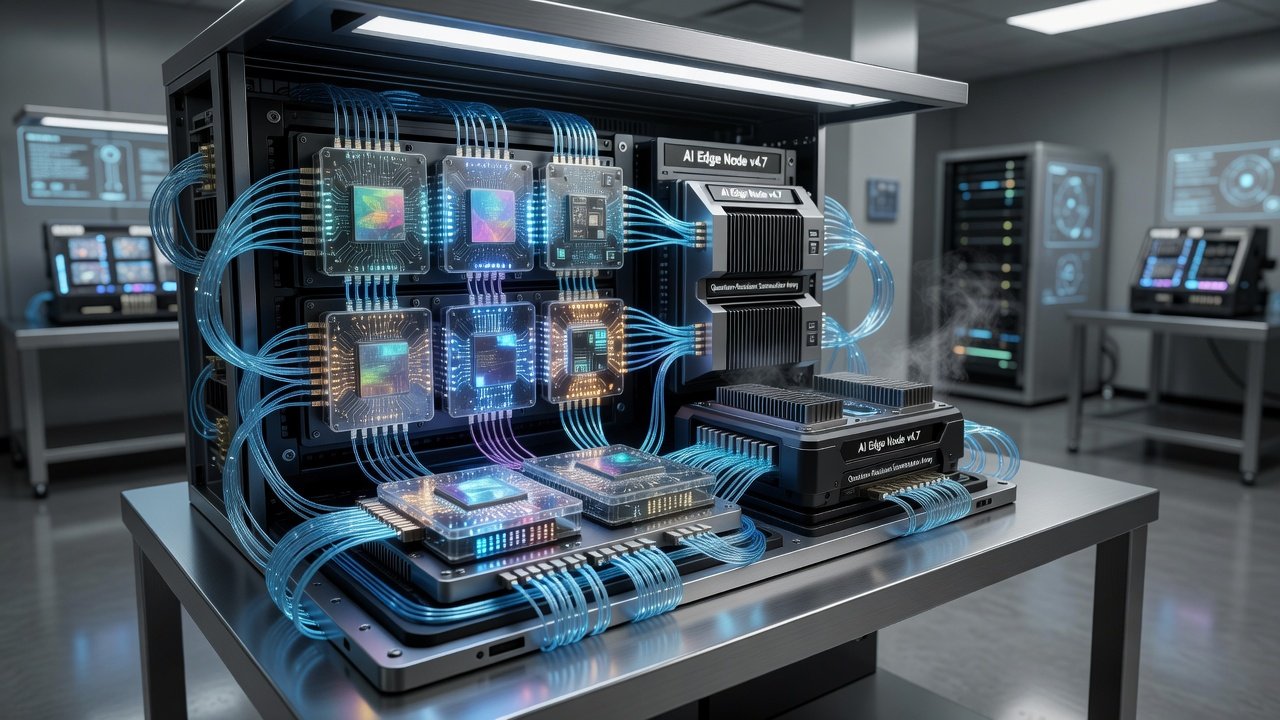
NVIDIA’s Jetson T4000: Powering the Edge
NVIDIA has launched the Jetson T4000, a powerful new module designed for edge computing applications. This module is set to enhance the capabilities of AI systems deployed in real-time environments, such as robotics and autonomous vehicles. With its advanced processing power, the Jetson T4000 can handle complex AI workloads at the edge, reducing latency and improving responsiveness.
This development is crucial as industries increasingly rely on real-time data processing. The ability to perform AI computations at the edge means that systems can react faster to changing conditions, which is essential for applications like autonomous driving and smart manufacturing.
TSMC’s 1nm Chips: The Future of Semiconductor Technology
TSMC has announced that it is on track to produce 1nm chips by 2028, a significant leap in semiconductor technology. This advancement will enable more powerful and efficient AI systems, as smaller chips can deliver higher performance while consuming less power.
The implications of this technology are vast. As AI systems become more complex and demanding, the need for advanced semiconductor technology becomes critical. TSMC’s progress in this area will support the next generation of AI applications, enabling them to operate more efficiently and effectively.
In conclusion, the convergence of these developments signals a major shift in the AI infrastructure landscape. As Google, NVIDIA, and TSMC push the boundaries of what is possible, we can expect to see a new era of AI applications that are more autonomous, responsive, and powerful than ever before.