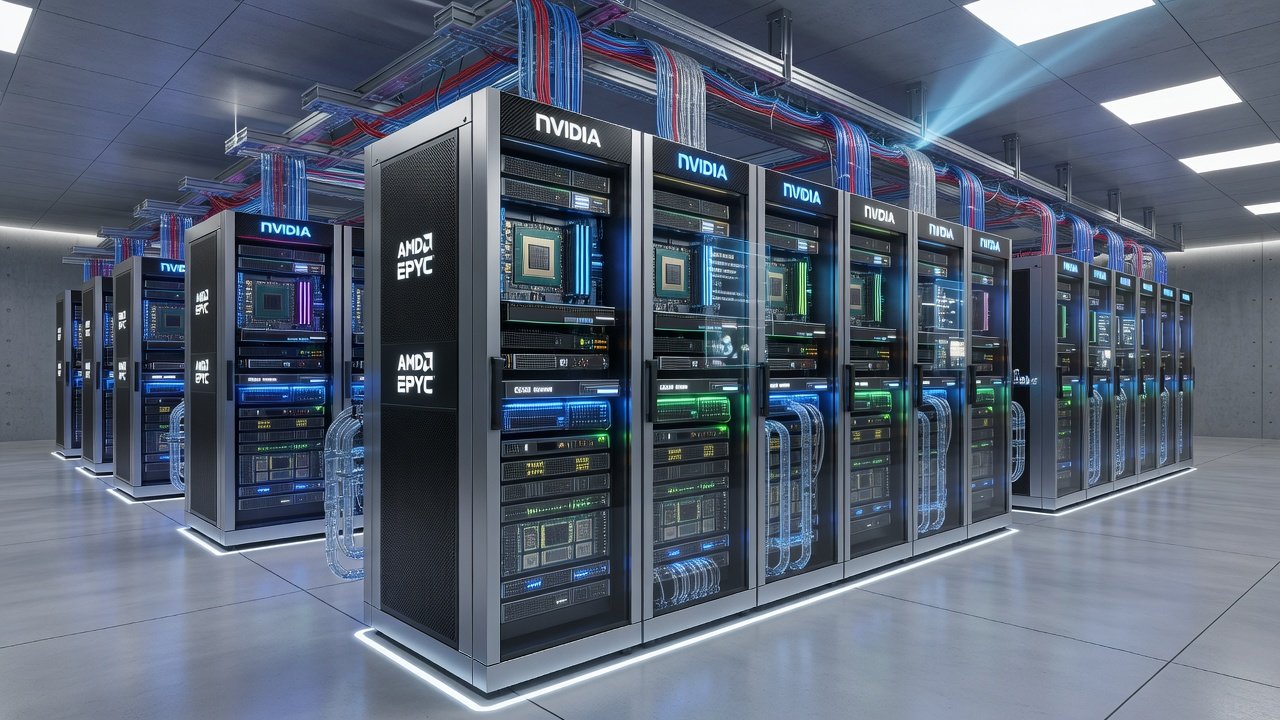
The race to power the next generation of AI infrastructure just reached a new milestone. AMD has begun production of its new Milan-based EPYC processors, which are built on TSMC’s 2nm node. This week, major players like NVIDIA, Google, Anthropic, and Caltech are pushing the boundaries of AI infrastructure and quantum computing forward.
As the demand for AI capabilities continues to grow, AMD’s new processors are expected to play a crucial role in meeting the needs of data centers and cloud computing environments. The EPYC processors are designed to handle the increasing workloads associated with AI and machine learning applications, providing the necessary performance and efficiency.
In addition to AMD’s advancements, NVIDIA has also made significant strides in AI infrastructure. The company has been at the forefront of developing GPUs that are optimized for AI workloads, enabling faster training and inference times for machine learning models. Google’s contributions to AI infrastructure include their Tensor Processing Units (TPUs), which are specifically designed for accelerating machine learning tasks.
Furthermore, Anthropic and Caltech are exploring innovative approaches to quantum computing, which could revolutionize the way we process information and solve complex problems. The collaboration between these organizations highlights the importance of interdisciplinary research in advancing AI technologies.
Overall, the combination of AMD’s new EPYC processors, NVIDIA’s powerful GPUs, and the ongoing research in quantum computing signifies a pivotal moment in the evolution of AI infrastructure. As these technologies continue to develop, we can expect to see even more breakthroughs in the field of artificial intelligence.