Full HTML article body
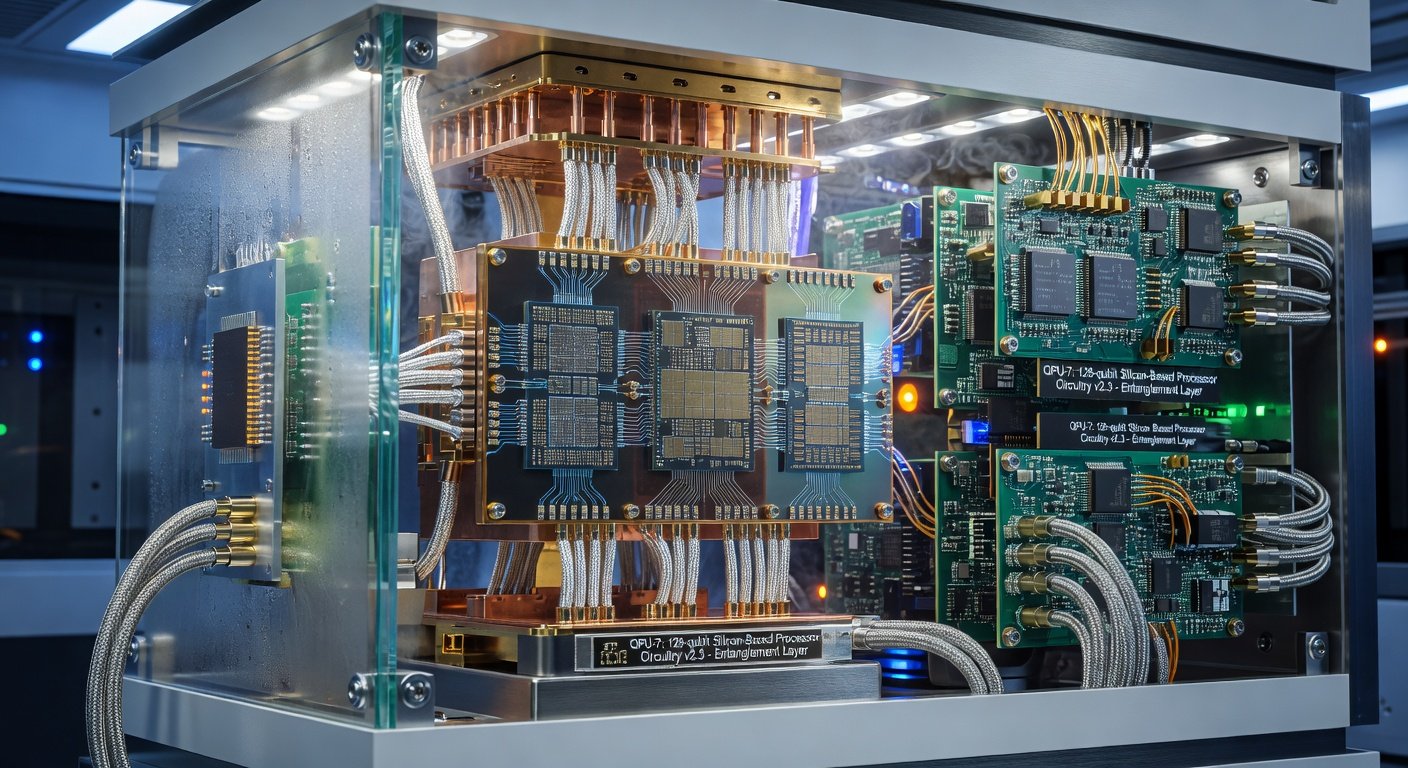
Quantum computing has long promised to reshape industries by solving problems that are currently intractable for classical computers. However, the path to practical quantum computing has been fraught with challenges, particularly in the realm of hardware. Recent advancements by Quantum Motion, which has developed the first full-stack quantum computer built on standard silicon fabrication, mark a significant step toward scalable and cost-effective quantum systems.
But one obstacle has persisted: scalability. Quantum bits, or qubits, are notoriously difficult to manage and maintain. They require extremely low temperatures and isolation from environmental noise to function correctly. This has led to a reliance on specialized materials and complex setups that are not easily replicated.
Quantum Motion’s approach leverages existing semiconductor manufacturing techniques, which could allow for the mass production of quantum chips. This could potentially lead to a new era of quantum computing where devices are not only powerful but also affordable and accessible.
As the technology matures, it is expected that quantum computers will be able to tackle complex problems in fields such as cryptography, materials science, and drug discovery. The implications of this technology are vast, and as more companies invest in quantum research, the race to achieve practical quantum computing is heating up.
In conclusion, while challenges remain, the development of quantum computers using standard silicon fabrication techniques represents a promising avenue for the future of quantum technology.