Full HTML article body
The biggest barrier to quantum computing has never been purely scientific. It has been manufacturing. Building quantum systems at scale requires fabrication processes that most bespoke projects simply cannot deliver consistently. This week, London-based startup Quantum Motion announced it has deployed the first full-stack quantum computer using standard silicon fabrication techniques. The milestone could fundamentally change the landscape of quantum computing and semiconductor manufacturing.
Why Silicon Fabrication Is the Real Breakthrough
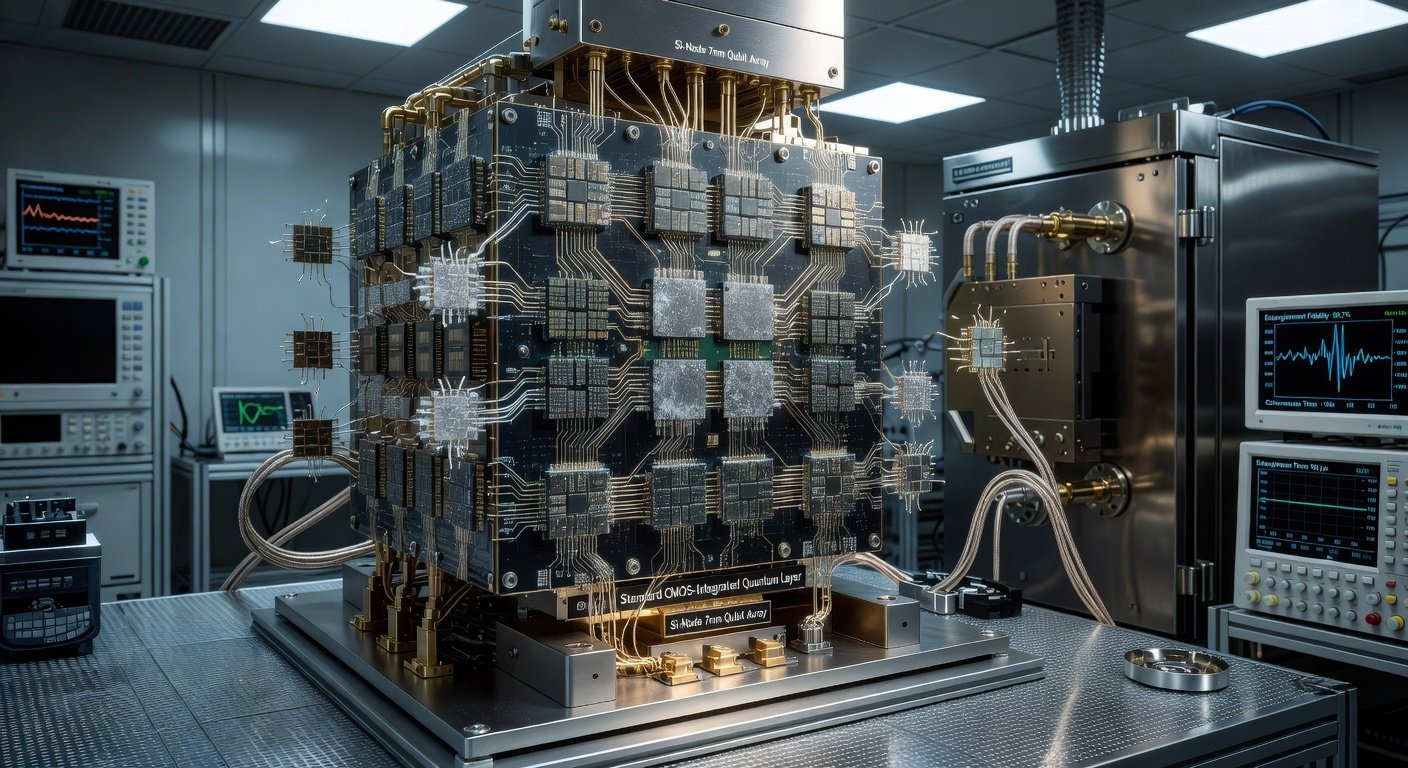
Most quantum computers today rely on specialized manufacturing methods that require exotic materials, intricate designs, and bespoke processes that do not exist at scale. Quantum Motion has taken a different path: it has developed a quantum computer that can be built using existing silicon fabrication techniques. This means that the same processes used to manufacture traditional semiconductor devices can be adapted to create quantum systems.
The implications are staggering. If quantum computers can be produced using standard silicon techniques, it opens the door to mass production, cost reduction, and widespread adoption of quantum technology.
What This Means for AI, Cloud Computing, and More
The implications of this breakthrough extend beyond quantum computing itself. Industries such as artificial intelligence, cloud computing, and robotics could see significant advancements as quantum technology becomes more accessible. Quantum Motion’s approach could lead to faster processing speeds, improved algorithms, and the ability to solve complex problems that are currently beyond the reach of classical computers.
In conclusion, Quantum Motion’s achievement represents a significant step forward in the quest for scalable quantum computing. By leveraging existing silicon fabrication techniques, the company is paving the way for a future where quantum technology is not just a theoretical concept but a practical reality.