AI in the Enterprise: Supply Chain Optimization and Memory Compression Lead the Week
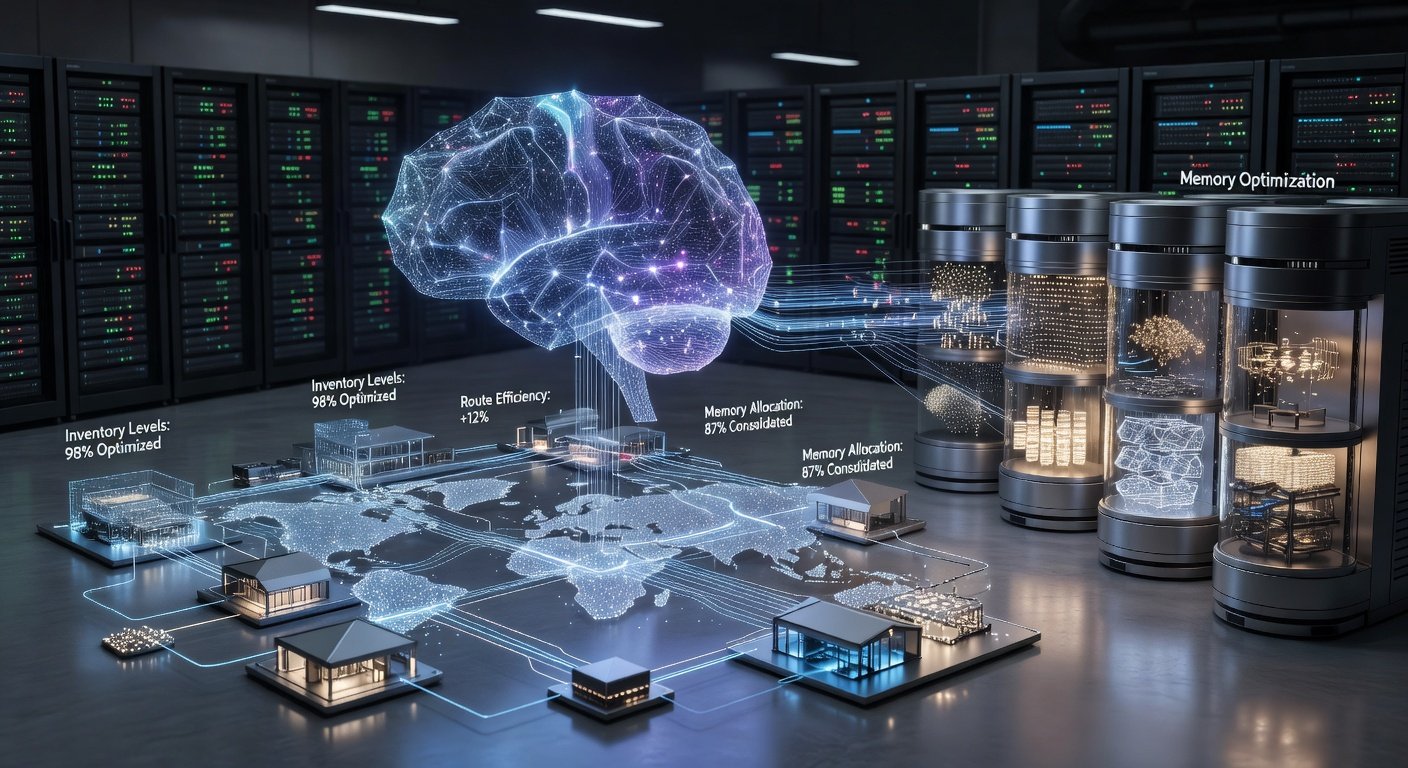
While the AI news cycle often focuses on splashy model launches, some of the most significant progress in enterprise AI adoption this week came from a major consumer goods company applying AI to global logistics, to Google researchers pushing the boundaries of memory efficiency in AI models. This week demonstrates that.
Hershey’s AI-powered supply chain is a prime example of how companies can leverage AI to optimize their operations. The company has been using AI to enhance its supply chain management, ensuring that products are delivered efficiently and effectively. This approach not only improves operational efficiency but also enhances customer satisfaction by ensuring that products are available when and where they are needed.
On the other hand, Google researchers have introduced TurboQuant, a new memory compression technique that significantly reduces the memory footprint of AI models. This innovation allows for more efficient training and deployment of AI models, making it easier for organizations to implement AI solutions without the need for extensive computational resources. The implications of this technology could be profound, enabling smaller companies to leverage AI capabilities that were previously only accessible to larger enterprises.
As AI continues to evolve, the focus on practical applications in the enterprise sector will likely grow. Companies that can effectively integrate AI into their operations will have a competitive advantage in the marketplace. The developments from Hershey and Google this week are just a glimpse of the potential that AI holds for transforming industries.