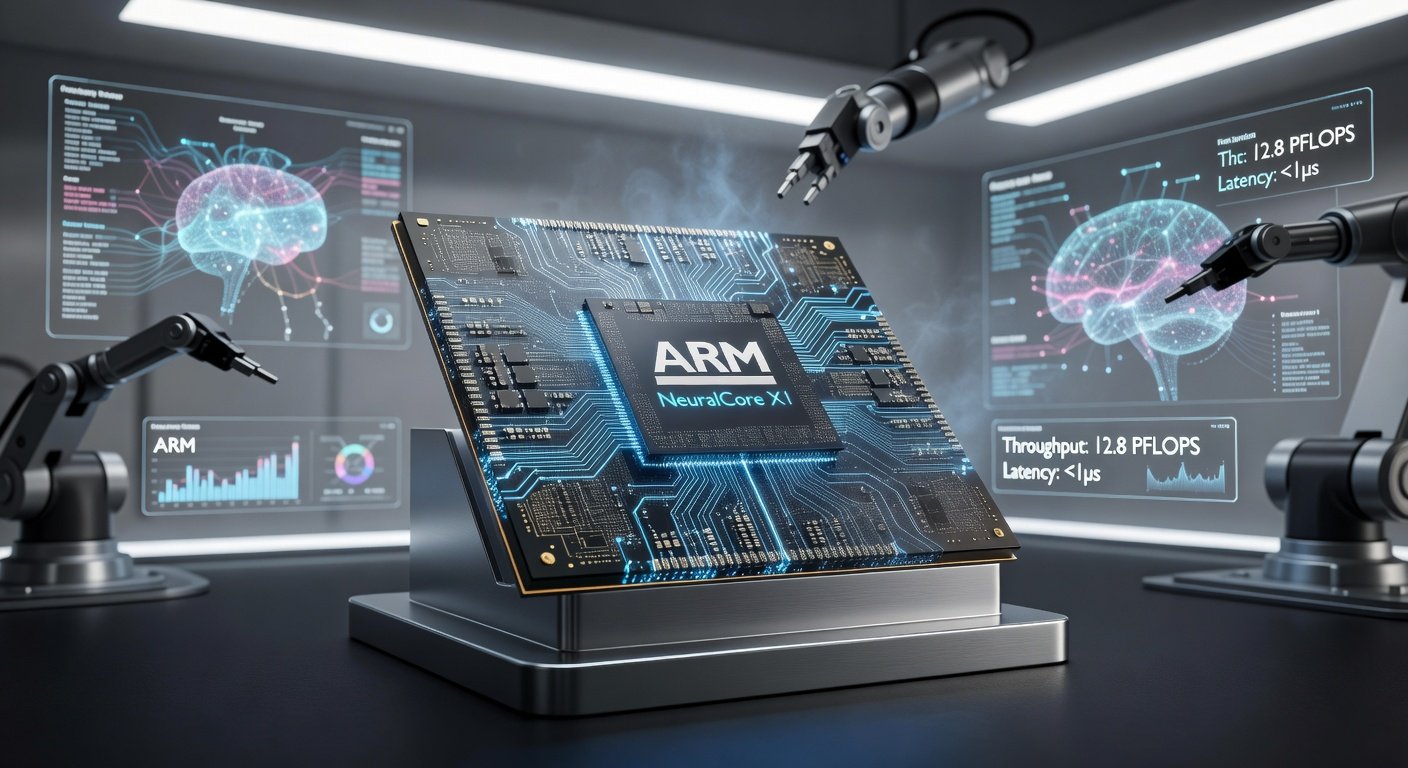
For decades, ARM Holdings built its empire by licensing chip designs to everyone else. Now, the company is stepping out of the shadows of its own supply chain. ARM has launched its first in-house AI chip — an AGI-oriented CPU targeted at AI data centers — and has already secured commitments from Meta, OpenAI, Cloudflare, and Cerebras, according to TechStartups. This is not a incremental product update. It is a fundamental shift in how AI hardware power is consolidated — and it sends a clear signal to every startup, funded scaleup, and enterprise team building on AI infrastructure today.
ARM Makes Its Move: From Licensor To Chipmaker
ARM’s strategic pivot is significant for one key reason: the company has long been the silent foundation underneath chips made by Apple, Qualcomm, and countless others. By designing and producing its own AI chip, ARM is now competing directly in the market it has historically enabled.
The early customer list tells a compelling story. Meta and OpenAI are not experimental partners — they are among the most demanding AI compute consumers on the planet. Their commitments suggest ARM’s in-house design offers something meaningful in terms of performance, power efficiency, or total cost of ownership — likely all three.
- Early customers: Meta, OpenAI, Cloudflare, Cerebras
- Target use case: AGI-oriented CPUs for AI data centers
- Strategic shift: Moving from licensing to direct hardware production
For startups and scaleups building AI products, this move demonstrates that the hardware layer is no longer a commodity. Controlling the silicon stack is becoming a core competitive advantage.
Nvidia’s Energy Bet and the Real Bottleneck in AI Infrastructure
While ARM makes headlines with its chip launch, Nvidia CEO Jensen Huang is focused on a different constraint: power. Huang has linked AGI progress directly to energy availability, arguing that the pace of compute growth is now bound as much by megawatts as by microchips.
This is not mere posituring. AI data centers are projected to account for a growing share of global electricity consumption over the next decade. Nvidia’s emphasis