The AI investment cycle is no longer about models — it is about the infrastructure, tooling, and physical systems that put those models to work. Three significant deals announced in early 2026 make that shift unmistakably clear: a Singapore data-center operator racing toward a U.S. public listing, China’s largest e-commerce company pivoting to enterprise AI agents, and a humanoid robotics startup valued at $900 million folded into one of the semiconductor industry’s most ambitious players.
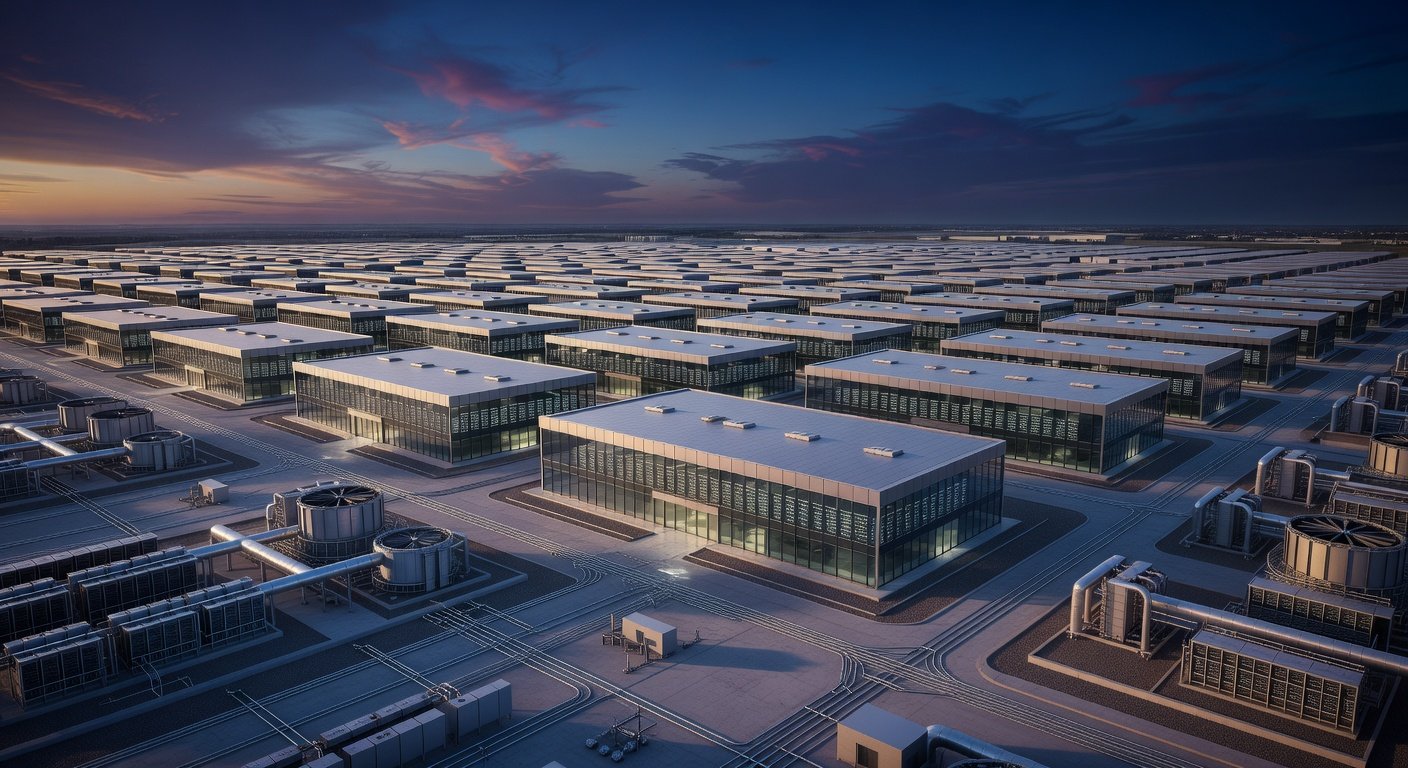
DayOne’s Confidential IPO Filing Signals a Data-Center Capital Surge
Singapore-based DayOne Data Centers is preparing a confidential U.S. IPO filing, according to TechStartups (March 16, 2026). The move places DayOne squarely in the middle of a financing wave driven by surging demand for AI compute capacity — demand that hyperscalers including Google, Microsoft, and Apple have each cited in recent capital expenditure guidance.
The timing is deliberate. Global data-center investment is projected to exceed $500 billion by 2027, with AI workloads accounting for a growing share of new capacity requirements. A confidential filing allows DayOne to test institutional appetite before committing to a public price range — a strategy that has become standard for high-growth infrastructure startups navigating volatile public markets.
For startup founders and venture investors, the DayOne filing is a leading indicator: funding for picks-and-shovels AI infrastructure remains open, even as sentiment around pure-play AI software companies grows more selective.
Alibaba Moves Enterprise AI Agents Into Production
Alibaba is launching a dedicated product to help companies build and deploy agentic AI systems built on its Qwen model family, integrating the offering directly into its software and commerce ecosystem. The announcement marks a meaningful strategic shift — from consumer-facing chatbots toward business tools designed to automate multi-step enterprise workflows.
The significance here extends beyond China. Enterprise AI agent platforms represent one of the fastest-growing categories in B2B software, with analysts at several major firms estimating the market could reach $47 billion by 2030. Alibaba’s move demonstrates that the race to monetize foundation models through vertical business applications is now a global competition, not a Silicon Valley exclusive.
- Key differentiator: Deep integration with Alibaba’s existing commerce and cloud infrastructure gives enterprise customers a lower-friction deployment path.
- Competitive pressure: Microsoft‘s Copilot ecosystem and Google‘s Workspace AI agents remain the dominant Western benchmarks, but Alibaba’s regional reach across Asia-Pacific is substantial.
- What to watch: Pricing strategy and whether Alibaba opens the agent platform to third-party model providers.
Mobileye’s $900M Robotics Acquisition and the 1X Technologies Raise
In January 2026, Mobileye — Intel’s autonomous-driving subsidiary — acquired Tel Aviv-based humanoid robotics startup Mentee Robotics at a $900 million valuation. The deal is notable not just for its size, but for what it signals about where legacy semiconductor companies are placing long-term bets: physical AI systems that operate in unstructured real-world environments.
Separately, 1X Technologies is seeking a $1 billion raise at a $10 billion valuation following a major deployment agreement with investment firm EQT. That funding round, if completed, would rank among the largest single raises in the humanoid robotics category to date.
Together, these two data points confirm that robotics is transitioning from research curiosity to funded commercial category. Investors are no longer asking whether humanoid robots will find enterprise use cases — they are competing to back the startups most likely to own those deployments at scale.
What This Means for Investors and Founders in 2026
The common thread across all three stories is capital conviction. Funding is concentrating around AI infrastructure, enterprise automation, and physical AI systems — categories where the path from deployment to recurring revenue is becoming demonstrably shorter.
For founders, the implication is structural: building on top of foundation models is increasingly table stakes. The differentiated opportunities lie in the layers that connect AI capability to real operational outcomes — whether that is a data center rack, an enterprise agent workflow, or a robot on a warehouse floor.
For investors, the DayOne IPO watch is a useful barometer. If institutional demand for AI infrastructure equity remains strong through a public listing, it will validate continued private-market enthusiasm for the category and likely accelerate the next wave of growth-stage funding rounds.
The forward-looking takeaway: 2026 is shaping up as the year AI investment matures from model-centric bets into a diversified infrastructure and applications cycle — and the startups and acquirers moving earliest into that cycle are already staking out significant positions.