# U.S. Submarine Sinks Iranian Warship in Indian Ocean as Conflict Widens
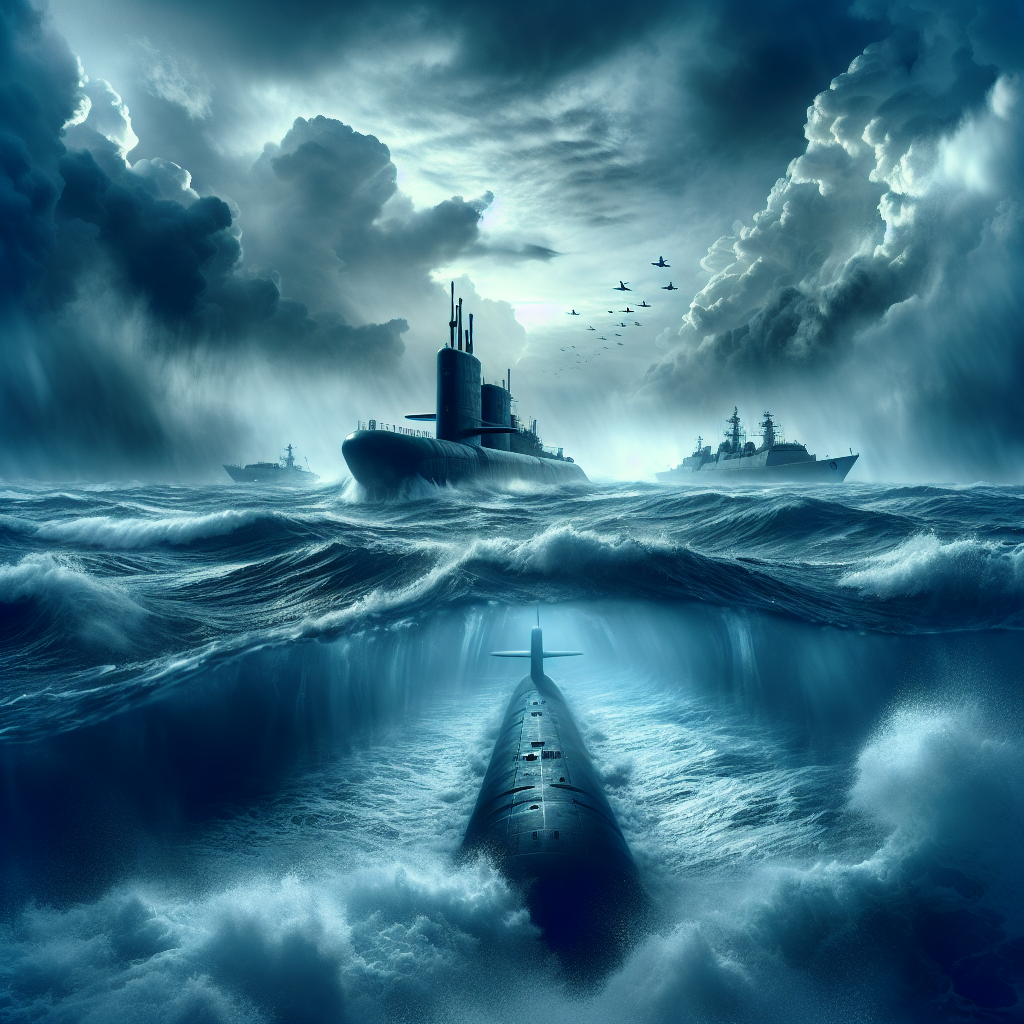
The geopolitical landscape shifted dramatically this week when a **U.S. Navy fast-attack submarine** achieved a historic military milestone by sinking an Iranian warship with a single torpedo—the first submarine-launched torpedo kill by American forces since World War II.[1][3] The strike, confirmed by Defense Secretary Pete Hegseth during a Pentagon press briefing, marks a significant escalation in the ongoing conflict between the United States, Israel, and Iran, expanding military operations far beyond the traditional Middle Eastern theater.
## The Strike: Operation Epic Fury
On Tuesday, in international waters approximately 40 kilometers off the southern coast of Sri Lanka, a U.S. Navy submarine fired a Mark 48 torpedo that destroyed the **IRIS Dena**, a Moudge-class frigate belonging to Iran’s Southern Fleet.[1][3] The Iranian vessel, which had been participating in a naval drill in the Bay of Bengal, was transiting through the Indian Ocean when it became the target of this unprecedented attack.
“Yesterday, in the Indian Ocean… an American submarine sunk an Iranian warship that thought it was safe in international waters,” Hegseth declared at the Pentagon briefing. “Instead, it was sunk by a torpedo. Quiet death. The first sinking of an enemy ship by a torpedo since World War II.”[1] Chairman of the Joint Chiefs of Staff Gen. Dan Caine confirmed that a single Mark 48 torpedo achieved “immediate effect,” sending the warship to the bottom of the sea.[1]
The Pentagon subsequently released video footage of the engagement, showing an infrared image of a massive detonation at the stern of the vessel before it slipped beneath the surface.[3] The identity of the submarine involved remains classified, adhering to standard operational security protocols surrounding submarine operations.[1]
## Human Cost and Rescue Efforts
The sinking of the IRIS Dena came at a considerable human cost. According to the Sri Lankan Foreign Ministry, approximately 180 personnel were aboard the Iranian frigate at the time of the strike.[1] Rescue operations coordinated by Sri Lankan naval forces recovered more than 80 bodies, with reports indicating at least 87 sailors were killed in the attack.[4][5] Sri Lankan naval personnel managed to rescue more than 30 survivors, though some crew members remain missing.[6]
The swift response by Sri Lankan forces, prompted by a distress call they received, underscores the immediate humanitarian dimensions of this military engagement. However, the incident also raised significant questions across South Asia about whether regional powers, particularly Sri Lanka and India, had been given advance notification of the operation.[6]
## Broader Campaign Against Iranian Naval Forces
The sinking of the IRIS Dena represents just one component of a much larger military campaign designated **Operation Epic Fury**. According to Gen. Caine, U.S. forces have destroyed more than 20 Iranian naval vessels and struck over 2,000 total targets across Iran since the conflict began.[1][3] The campaign has achieved what military officials describe as an effective neutralization of Iran’s major naval presence in the theater.
“We are destroying the Iranian Navy, degrading its capacity, capability and ability to conduct operations,” Caine stated during the press briefing.[2] Defense Secretary Hegseth went further, declaring the Iranian Navy “combat ineffective, decimated, destroyed, defeated.”[3]
Recent satellite imagery has documented the destruction of Iran’s largest naval vessel—an oil tanker converted into a floating base—in an Iranian port near the Strait of Hormuz.[2] Additional vessels have been captured sinking at other naval facilities, including an Iranian Jamaran-class corvette and other targets in the Gulf of Oman.[2]
## Historical Significance
The achievement carries profound historical weight. The last time a U.S. Navy submarine sank an enemy warship was during the final days of World War II, when USS Torsk sank a Japanese vessel just days before Japan’s surrender.[3] More broadly, the last submarine-to-ship kill by any nation occurred during the 1982 Falkland Islands War, when the British nuclear-powered attack submarine HMS Conqueror sank the Argentine cruiser ARA General Belgrano using Mark VIII torpedoes—making the IRIS Dena sinking the first such event in nearly 44 years.[3]
## The Widening Conflict
This naval engagement reflects a significant expansion of military operations beyond traditional Middle Eastern boundaries. The strike in the Indian Ocean demonstrates that the U.S.-Israel conflict with Iran now extends into distant maritime regions, with implications for global shipping routes and regional security dynamics in South Asia.
The Pentagon indicated that operations would continue with sustained intensity. Gen. Caine noted that “strikes on infrastructure and naval capability by the vast assembly of U.S. forces in the region are expected to continue over the next 24 to 48 hours,” as military planners assess progress against established military objectives.[1]
## Looking Forward
As this conflict continues to evolve, the sinking of the IRIS Dena stands as a watershed moment—demonstrating advanced American submarine capabilities while simultaneously illustrating the human costs of modern naval warfare. The incident raises important questions about the scope and trajectory of the broader conflict, the security implications for regional powers, and the long-term consequences of expanded military operations in strategically vital waterways.
The historic torpedo strike serves as a stark reminder that modern warfare increasingly transcends geographic boundaries, with consequences that ripple across multiple regions and affect civilian populations far from traditional conflict zones.
Original source: NPR News – U.S. submarine sinks Iranian warship in Indian Ocean as conflict widens