# Three Generations of Women: How Motherhood Choices Have Transformed
The story of motherhood in America is being rewritten—and nowhere is this transformation more visible than in the lived experiences of three generations of women within a single family. **Barbara Briscoe, her daughter Cynthia, and her granddaughter Caroline represent a profound shift in how women approach the question of having children, shaped by evolving opportunities, economic realities, and cultural expectations.**
## A Different World for Each Generation
**Barbara Briscoe, now 93, came of age during the Great Depression**, when the trajectory of a woman’s life was largely predetermined.[2] For her generation, the question wasn’t whether to have children—it was simply assumed. Marriage and motherhood were the default path, the expected culmination of a woman’s purpose. There was little room for deliberation or alternative visions of adulthood.
Her daughter, Cynthia, entered adulthood in a markedly different landscape. **While she still felt the cultural pull toward marriage and family, she had professional opportunities her mother never imagined.** Cynthia embraced both spheres: she built a career while also hoping to become a mother. “I don’t know that I thought, ‘I’ll have a girl and a boy, or I’ll have four kids.’ But yes, I think I always hoped that that would happen for me,” she reflected.[2] Her generation experienced the expansion of women’s rights and workplace access, yet the expectation of motherhood remained culturally dominant.
Then came Caroline, Cynthia’s daughter, now 33 years old. **Caroline’s relationship to motherhood is fundamentally different—she is genuinely uncertain whether she wants children at all.** This uncertainty isn’t born from tragedy or circumstance; it’s a considered choice within a landscape of genuine alternatives. “I don’t really feel like I got strong messages about what my life should look like beyond college graduation,” Caroline explained. “I was very much under the impression that the world was kind of my oyster.”[2]
## The Rise of Choice
What distinguishes Caroline’s generation is the unprecedented availability of *choice*. **American women today are having fewer children than their mothers and grandmothers did, with the current U.S. birthrate about half of what it was in the 1960s.**[2][4] This dramatic decline reflects not primarily a rejection of motherhood, but rather the genuine freedom to make different decisions.
Caroline was intentional about communicating her uncertainty to her now-husband from the beginning of their relationship. “I made it a practice that by the third date, I found a way to work into casual conversation that I did not know if I wanted kids,” she said.[2] Both partners remain on the same page—neither feels a strong pull toward parenthood. Yet this decision comes with its own complexity. “I think from our perspective, it doesn’t really feel achievable to have it all like my parents did in today’s world,” Caroline acknowledged.[2]
This observation reveals an important paradox: while women have gained unprecedented freedom to choose motherhood or not, economic pressures have simultaneously intensified. **According to recent data, 7 in 10 Americans say that raising children is unaffordable, a 20-percentage-point increase over the last decade.**[1] Financial concerns have now surged to the top of the list of challenges families report, surpassing worries about crime and religion.[1]
## What Modern Mothers Actually Want
For those women who do choose motherhood, the landscape has shifted dramatically as well. **Both married and unmarried mothers of young children are now about equally likely to work full time—a trend never seen before.**[1] This represents a fundamental reorganization of family life, driven by both economic necessity and changing preferences.
**College-educated married mothers overwhelmingly prioritize flexible work arrangements (85%), followed by paid family leave (83%), and child tax credits (78%).**[1] These preferences reveal what modern mothers actually need: the ability to remain connected to both their careers and their families, rather than choosing between them entirely.
**The median age of married mothers with children under five is now 34, well within the Millennial generation—the most educated generation of women in U.S. history.**[1] These women are more career-oriented, partly because they’re more likely to work in higher-paying professional jobs where leaving the workforce carries a much higher opportunity cost.[1] Additionally, about 26% of Millennials carry student debt, more than any previous generation, creating financial pressure to maintain employment.[1]
## A Legacy of Possibility
When Barbara looks at her daughter and granddaughter, she sees something remarkable: **”I’m very proud of both of them. And I think they both have done what they wanted to do in life. And I think that today women have so many opportunities to decide what they want to do.”**[2]
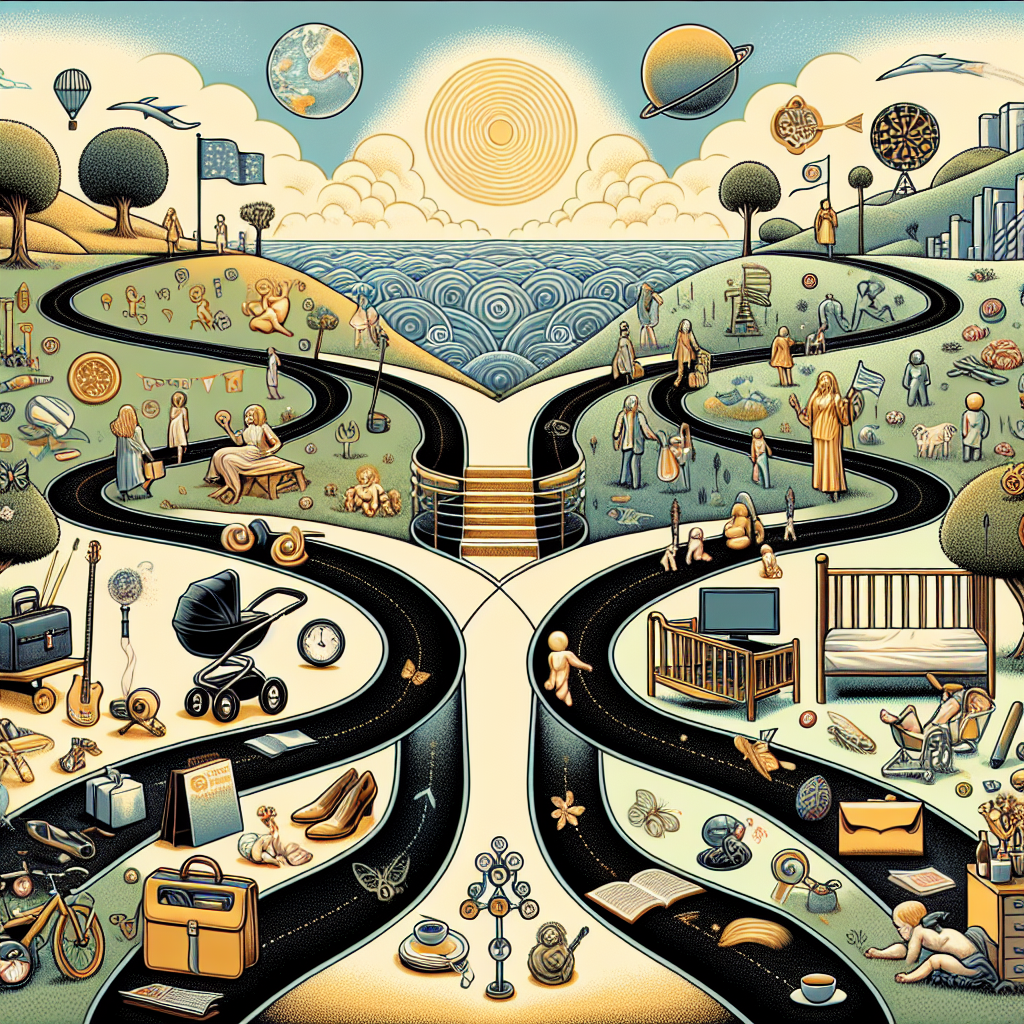
This sentiment captures the essence of the transformation across three generations. Barbara’s world offered one path. Cynthia’s world expanded that path into two. Caroline’s world presents an open field of possibilities—some of which involve motherhood, some of which don’t.
**The evolution from Barbara to Caroline isn’t simply a story of progress, but of genuine liberation.** Each generation has gained the ability to define motherhood—or the absence of it—on their own terms. For some women, that means prioritizing career and personal fulfillment. For others, it means seeking ways to integrate motherhood with professional ambition. And for still others, like Caroline, it means remaining genuinely open to whatever future unfolds.
The question of motherhood has transformed from an inevitability into a choice—and that choice, in all its complexity, belongs entirely to the women making it.
Original source: NPR News – 3 generations of women in one family show how choices on motherhood have changed