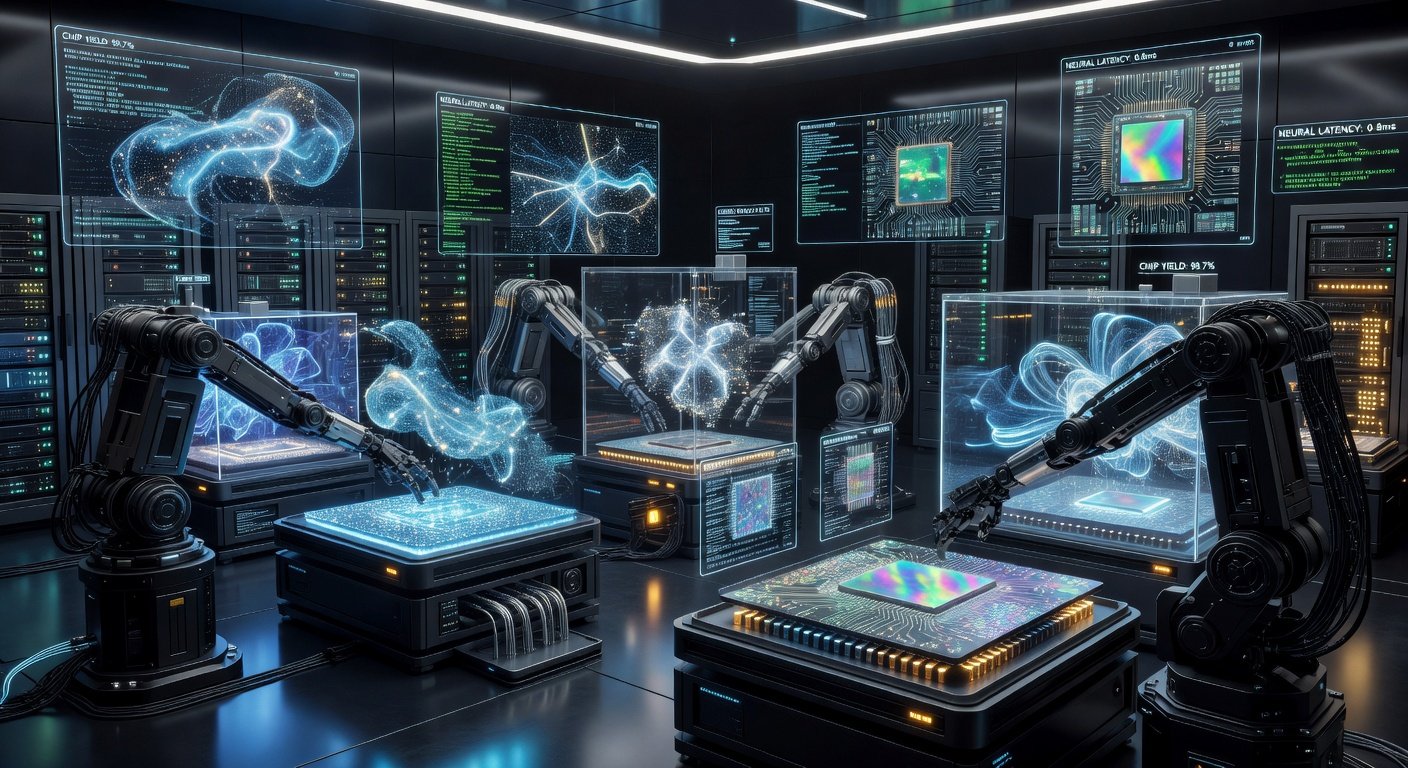
Three Forces Reshaping Technology in 2026
Agentic AI, robotics, and custom AI semiconductors are converging to redefine technology in 2026: agentic AI systems that act autonomously, physical AI embedded in robotics, and a new generation of AI chips that enable sophisticated applications. Together, they are not incremental upgrades; they represent a paradigm shift in how we interact with technology.
Agentic AI: From Assistant to Autonomous
The most significant shift in AI is the transition from systems that assist humans to those that operate independently. These agentic systems are designed to make decisions and take actions without human intervention, fundamentally changing industries from healthcare to finance. They can analyze vast amounts of data, learn from their environments, and adapt to new situations, making them invaluable in dynamic settings.
Physical Robotics: The New Workforce
As agentic AI evolves, so does its physical embodiment in robotics. Robots are no longer just tools; they are becoming autonomous agents capable of performing complex tasks in unpredictable environments. From manufacturing to service industries, these robots are designed to work alongside humans, enhancing productivity and safety.
Custom AI Chips: The Engine of Innovation
The rise of agentic AI and robotics is supported by a new generation of custom AI chips. These chips are optimized for machine learning tasks, enabling faster processing and more efficient energy use. Companies are investing heavily in developing specialized hardware that can handle the demands of advanced AI applications, leading to breakthroughs in performance and capabilities.
Conclusion
The convergence of agentic AI, physical robotics, and custom chips is set to reshape the technological landscape in 2026. Professionals across all sectors must understand these changes and prepare for a future where technology is not just a tool but a partner in innovation.