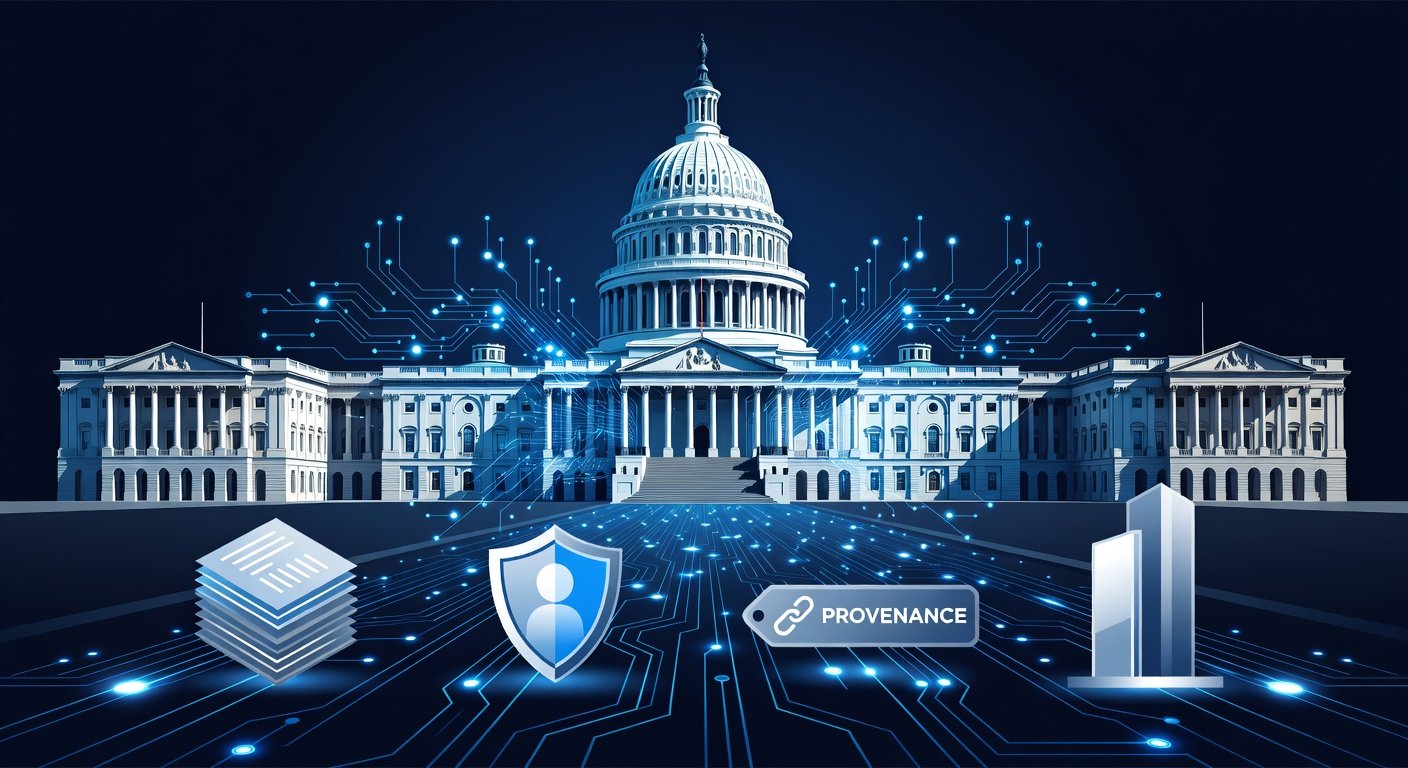
Across the United States, AI governance is moving from debate to legislation at a pace few anticipated. On March 20, 2026, multiple state-level AI bills cleared critical procedural hurdles simultaneously — a signal that the regulatory window for AI companies is narrowing faster than many boardrooms have planned for.
State Legislatures Push AI Bills Toward the Finish Line
According to the Transparency Coalition AI, several significant bills are now in advanced stages across multiple states. SB 1786, which mandates provenance data for generative AI-produced media, is approaching its House third reading — a milestone that places it one step from potential enactment. Meanwhile, HB 2311, focused on child safety standards for AI-powered chatbots, has received a Senate committee recommendation for passage.
Beyond these two headline bills, additional legislation targeting AI disclosures, election-related deepfakes, and algorithmic transparency is advancing in states including Massachusetts and New York. Taken together, this wave represents a coordinated legislative push that spans content authenticity, vulnerable user protection, and electoral integrity.
- SB 1786: Requires traceable provenance data embedded in AI-generated media
- HB 2311: Establishes safety standards for chatbots interacting with minors
- Additional bills address election deepfakes and AI transparency disclosures
For AI developers and media platforms, compliance timelines are no longer theoretical. Engineering teams that have not yet built provenance or disclosure infrastructure into their pipelines face a narrowing window to do so.
Federal AI Policy Takes Shape as Blackburn Releases Updated Draft
At the federal level, Senator Marsha Blackburn has released an updated draft of her AI policy framework, explicitly designed to influence the Trump administration’s forthcoming White House AI plan. The draft arrives at a critical moment: federal guidance, or the absence of it, will determine whether state-level fragmentation becomes the default regulatory environment for the industry.
The timing is notable. With multiple states already advancing binding legislation, a coherent federal framework could harmonize requirements and reduce compliance complexity for companies operating nationally. Without it, AI developers may face a patchwork of conflicting obligations across jurisdictions — a scenario that historically advantages larger incumbents with dedicated legal and compliance resources over smaller startups.
Corporate AI Strategies: Bold Mandates, Strategic Partnerships, and a Notable Setback
Accenture announced an AI-First Mandate this week, signaling an internal transformation that places AI at the center of its service delivery model. The announcement raises two immediate questions for observers: how the firm retains human talent whose roles are being redefined, and whether an AI-first posture constitutes a durable competitive advantage when the underlying models are broadly accessible to competitors.
In a more targeted move, Infosys announced a partnership with Anthropic to deploy agentic AI systems specifically within regulated industries. The focus on regulated sectors — where compliance, auditability, and risk management are paramount — demonstrates a strategic recognition that enterprise AI adoption in finance, healthcare, and legal services requires more than raw capability. It requires trust infrastructure.
Not all corporate AI stories this week were positive. Alibaba’s AI vision failed to impress investors, contributing to a stock decline. Reports indicate the company is restructuring its Qwen team away from its previous open-source focus — a pivot that raises questions about the sustainability of open-source AI strategies when investor pressure intensifies.
What This Means for AI Practitioners and Founders
The convergence of state legislation, federal drafts, and corporate strategy shifts this week points toward a single underlying dynamic: AI is entering its compliance era. The questions shifting to the foreground are not only what AI can do, but who is accountable for what it does, and how that accountability is documented and enforced.
For founders and practitioners, the forward-looking takeaway is clear. Building provenance, transparency, and safety mechanisms into AI products is no longer a differentiator — it is becoming a baseline requirement. Companies that treat regulatory readiness as a product feature rather than a legal afterthought will be better positioned as this legislative wave reaches enactment.