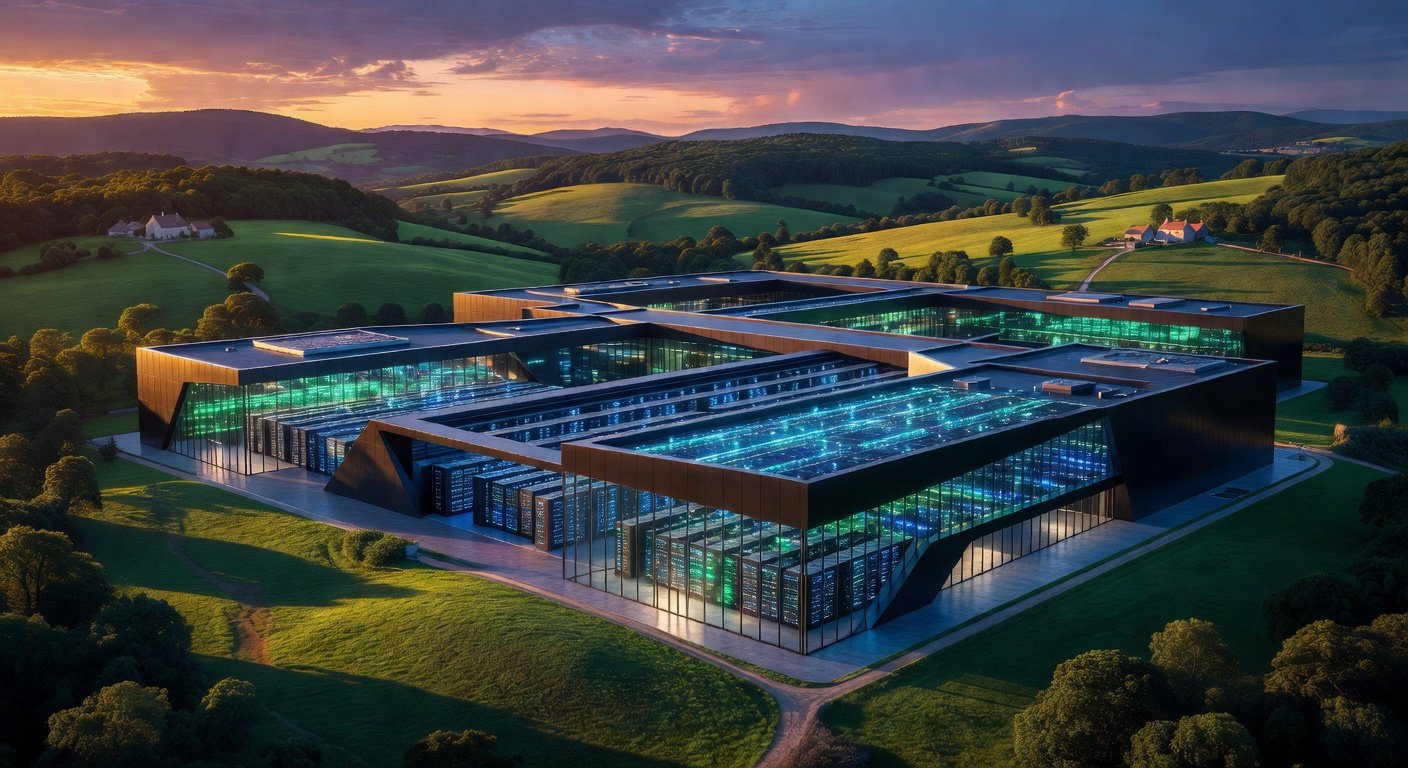
When Meta writes a $27 billion cheque, the industry listens. The social media giant has inked a five-year infrastructure pact with Nebius — the Amsterdam-headquartered AI cloud specialist spun out of Yandex — securing massive data-center capacity to power its generative AI ambitions. It is one of the largest AI infrastructure deals ever signed, and it tells us something important: even the biggest hyperscalers on the planet can no longer build fast enough on their own.
Why Meta Is Outsourcing Its AI Backbone
Meta is not a company short on engineering talent or capital. It has spent billions on its own data centers and custom silicon. So why hand $27 billion to a third party? The answer lies in the brutal physics of GPU procurement and construction timelines. Demand for compute — driven by large language models, multimodal AI, and real-time inference at Meta’s scale — is simply outpacing what any single company can provision alone, no matter how deep its pockets.
This is precisely where Nebius fits. Founded as a European AI infrastructure play with roots in Russia’s Yandex ecosystem, Nebius has repositioned itself as a GPU-native cloud provider purpose-built for AI workloads. Unlike AWS or Azure — which serve a vast menu of enterprise use cases — Nebius is laser-focused on high-density compute for AI training and inference. That specialisation is exactly what Meta needs: speed, density, and flexibility without the overhead of a general-purpose hyperscaler.
The deal is a landmark moment for the emerging technology sector in Europe. It validates the thesis that specialist cloud providers can compete — and win — at the highest tier of the AI supply chain, even against trillion-dollar incumbents.
The Infrastructure Arms Race Is Reshaping the Tech Stack
Meta’s Nebius deal does not exist in isolation. This week’s Nvidia GTC conference made clear that the entire industry is in a full-sprint infrastructure build-out. Microsoft used the event to advance its Microsoft Foundry and Azure AI platform, positioning itself as a full-stack solution for enterprise AI development — from model training to deployment. Meanwhile, Roche quietly announced it has scaled its hybrid-cloud AI factory to over 3,500 Nvidia Blackwell GPUs, deploying them across drug discovery, diagnostics, and pharmaceutical manufacturing. That is not a pilot programme — that is production-scale AI in one of the world’s most regulated industries.
The pattern is consistent across all three: organisations are no longer asking whether to invest in AI infrastructure, but how fast they can scale it. For developers and founders building on top of these platforms, this has real consequences:
- Compute availability is becoming a strategic differentiator, not just a cost line.
- Specialist providers like Nebius are emerging as credible alternatives to AWS and Azure for AI-native workloads.
- Enterprise AI is moving from experimentation to mission-critical infrastructure, as Roche’s pharma deployment demonstrates.
- The gap between companies that have secured long-term compute contracts and those that have not is widening fast.
Hardware Is Having Its Moment — Again
While the infrastructure story dominates boardrooms, the consumer hardware layer is also in motion. Apple’s AirPods Max 2 landed this week with the H2 chip, enhanced noise cancellation, and — most tellingly — AI-powered Live Translation. It is a quiet but significant signal: AI is no longer a cloud-only story. It is being baked into the earbuds in your bag. Over at MWC 2026, the hardware experimentation was even more vivid, with Nothing’s Phone 4a, HONOR’s Robot Phone concept, and rugged devices from Jolla and Unihertz painting a picture of a device ecosystem that is diversifying rapidly, not consolidating.
For product managers and creators, this proliferation of niche hardware and AI-integrated consumer devices is both an opportunity and a design challenge. The surface area of platforms to build for is expanding again after years of smartphone monoculture.
What This Means for Builders and the Industry
The Meta-Nebius deal is a bellwether for a structural shift in how AI infrastructure is procured and delivered. The era of the AI infrastructure specialist has arrived. European providers, historically overshadowed by US hyperscalers, now have a credible path to winning hyperscale contracts — if they can deliver the GPU density and reliability that frontier AI demands.
For startups and scaleups navigating their own infrastructure decisions, the lesson is clear: compute strategy is product strategy. Whether you are training models, running inference at scale, or simply choosing which cloud to build on, the decisions you make today will shape your competitive position for years. Nebius just proved that being the best at one thing — in this case, AI-native infrastructure — can be worth $27 billion. That is a number worth remembering.