The AI infrastructure story in early 2026 is no longer just about raw compute power — it is about doing more with what already exists. Within a single week, a stealth-mode startup raised $12 million to make GPU clusters smarter, OpenAI shipped a reasoning-first frontier model, and Google DeepMind demonstrated autonomous mathematical problem-solving at near-expert level. Taken together, these developments signal a meaningful shift in how the industry is approaching scale, efficiency, and intelligence.
Niv-AI’s $12M Bet on GPU Efficiency
Niv-AI emerged from stealth on March 17–18, 2026, with $12 million in funding to tackle one of AI’s most persistent infrastructure challenges: GPU power inefficiency in large-scale data centers. According to TechCrunch, the company is developing sensors and data analytics tools designed to optimize how GPUs consume and distribute power during machine learning workloads.
This matters more than it might initially appear. As AI models grow in size and complexity, data center operators face compounding costs — not just from acquiring more hardware, but from the energy overhead of running that hardware suboptimally. Niv-AI’s approach targets the gap between theoretical GPU capacity and actual utilization, a problem that affects every major cloud computing provider running large-scale AI infrastructure.
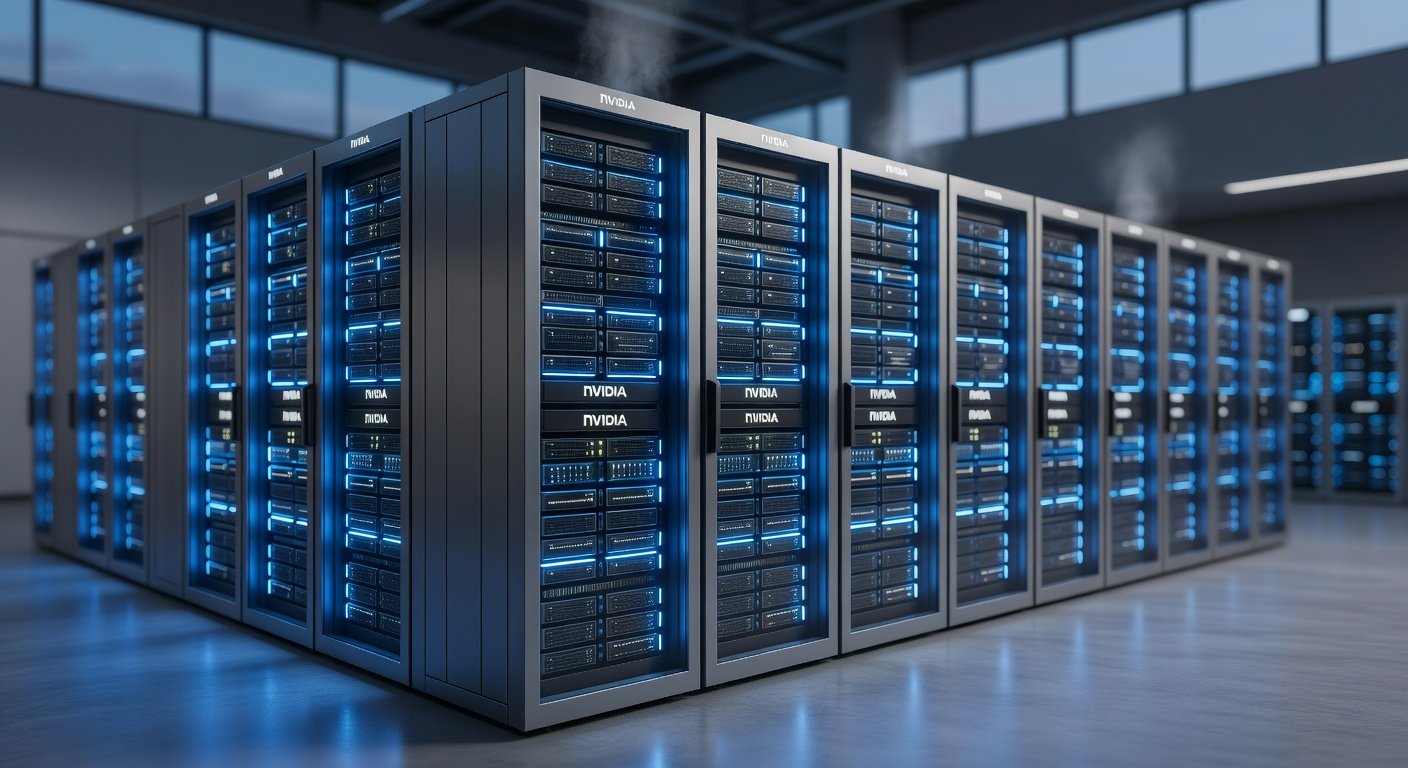
The funding round positions Niv-AI alongside a growing cohort of companies building the operational layer beneath AI — the systems that keep the engines running efficiently rather than simply adding more engines. For enterprises already invested in NVIDIA-based GPU clusters, tools that extract more performance from existing hardware represent a compelling value proposition without requiring additional capital expenditure.
Reasoning Takes Center Stage: GPT-5.4 and Gemini 3.1
On the model side, the emphasis has shifted decisively toward reasoning capability over parameter count. OpenAI launched GPT-5.4 on March 5, 2026, a reasoning-optimized model that scored 83% on the GDPVal benchmark, surpassing human expert performance on a range of key tasks. The model demonstrates improved step-by-step thinking, stronger coding ability, and notably better cost efficiency compared to its predecessors — a combination that makes it viable for production deployment at scale.
Google DeepMind followed closely with two distinct releases: Gemini 3.1 Flash-Lite, optimized for high-speed developer workloads, and Deep Think, a model that autonomously solved open mathematical problems and achieved 90% on the IMO-ProofBench Advanced benchmark as of March 3–4, 2026. That score on a dataset derived from International Mathematical Olympiad problems is a concrete indicator of structured, multi-step reasoning at a level that was not achievable by AI systems even twelve months ago.
The pattern across both releases is consistent: the frontier is no longer defined by model size alone. Cost efficiency, reasoning depth, and agentic capability — the ability to plan and execute multi-step tasks with minimal human intervention — are now the primary competitive dimensions.
What This Means for AI Infrastructure and the Broader Industry
These developments converge on a single underlying trend: the AI industry is maturing from a phase of rapid scaling into one of operational discipline. According to Morgan Stanley, the first half of 2026 is expected to produce significant AI breakthroughs driven by compute scaling, with measurable economic impacts including workforce shifts already underway across multiple sectors.
For AI practitioners and infrastructure teams, the implications are concrete:
- GPU optimization is becoming a dedicated engineering discipline, not an afterthought. Startups like Niv-AI are building the tooling to support it.
- Reasoning-optimized models are enabling agentic AI applications that can handle complex, multi-step workflows — expanding what machine learning can realistically automate.
- Cost efficiency is now a first-class benchmark metric, reflecting enterprise demand for AI that is deployable at scale without prohibitive infrastructure costs.
- Cloud computing providers will need to integrate efficiency tooling at the infrastructure layer to remain competitive as AI workloads grow denser and more demanding.
For startup founders and enterprise technology leaders, the window to build on top of these more capable, more efficient models is opening. The infrastructure layer — spanning hardware optimization, cloud orchestration, and agentic AI frameworks — is where significant investment and opportunity are concentrating.
What to Watch in the Months Ahead
The trajectory points toward several developments worth monitoring closely. GPU efficiency tooling from companies like Niv-AI will face its first real test at enterprise scale — whether sensor-based optimization can deliver measurable reductions in power consumption and cost will determine whether this approach becomes standard practice or a niche solution.
On the model side, the benchmark scores from GPT-5.4 and Gemini Deep Think suggest that autonomous reasoning in specialized domains — mathematics, coding, scientific analysis — is approaching a threshold where agentic AI systems can operate with meaningful independence. The next frontier is reliability and safety at that level of autonomy, not just peak benchmark performance.
Morgan Stanley’s forecast of substantial AI-driven economic impact in H1 2026 adds urgency to these questions. The organizations best positioned will be those that treat AI infrastructure — including efficiency, reasoning capability, and agentic deployment — as a strategic priority rather than a technology experiment.
The race in 2026 is not simply about who has the most compute. It is about who uses it most intelligently.