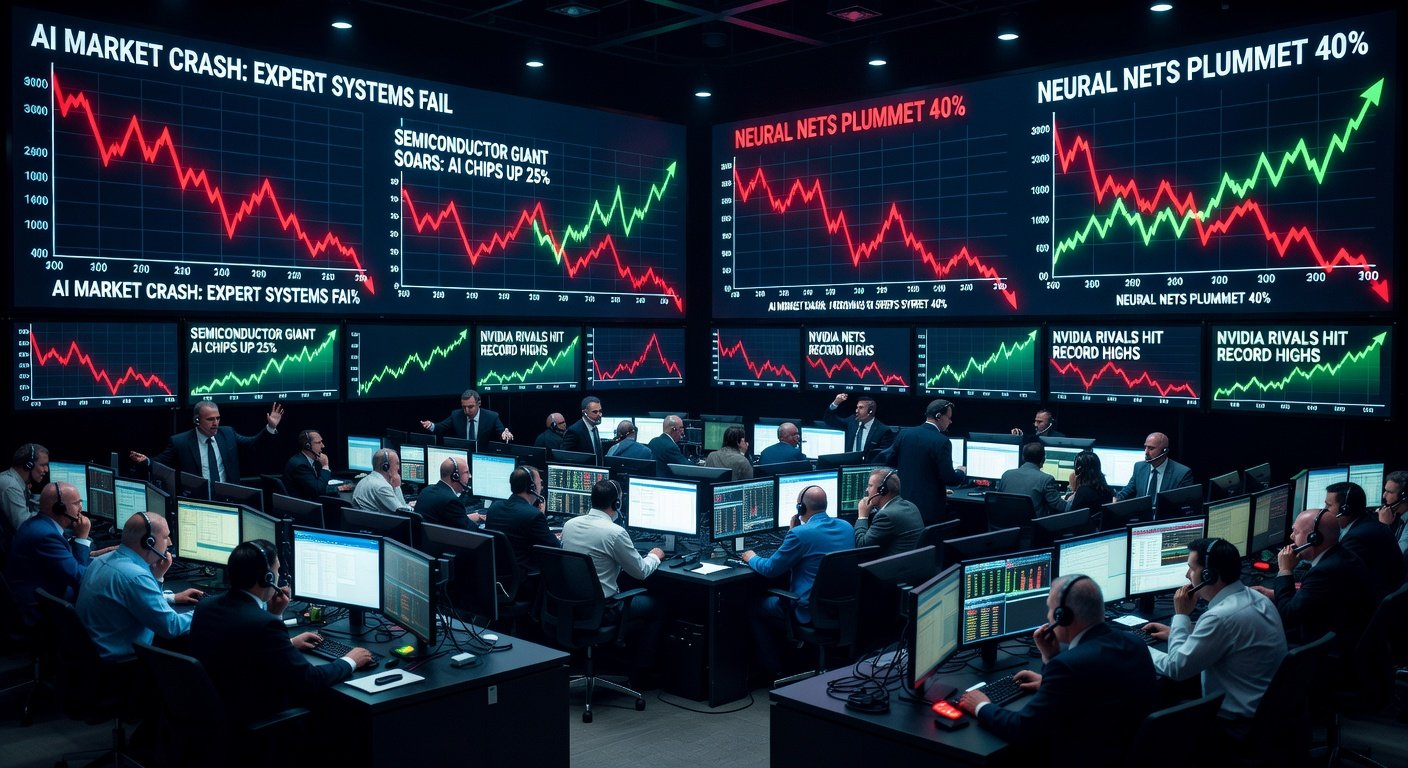
In a dramatic shift that’s being called the ‘AI Scare Trade,’ global markets experienced their most significant sector rotation of 2026 on February 18th, as investors grappled with the implications of truly autonomous AI systems. The catalyst? A convergence of technological breakthroughs that suggest AI is moving beyond simple content generation to independent task execution.
The Trigger Point: From Generative to Agentic AI
According to [valueinvestingnews.com](https://markets.financialcontent.com/fatpitch.valueinvestingnews/article/marketminute-2026-2-18-the-ai-scare-trade), the market upheaval was sparked by Altruist’s launch of ‘Hazel,’ an autonomous AI platform capable of generating complex tax and estate strategies without human intervention. The impact was immediate and severe: Charles Schwab dropped over 7%, while European wealth manager St. James’s Place saw its value crater by 20%.
This wasn’t just another tech correction. As [reuters.com](http://today.reuters.com/business/software-real-estate-us-sectors-under-grip-ai-scare-trade-2026-02-13/) reports, the selloff has spread from software to real estate, insurance, and logistics sectors, marking a fundamental reassessment of how value is created in professional services.
The Productivity Paradox
Yet amid the panic, a curious contradiction emerges. While markets react to AI’s potential disruption, 80% of firms report no productivity gains from their AI investments, despite hundreds of billions spent. This disconnect between market perception and current reality highlights the complex transition phase we’re entering.
Winners and Losers in the AI Economy
The market rotation has created clear winners and losers. Companies providing AI infrastructure, particularly semiconductor and specialized software firms, are seeing significant gains. [bloomberg.com](https://www.bloomberg.com/news/newsletters/2026-02-13/) notes that this ‘picks and shovels’ approach to AI investment is becoming increasingly attractive as traditional service-oriented sectors face disruption.
Looking Ahead: The New Professional Services Landscape
The implications for the future of work are profound. [cnn.com](https://www.cnn.com/2026/02/16/business/ai-disruption-fears-us-stocks) suggests that this market reaction might be just the beginning of a larger transformation. Industries will need to adapt to a hybrid model where AI handles routine tasks while human professionals focus on high-level strategy and relationship management.
As we navigate this transition, one thing is clear: the market’s reaction signals that AI’s impact on professional services is no longer theoretical—it’s becoming tangibly real, and the time to adapt is now.