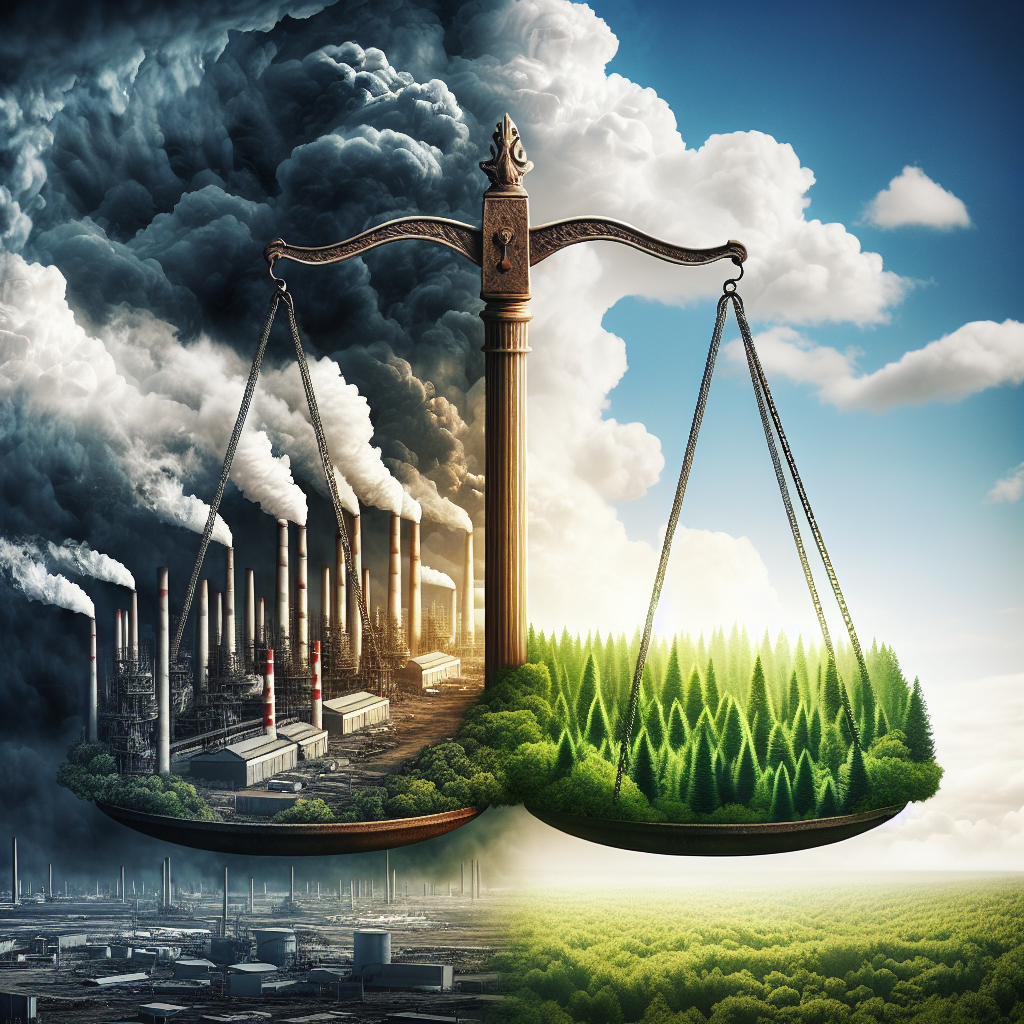
# Trump Administration Undermines EPA Enforcement of Clean Air Act
The Trump administration’s recent repeal of the EPA’s 2009 “endangerment finding” marks a pivotal shift, stripping the agency of key authority to regulate greenhouse gases under the Clean Air Act and weakening overall enforcement efforts.[1][3][4] Announced on February 12, 2026, by EPA Administrator Lee Zeldin alongside President Trump, this move eliminates federal standards for vehicle and engine emissions from model years 2012 onward, saving an estimated $1.3 trillion in compliance costs according to the EPA.[3]
## Repealing the Endangerment Finding: A Deregulatory Milestone
At the heart of this controversy is the 2009 endangerment finding, which determined that six greenhouse gases—including carbon dioxide and methane—threaten public health and welfare, enabling EPA regulations on emissions from cars, trucks, power plants, and other sources under Section 202(a) of the Clean Air Act.[1][3] The Obama-era decision provided the legal foundation for nearly all federal climate rules, interpreting “air pollution” broadly to include gases contributing to global climate change.[3][4]
The Trump EPA now argues this interpretation exceeds statutory authority, claiming the Clean Air Act targets local and regional pollutants, not global phenomena like climate change.[3] Zeldin described it as the “Holy Grail of federal regulatory overreach,” asserting that predictions justifying the finding—such as climate impacts—have not materialized as forecasted.[3][4] Even if the U.S. eliminated all vehicle GHG emissions, the EPA claims there would be no material global climate impact through 2100, based on reevaluated models.[3]
This final rule, touted as the “single largest deregulatory action in U.S. history,” also removes off-cycle credits for vehicle start-stop technology and proposes a two-year delay on Biden-era light-truck emission limits.[3][4] It stems from Trump’s Day One Executive Order 14154, “Unleashing American Energy,” which prompted a formal reconsideration announced in March 2025.[3]
## Broader Enforcement Collapse Under Trump
Beyond the repeal, EPA enforcement has plummeted to historic lows in 2025, as detailed in a February 2, 2026, report by the Environmental Data & Governance Initiative (EDGI).[2] Analyzing 24 enforcement categories from the EPA’s ECHO database over 20 years, the study found 58%—14 categories—at their weakest or second-weakest levels since 2020 (the COVID baseline).[2] Civil judicial cases hit a 20-year low, fewer than under any prior administration.[2]
Inspections dropped across the board compared to 2024, with Toxic Substances Control Act (TSCA) checks falling 36%—the sharpest decline.[2] Clean Air Act and Clean Water Act enforcement similarly weakened, undermining laws meant to deter polluters.[2] EDGI co-coordinator Christopher Sellers warned: “Without enforcement, polluters have no incentive to follow the law,” signaling unprecedented damage to public health protections.[2]
The repeal is projected to slow U.S. emissions declines by 10%, per Axios analysis, though cheap renewables may limit reversal.[1] Critics like Environmental Defense Fund President Fred Krupp argue it will increase pollution, raising family costs and harms, amid projections of 2% higher U.S. mortality and 17% global GDP loss ($38 trillion) by 2050 from unabated climate change.[1]
## Official Justification vs. Critic Backlash
Proponents frame the action as restoring “commonsense” and consumer choice, adhering strictly to the Clean Air Act’s text post-recent court rulings.[3] The EPA insists it fulfills its core mission without GHG rules, which it views as congressional policy territory, not agency overreach via “backdoor ideological agendas.”[3]
Opponents decry it as the biggest assault on climate authority in U.S. history.[4] California’s EPA condemned it as declaring the Republican Party “pro-pollution,” ignoring visible climate impacts like wildfires, job losses, and rising costs.[5] Governor Newsom vowed lawsuits, affirming California’s duty to protect air under the Clear Air Act.[5] Environmental groups highlight related lapses, like missing deadlines for soot designations, prompting legal notices.[6]
Zeldin, a former congressman, has lambasted prior Democratic-led efforts as economically ruinous.[4] Yet the move applies initially to tailpipe emissions, with more air rules potentially targeted.[1]
## Implications for Air Quality and Policy
This deregulation prioritizes economic relief—$1.3 trillion in savings—over expansive climate mandates, potentially spurring energy production and vehicle affordability.[3] However, it risks higher emissions, slower clean energy transitions, and legal battles, as states like California challenge federal retreat.[5]
Enforcement data reveals a systemic EPA pullback, eroding deterrence for industrial violators under Clean Air Act provisions.[2] While GHG rules fall, criteria pollutants and toxics remain regulated.[3] The lengthy repeal process for the full finding echoes its two-year origin.[1]
As renewables dominate new capacity, emissions trends may persist despite policy shifts.[1] Nonetheless, stakeholders from EDF to EDGI foresee amplified pollution harms without robust enforcement.[1][2] California’s defiance underscores state-federal tensions, positioning it as a climate leader amid perceived federal abdication.[5]
This episode encapsulates the Trump EPA’s philosophy: law as written, deregulation for growth, challenging what it calls flawed precedents. Whether it withstands courts or galvanizes congressional action remains unseen, but it fundamentally alters Clean Air Act enforcement as of early 2026.[3][4]
(Word count: 812)
Original source: TechCrunch – Trump administration undermines EPA enforcement of Clean Air Act