# Opinion: Alternate Endings for Modern Attention Spans
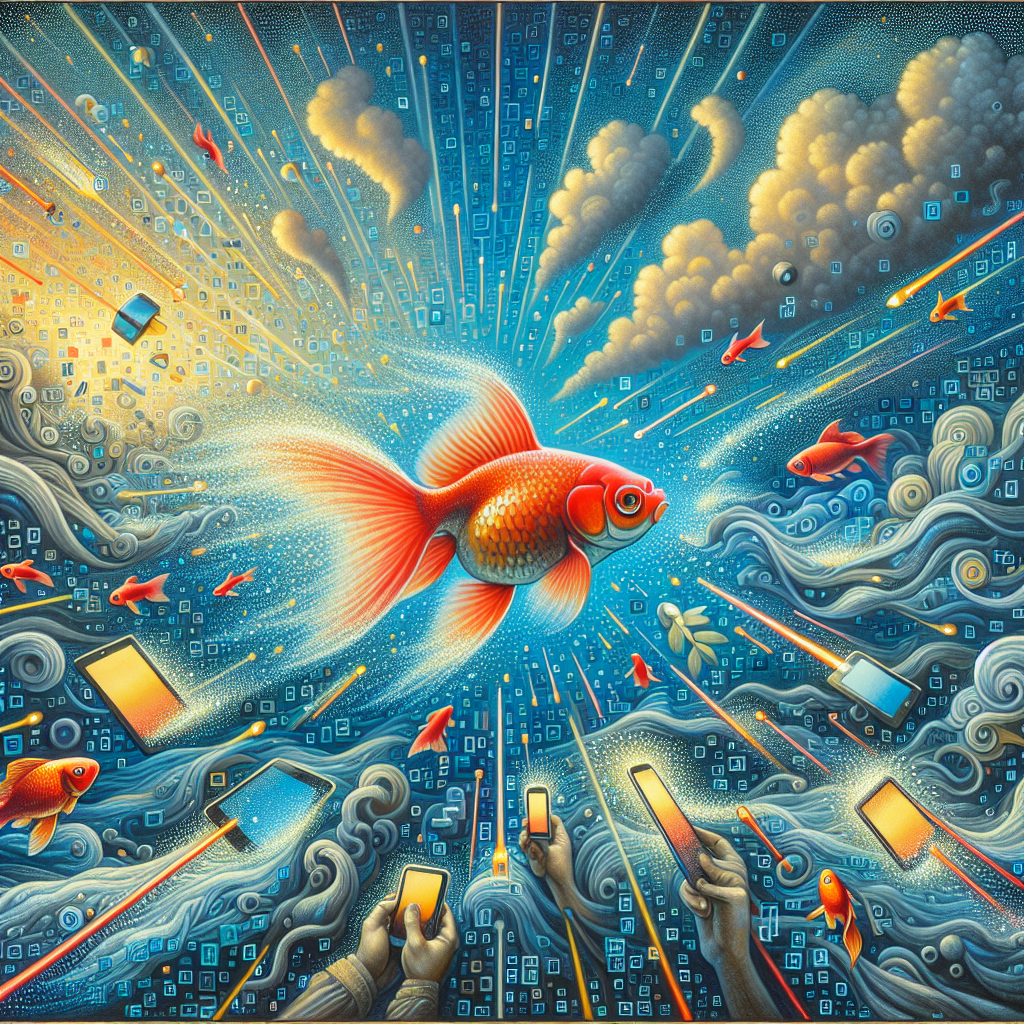
The data is stark and unforgiving. The average human attention span now sits at **8.25 seconds**—shorter than a goldfish—down from 12 seconds in 2000.[1] We’ve watched this decline unfold in real time: screen-based focus plummeted from 2½ minutes in 2004 to just 47 seconds today.[1] Social media users who could once concentrate on a single post for 12.1 seconds in 2015 now manage merely 8.25 seconds.[3] The trajectory seems inevitable, almost predetermined. But what if it isn’t?
The conventional narrative treats shrinking attention spans as an unstoppable consequence of technology. We’ve internalized this story so thoroughly that it feels like destiny. Yet buried within the research are hints of alternative futures—paths we might still choose if we recognize the fork in the road while we’re still standing at it.
## The Pessimistic Ending We’re Heading Toward
Without intervention, the current trajectory suggests a grim future. Smartphone multitasking has surged 84% since 2016, correlating directly with declining focus.[3] Users under 25 now switch focus every 39 seconds, up from 47 seconds just six years ago.[3] “Phantom notification syndrome” affects 78% of Gen Z, creating a psychological state where concentration becomes nearly impossible even when devices are silent.[3] Children show attention spans of just 29.6 seconds in continuous performance tests, declining 27% over the session.[1]
This path leads somewhere dark: a society of perpetually distracted individuals, unable to engage deeply with complex ideas, relationships, or creative work. Workplaces become less productive despite more technology. Education suffers as students cannot sustain focus long enough to master difficult subjects. Mental health deteriorates—Dr. Gloria Mark’s research shows that as attention spans shrink, perceived stress levels and heart rates rise.[4] We become consumers of content rather than creators of meaning.
## The Optimistic Ending: Technology as Solution
But there’s another possibility. What if the tools fragmenting our attention become instruments of restoration?
Consider the emerging evidence: video microlearning boosts attention from 8 seconds to 120 seconds.[1] This isn’t magic—it’s intentional design. When content is structured to match our current capabilities while gradually expanding them, attention can actually improve. We don’t have to accept 8-second focus as a ceiling; it might be a floor we’re standing on.
The most promising sign comes from 2025 research showing that **mobile-first users have 20% lower sustained attention than desktop-first users**.[3] This suggests the problem isn’t technology itself—it’s *how* we’ve designed our digital environments. The same innovation that created infinite scroll and algorithmic feeds could create focus-preserving interfaces.
Startups in 2025 are already investing in focus-first platforms, limiting scroll time and push notifications to foster healthier digital behaviors.[3] Stanford researchers developed the “Digital Focus Quotient,” a metric for measuring cognitive endurance on social platforms.[3] These aren’t band-aids; they’re frameworks for reimagining digital spaces from the ground up.
## The Nuanced Ending: Stratification and Choice
Perhaps the most realistic future lies somewhere between utopia and dystopia. The data hints at this already: older adults maintain stable attention spans of 67 seconds, slightly lower than young adults but remarkably consistent.[1] Baby Boomers average 20 seconds while Gen Z averages 8 seconds.[1] Age and experience matter.
This suggests an uncomfortable truth: attention span may become a marker of inequality. Those who cultivate focus—through education, deliberate practice, or access to focus-preserving technologies—will maintain cognitive advantages. Those who don’t will find themselves increasingly marginalized in work requiring deep concentration. We might see the emergence of “attention literacy” as a crucial skill, taught explicitly in schools and workplaces.
Alternatively, we could see genuine bifurcation: some digital spaces designed for rapid consumption, others engineered for deep focus. Rather than one universal attention span, we’d have contextual attention—8 seconds for scrolling, 120 seconds for learning, hours for meaningful work. This requires intention and infrastructure, but it’s not impossible.
## The Choice We Still Have
The crucial insight from the research is that **attention span decline correlates with technology design, not with human neurology**. We haven’t fundamentally changed as a species in 15 years. Our brains haven’t shrunk or rewired irreversibly. We’ve simply optimized our environments for distraction.
Which ending we get depends on choices made now—by technologists, policymakers, educators, and individuals. Do we continue designing for engagement metrics that reward rapid attention-switching? Or do we redesign for human flourishing, even if it means less total engagement?
Neurofeedback games and ambient attention cues are being tested.[3] Focus-first platforms are launching. The technology to support sustained attention exists; we’re just not deploying it at scale.
The story of modern attention spans doesn’t have to end in fragmentation and decline. We’ve written the pessimistic chapters through inattention and misaligned incentives. But the final chapters remain unwritten. The question isn’t whether our attention spans will recover—it’s whether we’ll choose to make that recovery a priority before the alternative endings become irreversible.
Original source: NPR News – Opinion: Alternate endings for modern attention spans