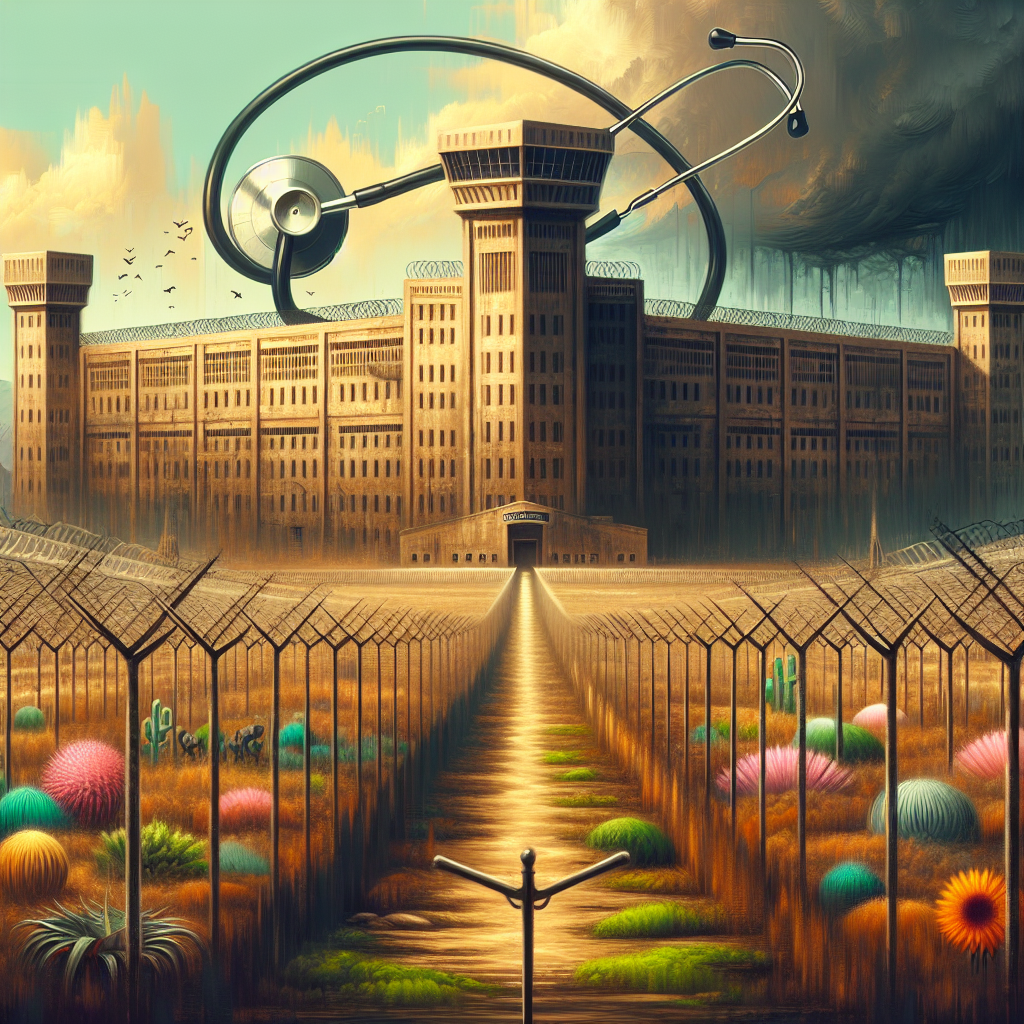
# How Systemic Failures Turn State Mental Hospitals Into Prisons
The United States faces a mental health crisis that has quietly transformed America’s correctional facilities into de facto psychiatric institutions. What began as deinstitutionalization—a well-intentioned movement to close large state mental hospitals—has evolved into a systemic failure that criminalizes mental illness rather than treating it. Today, jails and prisons house more individuals with serious mental illness than any psychiatric hospital in the nation, a troubling reality that demands our attention.
## The Collapse of Psychiatric Hospital Infrastructure
The numbers tell a stark story. Nationally, the number of state hospital beds for adults with serious mental health issues reached a historic low in 2023 with only 36,150 beds available—a 17% decline from 2017.[3] Meanwhile, approximately 20% of jail inmates and 15% of state prison inmates have a serious mental illness, translating to roughly 383,000 individuals behind bars.[2][5] To put this in perspective, Los Angeles County Jail, Cook County Jail in Chicago, and Rikers Island in New York each house more mentally ill individuals than any psychiatric hospital remaining in the United States.[5]
This inversion represents a catastrophic policy failure. While 6% of U.S. adults have serious mental illness, their prevalence in correctional facilities is three to four times higher.[2] The system has effectively criminalized a medical condition, funneling vulnerable people into institutions designed for punishment rather than healing.
## The Domino Effect on Local Systems
The consequences of reduced psychiatric bed capacity ripple through every community system. In New York City, the effects have been particularly severe. As of June 2025, approximately 1,600 seriously mentally ill individuals were incarcerated in city jails—a figure that far exceeds the bed count of New York’s largest psychiatric hospitals, each of which maintains only about 340 adult beds.[1] This overcrowding in jails represents a direct consequence of insufficient psychiatric hospital capacity.
The problem extends beyond criminal justice. Homeless services, emergency rooms, and community health systems have all become overwhelmed as psychiatric hospitals shed beds without establishing adequate community alternatives. The shift from state-funded asylums to county-funded jails and prisons has strained local resources to the breaking point, with recruitment challenges and inadequate infrastructure further complicating care delivery.[2]
## The Waitlist Crisis
Perhaps most alarming is the growing backlog of individuals waiting for psychiatric care. In some states, waitlists for secure psychiatric facilities have ballooned to unprecedented lengths. In Alabama, the waitlist for the state’s sole secure psychiatric facility is almost five times longer than it was seven years ago, according to court documents released in September.[3] Similar patterns have emerged across the country, with 31 states reporting increased waits for state hospital beds.[6]
These waitlists have devastating human consequences. Individuals in acute psychiatric crisis languish in jail cells designed for temporary holding, sometimes for weeks or months. In documented cases, suicidal inmates have been held in “telephone-booth sized cages without toilets” for prolonged periods because psychiatric hospitals have no available beds.[7] This is not treatment—it is abandonment masked by bureaucratic necessity.
## Conditions That Mirror Incarceration
Adding insult to injury, the psychiatric hospitals that do exist increasingly resemble prisons rather than healing environments. Healthcare professionals and patients describe inpatient hospital environments as carceral in nature, with conditions explicitly noted as “not conducive to well-being or recovery.”[4] Patients face unappetizing food, uncomfortable bedding, minimal privacy in showers, and severe restrictions on outdoor access—despite growing scientific evidence linking nature exposure to improved mental well-being.[4]
Safety remains a persistent concern, particularly for female patients. With patients outnumbering supervisors, sexual harassment and physical violence thrive in social spaces, often underreported due to normalization among staff.[4] The vast majority of mental hospital patients are not hospitalized for violent behavior, yet they endure conditions similar to those imposed on violent criminals.
## Attempted Solutions Fall Short
States have begun recognizing the crisis and attempting remedies. New York added 200 new psychiatric beds in 2024 and changed state law in 2025 to explicitly incorporate failing to meet basic living needs as a standard for involuntary commitment, adding 100 forensic beds.[1] Nationally, 12 states have added forensic, civil, or crisis beds, while 10 states have expanded crisis stabilization units and mobile crisis teams.[6] Two states have opened 158 intermediate-level beds with plans for 85 more in 2025.[6]
However, these efforts remain insufficient. Construction projects like Alabama’s planned 80 additional beds face critical staffing shortages—the infrastructure exists, but trained mental health professionals do not.[3] Without adequate compensation and working conditions, recruitment and retention remain persistent challenges.
## The Path Forward
The transformation of jails and prisons into America’s largest mental health facilities represents a profound systemic failure. We have created a vicious cycle: insufficient psychiatric beds force individuals into the criminal justice system, where they receive inadequate mental health treatment and often cycle back into the community more traumatized than before.
Solving this crisis requires sustained investment in psychiatric infrastructure, competitive salaries for mental health professionals, and community-based alternatives that prevent crisis situations from escalating. Until policymakers prioritize genuine mental health treatment over criminalization, America’s most vulnerable citizens will continue to suffer in institutions designed for punishment rather than healing. The question is not whether we can afford to fix this system—it is whether we can afford not to.
Original source: NPR News – How systemic failures turn state mental hospitals into prisons