Full HTML article body
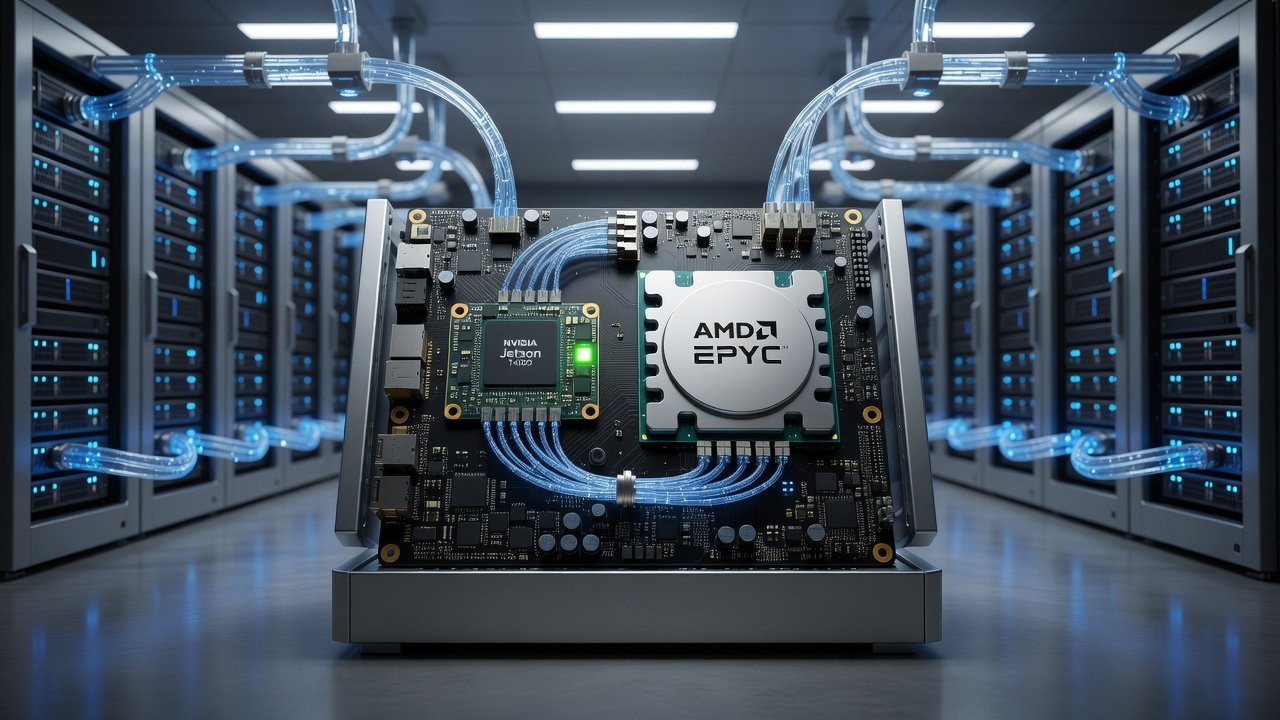
The hardware underpinning artificial intelligence is undergoing a rapid transformation. From NVIDIA’s latest edge AI hardware, the Jetson T4000, boasting 1200 TFLOPS, to AMD’s 2nm EPYC Venice processors, the landscape is evolving. Neuromorphic AI is also making strides, indicating a significant shift in edge AI and robotics hardware in 2026. The central theme: AI compute is moving closer to the edge, and the chips making that possible are getting smaller, faster, and more efficient.
2.
NVIDIA Jetson T4000: 1200 TFLOPS at the Edge
The most substantive announcement came from NVIDIA at CES 2026. The company unveiled the Jetson T4000, which delivers an astounding 1200 TFLOPS of performance. This new chip is designed to handle complex AI workloads directly at the edge, reducing latency and bandwidth requirements. With the Jetson T4000, developers can build applications that require real-time processing, such as autonomous vehicles and smart city infrastructure.
In addition to the performance boost, NVIDIA has also improved the power efficiency of the Jetson T4000, making it suitable for deployment in a variety of environments, from industrial settings to consumer electronics.
3.
AMD’s 2nm EPYC: A Game Changer for Data Centers
AMD’s latest offering, the 2nm EPYC Venice, is set to revolutionize data centers. With its advanced 2nm process technology, the EPYC Venice promises higher performance and lower power consumption compared to its predecessors. This chip is designed to handle the increasing demands of cloud computing and AI workloads, making it a perfect fit for modern data centers.
4.
Neuromorphic AI: The Future of Computing
Neuromorphic computing is gaining traction as a viable alternative to traditional computing architectures. By mimicking the way the human brain processes information, neuromorphic chips can perform complex tasks with minimal energy consumption. Companies are investing heavily in this technology, and we can expect to see significant advancements in the coming years.
5.
Conclusion
The race for edge AI hardware is heating up, with NVIDIA and AMD leading the charge. As these companies continue to innovate, we can expect to see more powerful and efficient chips that will enable a new generation of AI applications. The future of computing is at the edge, and it’s an exciting time to be involved in this rapidly evolving field.