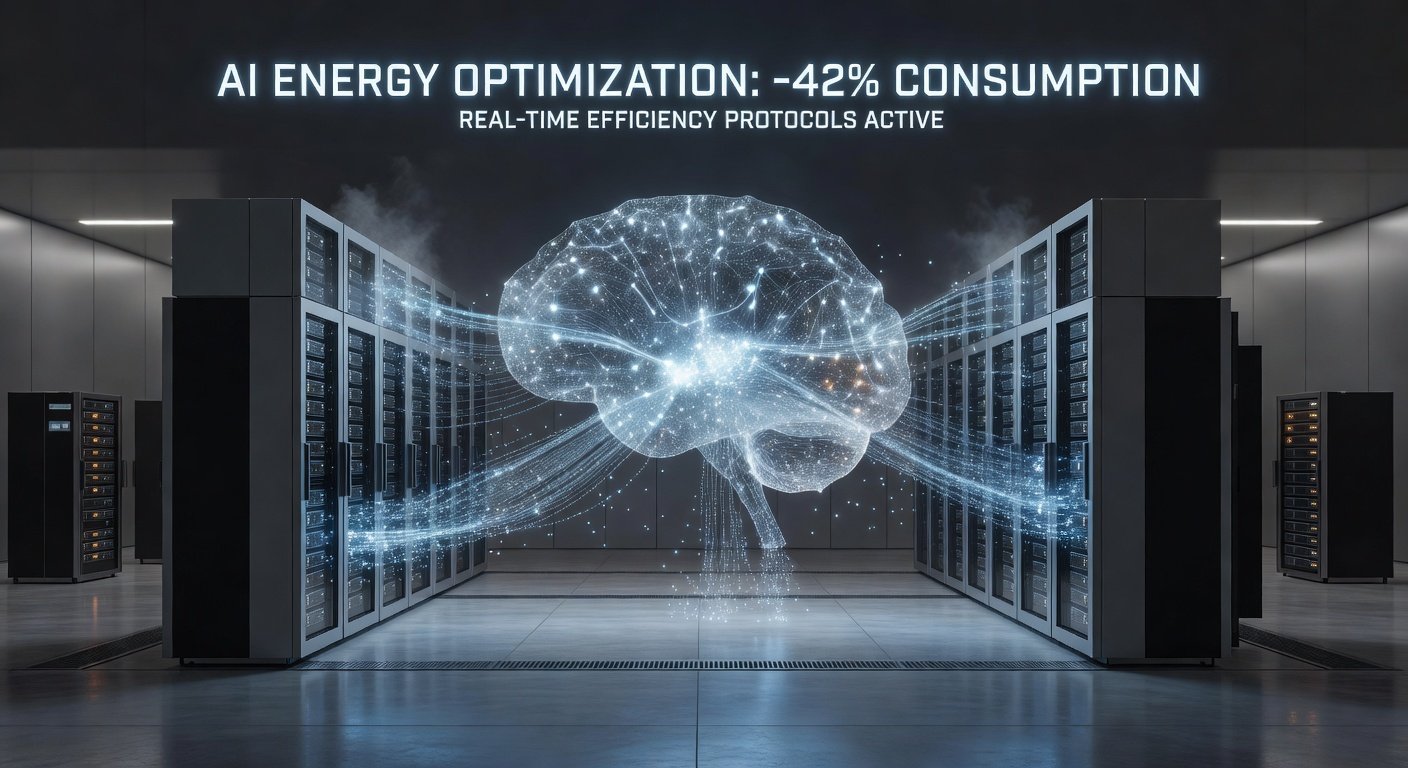
AI Energy Efficiency Breakthrough Could Cut Compute Use by 100×
A single number is dominating AI research conversations today: 100×. According to researchers, this is the potential energy savings that could be achieved through a new AI efficiency breakthrough. The implications of this are staggering, as it could mean a significant reduction in energy consumption while simultaneously improving the accuracy of AI models. For instance, advancements in brain MRI AI and Mars rover autonomy are just a few examples of how AI is being integrated into various fields, enhancing capabilities and efficiency.
AI training and inference are energy-intensive processes, often requiring vast amounts of computational power. However, with the new methods being developed, researchers are optimistic about the future of AI and its environmental impact. The breakthrough involves optimizing algorithms and utilizing more efficient hardware, which could lead to a paradigm shift in how AI systems are designed and deployed.
The Energy-Efficient Future of AI
AI training and inference are energy-intensive processes, often requiring vast amounts of computational power. However, with the new methods being developed, researchers are optimistic about the future of AI and its environmental impact. The breakthrough involves optimizing algorithms and utilizing more efficient hardware, which could lead to a paradigm shift in how AI systems are designed and deployed.
In addition to energy savings, this breakthrough could also lead to improved accuracy in AI models. By reducing the computational load, researchers can focus on refining algorithms and enhancing the overall performance of AI systems. This could have far-reaching implications across various industries, from healthcare to autonomous vehicles.
As AI continues to evolve, the focus on energy efficiency will become increasingly important. Researchers are already exploring ways to integrate these new methods into existing AI frameworks, ensuring that the benefits of this breakthrough are realized as quickly as possible.