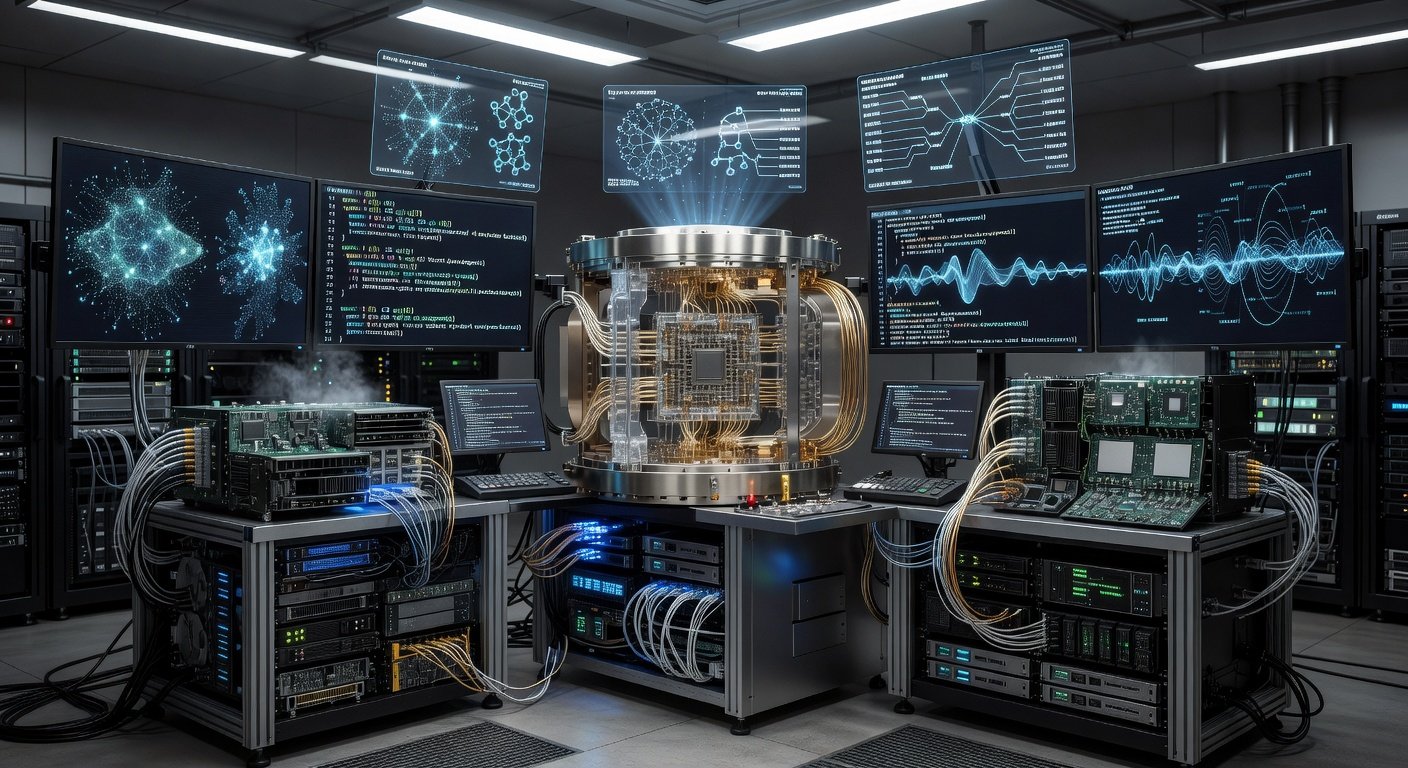
Quantum Computing and AI
Quantum computing has long promised to transform how we solve the world’s hardest problems. This week, two of the biggest players in the field, NVIDIA and IBM, made significant strides in this area. NVIDIA’s new Ising AI models deliver 2.5 times faster quantum error correction, while IBM has released a blueprint for quantum supercomputing. Here’s what it means for the industry.
NVIDIA’s Ising AI models are designed to improve quantum error correction, a critical component in making quantum computing practical. By leveraging advanced machine learning techniques, these models can identify and correct errors in quantum computations more efficiently than ever before. This breakthrough could pave the way for more reliable quantum systems that can tackle complex problems across various industries.
On the other hand, IBM’s quantum supercomputing blueprint outlines a roadmap for the future of quantum computing. It includes strategies for scaling quantum systems and integrating them with classical computing resources. This hybrid approach is essential for maximizing the potential of quantum technology and ensuring that it can be applied to real-world challenges.
As these two companies push the boundaries of what’s possible in quantum computing, the implications for industries ranging from finance to healthcare are profound. The ability to solve problems that are currently intractable could lead to breakthroughs in drug discovery, optimization, and beyond.
In conclusion, the advancements made by NVIDIA and IBM in quantum computing and AI are setting the stage for a new era of technological innovation. As these technologies continue to evolve, we can expect to see significant changes in how we approach complex problems and drive progress across various sectors.