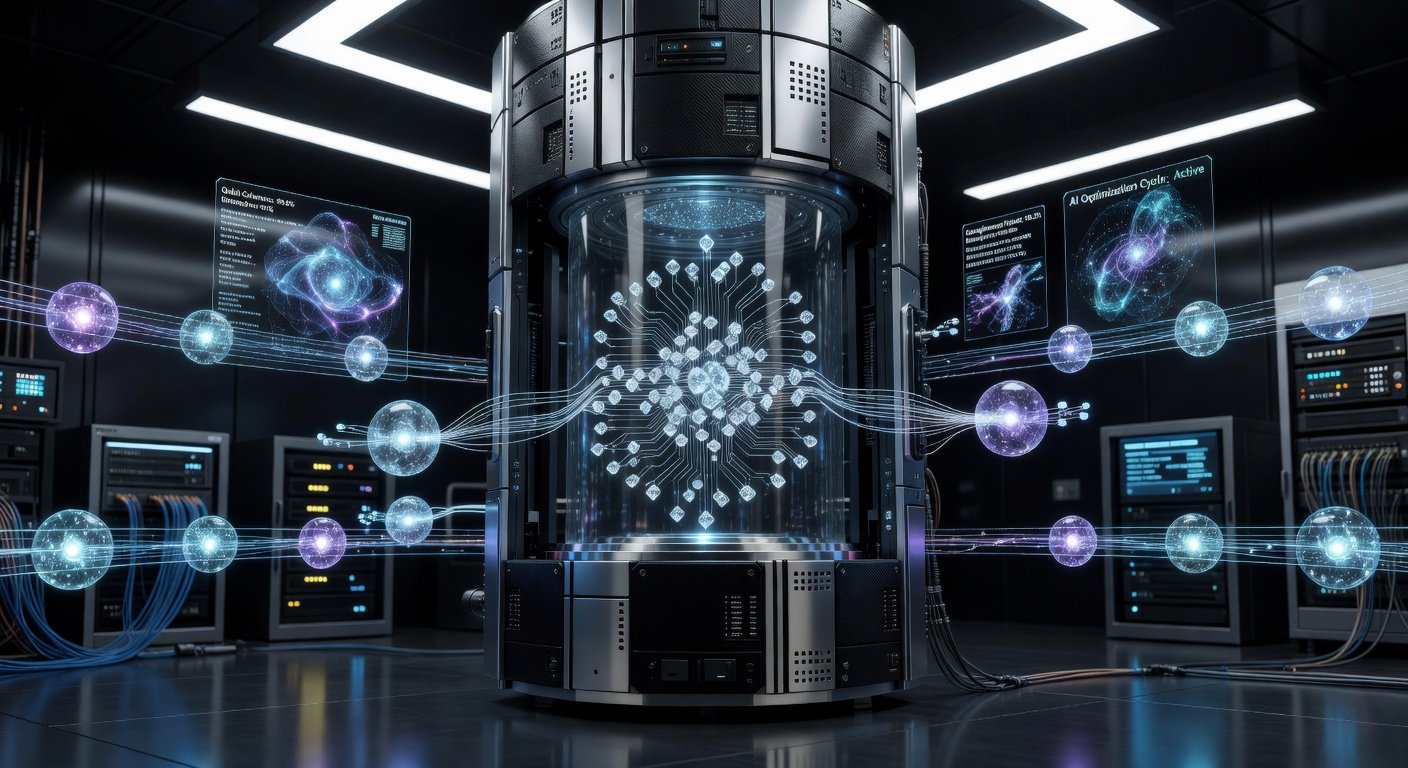
Quantum Computing and AI: A New Era
Quantum computing has long promised breakthroughs in processing power, and NVIDIA’s recent advancements in Ising models are a testament to this potential. These models, designed for quantum error correction, have shown to deliver three times better performance than traditional methods. As we look towards 2026, the convergence of AI and quantum computing is set to reshape the landscape of technology.
In recent developments, Google has introduced TurboQuant, a new quantum processing unit that enhances the efficiency of AI algorithms. This innovation, alongside NVIDIA’s AlphaEvolve, marks a significant step forward in the quest for more efficient AI systems. The integration of quantum computing into AI workflows could lead to unprecedented advancements in various fields, from healthcare to finance.
However, the journey is not without challenges. The complexity of quantum systems and the need for specialized knowledge in both AI and quantum mechanics pose significant hurdles. Researchers and developers must collaborate to bridge the gap between these two domains, ensuring that the potential of quantum computing is fully realized.
As we move forward, it is crucial to remain aware of the ethical implications of these technologies. The power of AI, when combined with quantum computing, could lead to significant societal changes. It is essential to approach these advancements with caution, ensuring that they are used for the benefit of all.
In conclusion, the intersection of AI and quantum computing represents a frontier of innovation. With companies like NVIDIA and Google leading the charge, the next few years will be pivotal in determining how these technologies will shape our future.