Full HTML article body
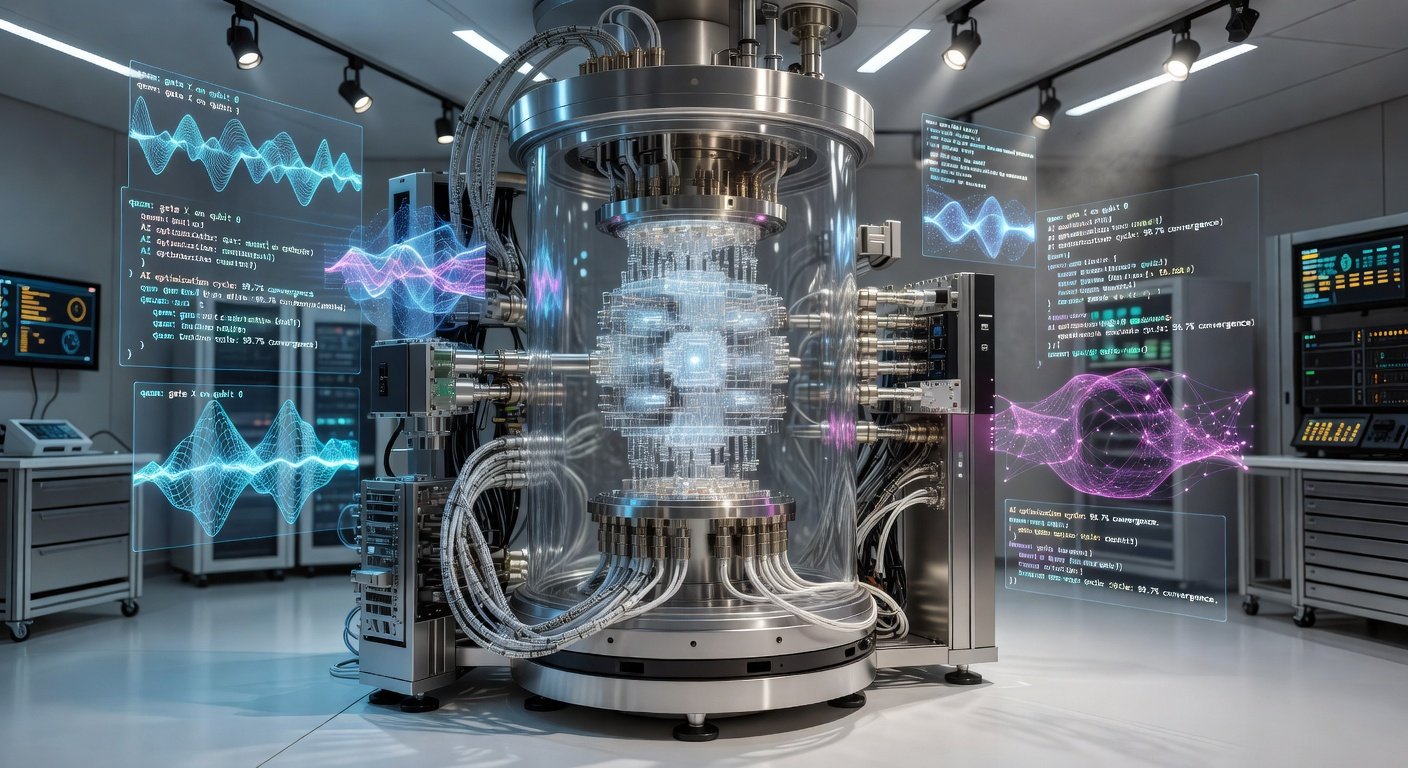
AI and quantum computing have long been treated as parallel tracks. This week, they converged in a new family of open-source AI models built specifically for quantum error correction. At the same time, Google researchers unveiled a memory-compression breakthrough for large language models, and Tsinghua University unveiled a new photorealistic image generation that processes data at 12.5 GHz using light. The theme running through all of it: AI is reshaping the future of quantum computing.
1
NVIDIA AI to Quantum Source Ising Models
The headline number is compelling: according to NVIDIA, Ising AI models deliver 2.5x faster quantum error correction than traditional methods. This is a significant leap forward, especially as quantum computing continues to evolve. The models are designed to work with the latest quantum hardware, making them a valuable tool for researchers and developers alike.
The headline number is compelling: according to NVIDIA, Ising AI models deliver 2.5x faster quantum error correction than traditional methods. This is a significant leap forward, especially as quantum computing continues to evolve. The models are designed to work with the latest quantum hardware, making them a valuable tool for researchers and developers alike.
What makes Ising models unique is their ability to adapt to the specific needs of quantum systems. By leveraging AI, these models can optimize error correction processes, ensuring that quantum computations are more reliable and efficient. This is crucial as we move towards more complex quantum applications.
AI and quantum computing have long been treated as parallel tracks. This week, they converged in a new family of open-source AI models built specifically for quantum error correction. At the same time, Google researchers unveiled a memory-compression breakthrough for large language models, and Tsinghua University unveiled a new photorealistic image generation that processes data at 12.5 GHz using light. The theme running through all of it: AI is reshaping the future of quantum computing.
2
Google Pushes Model Efficiency
Google’s latest advancements in AI are not just about speed; they also focus on efficiency. The new memory-compression techniques allow large language models to operate with significantly less memory, making them more accessible for a wider range of applications. This is particularly important as AI continues to integrate into various sectors, from healthcare to finance.
3
Tsinghua University’s Photorealistic Image Generation
Meanwhile, Tsinghua University has made strides in photorealistic image generation. Their new model can generate high-quality images at unprecedented speeds, thanks to its innovative architecture. This development has implications for industries such as gaming, film, and virtual reality, where realistic visuals are paramount.
In conclusion, the intersection of AI and quantum computing is paving the way for groundbreaking advancements. With NVIDIA’s Ising models leading the charge in quantum error correction, Google enhancing model efficiency, and Tsinghua University pushing the boundaries of image generation, the future looks promising for both fields.