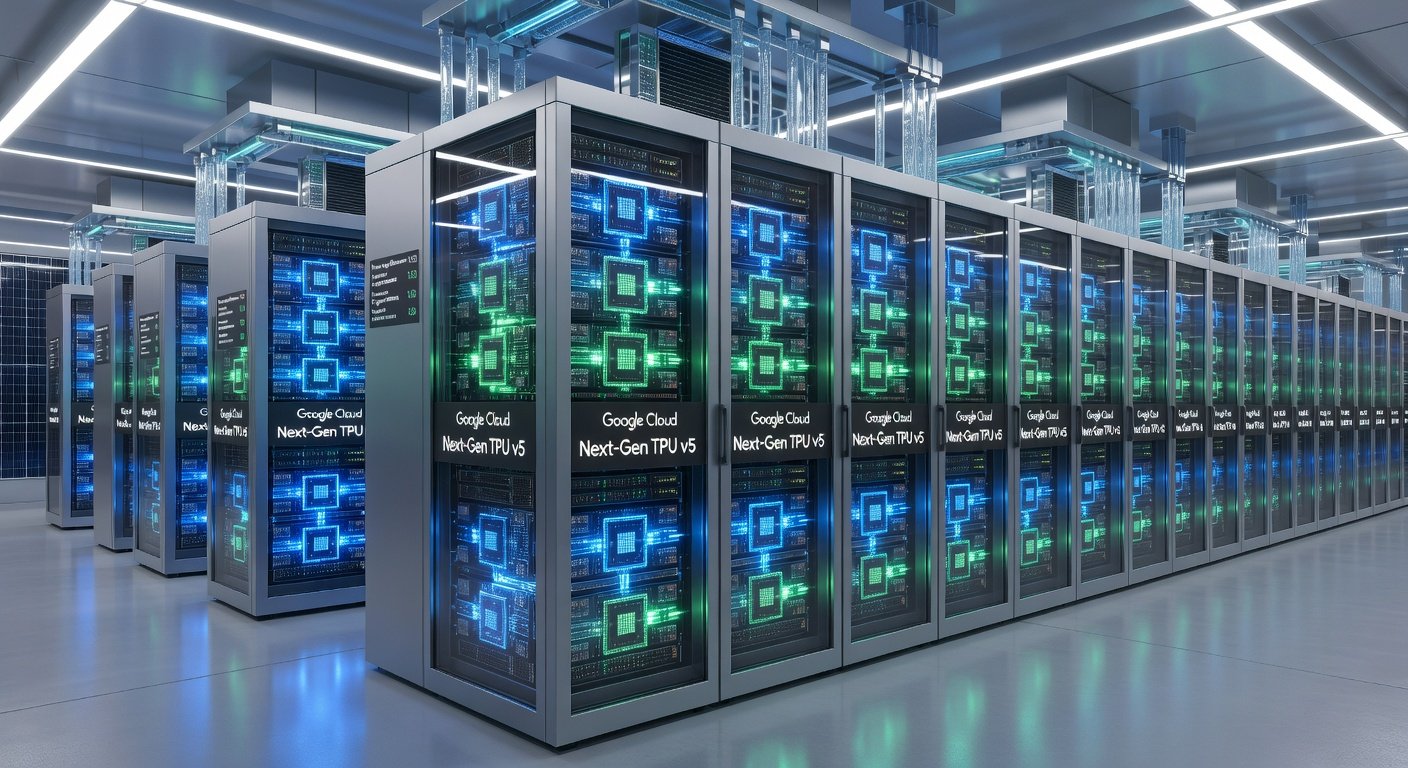
What Google’s New TPUs Mean for AI
As the race to power larger, faster, and more efficient AI models intensifies, Google Cloud has made a significant move. The company unveiled its next-generation Tensor Processing Units (TPUs), which are designed to accelerate AI computing workloads. This development comes at a time when the industry is eyeing the convergence of quantum computing and AI. The implications for cloud AI infrastructure in 2026 are profound.
TPUs are specialized hardware designed to perform tensor processing, which is a key operation in machine learning. Google has made a name for itself in the AI space, and these new TPUs are set to enhance its capabilities further. The company claims that the new TPUs will provide unprecedented performance, allowing developers to train larger models more quickly and efficiently.
One of the standout features of the new TPUs is their ability to handle complex computations with ease. This is particularly important as AI models continue to grow in size and complexity. The new TPUs are expected to support a wide range of applications, from natural language processing to computer vision, making them a versatile tool for developers.
Moreover, Google Cloud’s commitment to sustainability is evident in the design of these TPUs. The company has focused on energy efficiency, ensuring that the new hardware not only performs well but also minimizes its environmental impact. This aligns with the growing demand for sustainable computing solutions in the tech industry.
As we look towards the future, the introduction of these next-gen TPUs signals a new era for AI computing infrastructure. With the potential for faster training times and more efficient processing, developers will be better equipped to tackle the challenges of tomorrow’s AI applications.