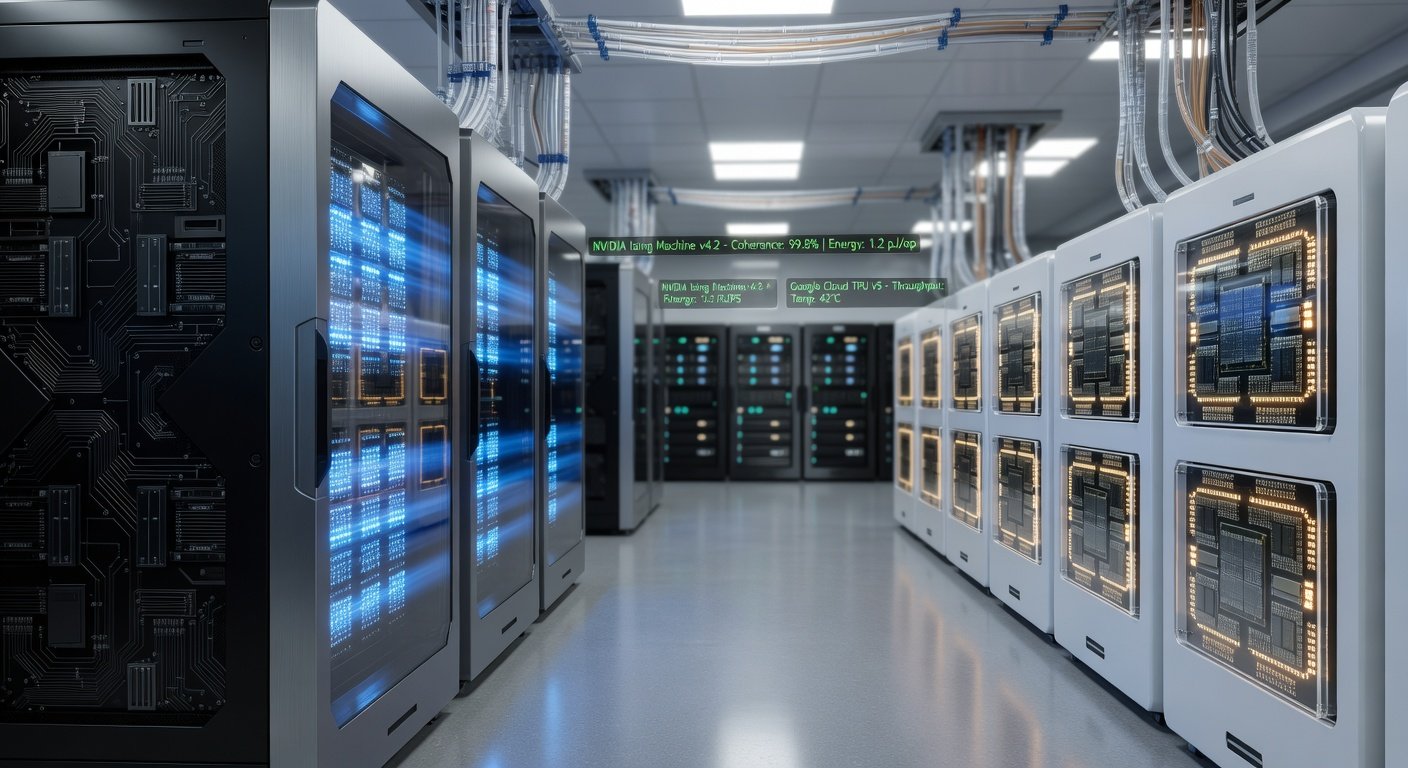
The AI hardware race just accelerated.
With the ten days in April 2026, two of the most influential companies in tech have announced significant advancements in AI infrastructure. Google Cloud has unveiled its next-generation TPU chips, while NVIDIA has introduced its Ising quantum AI models. These developments signal a new era for AI and cloud computing infrastructure.
For AI practitioners, startup founders, and researchers watching the compute landscape, these are not incremental upgrades. They represent a structural shift in how AI workloads will be handled, trained, and deployed at scale.
NVIDIA’s Ising Machines Bring Quantum Advantage
On April 14, 2026, NVIDIA’s Ising Machines bring quantum computing capabilities to the forefront. This technology allows for complex problem-solving that classical hardware struggles with, training and deploying AI models that are more efficient and powerful.
Ising Machines leverage quantum mechanics to optimize solutions for various applications, from logistics to finance, and are expected to revolutionize how AI models are trained.
Google’s TPU Chips: A Leap Forward
On April 22, 2026, Google Cloud’s TPU chips have been redesigned to handle AI workloads more efficiently. These chips are optimized for machine learning tasks, providing faster processing times and lower latency.
With these advancements, Google aims to support the growing demand for AI applications, ensuring that developers have the tools they need to build and scale their projects effectively.
Conclusion
As NVIDIA and Google push the boundaries of AI infrastructure, the implications for the industry are profound. The combination of quantum computing and advanced TPU chips will enable new possibilities for AI applications, making it an exciting time for developers and researchers alike.