Full HTML article body
Artificial intelligence is emerging as the next frontier in AI’s quest to do more with less. From Google’s latest quant computing advancements to optical AI chips and artificial neurons, the landscape is rapidly evolving. This week’s developments demonstrate that the industry is seriously rethinking how AI can be optimized for efficiency and performance.
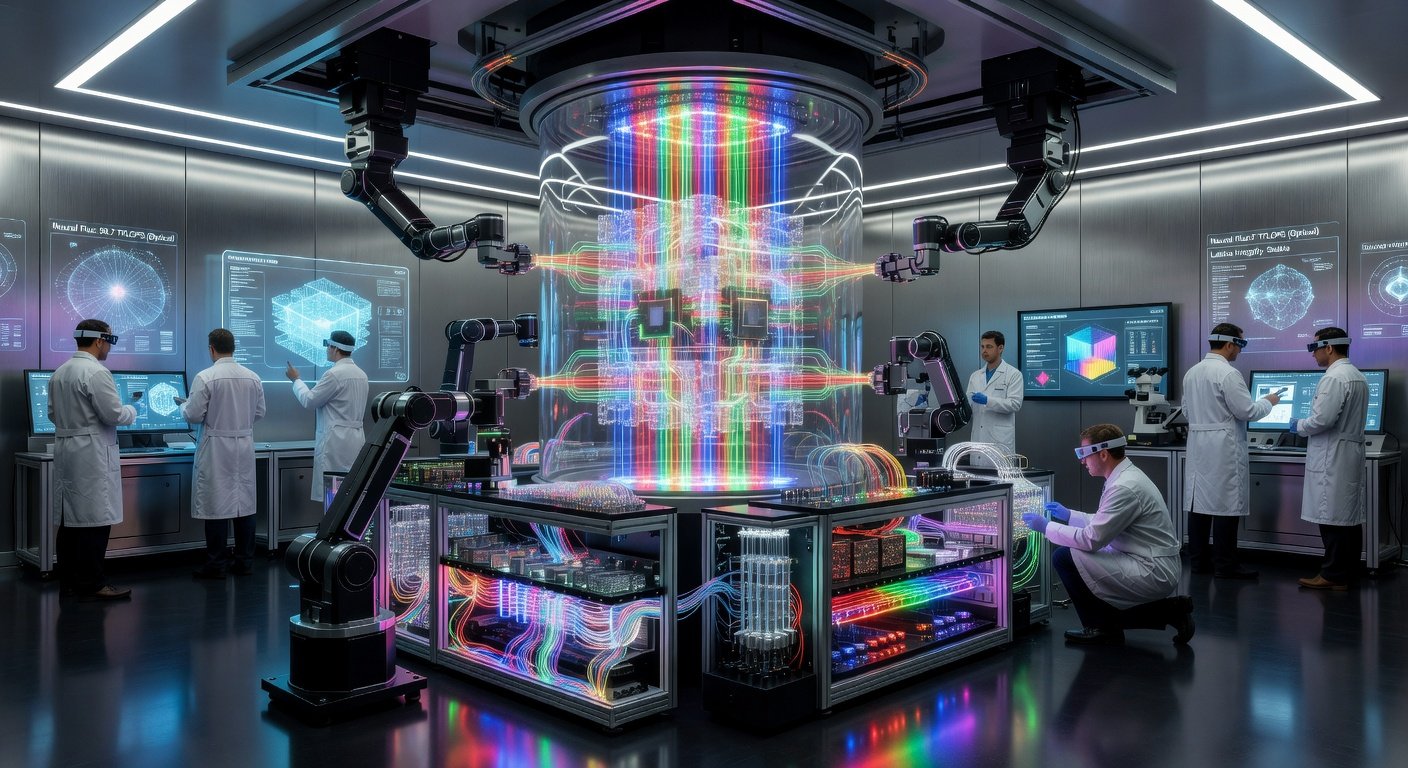
Google’s TurboQuant tackles one of AI’s most persistent bottlenecks: the need for faster processing without exponentially increasing energy consumption. This week’s announcements reveal a new approach to AI that leverages optical computing to enhance speed while reducing the carbon footprint.
As AI continues to integrate into various sectors, the implications for cloud computing and machine learning are profound. The introduction of optical chips could lead to a new era of AI applications that are not only faster but also more sustainable.
In addition to hardware advancements, the software side is also seeing significant improvements. New algorithms are being developed that can take advantage of these optical systems, allowing for more complex computations to be performed in real-time.
As we look ahead, the race to optimize AI efficiency is just beginning. With companies like Google leading the charge, we can expect to see more innovations that will redefine what is possible in the realm of artificial intelligence.