Full HTML article body
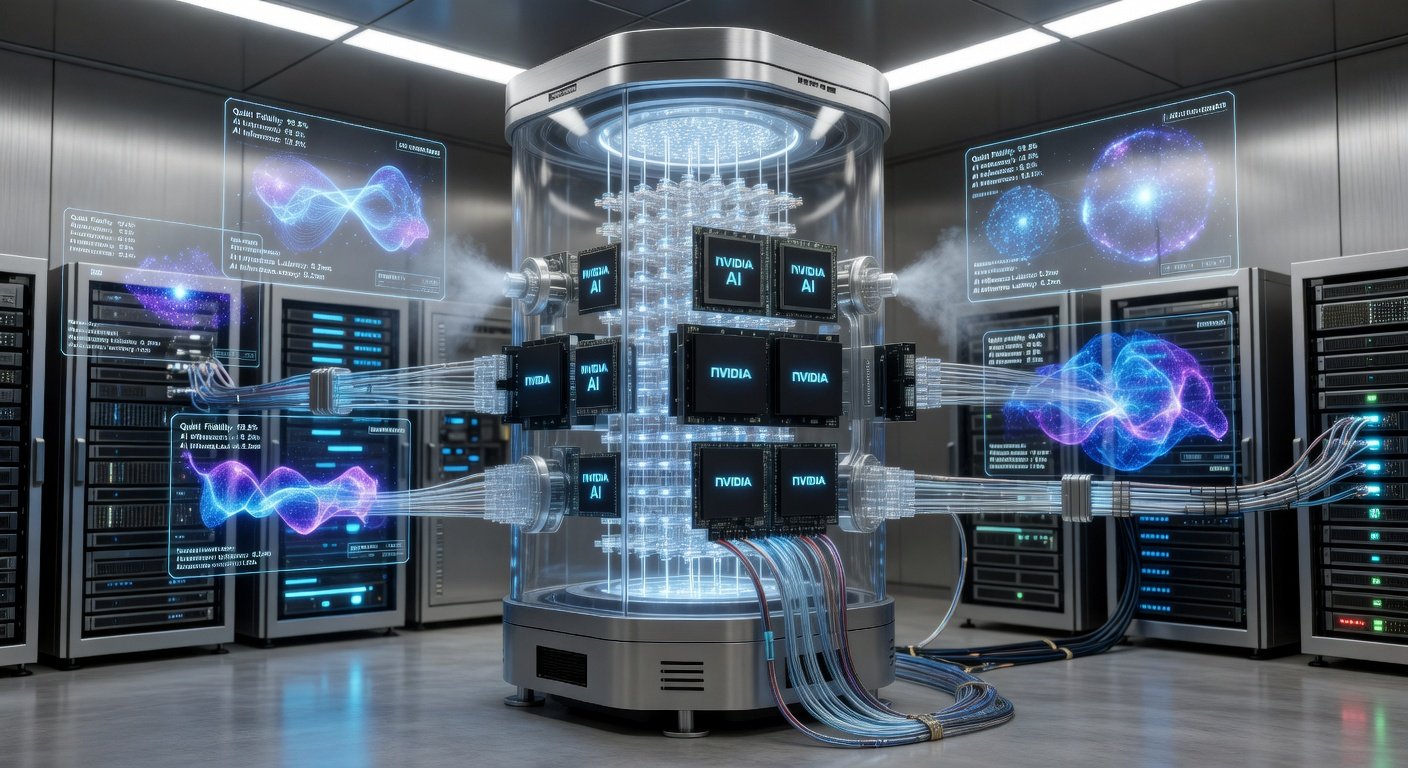
The quantum-AI convergence is no longer a theoretical horizon. As of April 2026, NVIDIA’s Ising models are delivering 2.5x faster quantum error correction. Here’s what the quantum-AI convergence means for machine learning and cloud computing in 2026.
Announced in mid-April 2026, NVIDIA’s Ising AI models are reshaping operational paradigms in quantum computing. The quantum-AI convergence is not just a buzzword; it is a reality that is transforming how deep learning models have demonstrated strong capabilities in addressing complex problems. The quiet periods in the tech trends emerging from the trends emerging from GTC 2026 and recent AI chip developments are worth examining. The quiet periods in the tech trends emerging from the trends emerging from GTC 2026 and recent AI chip developments are worth examining.
NVIDIA’s Ising Models: What the 2.5x Speedup Means
NVIDIA’s Ising models are a class of mathematical structures that have driven the quantum-AI convergence. The Ising model is a mathematical representation of spins in a magnetic field, and it has been adapted to solve optimization problems in AI. The convergence of quantum computing and AI is not just a theoretical exercise; it is a practical application that is reshaping industries.
As the quantum-AI convergence continues to evolve, it is essential to understand the implications for machine learning and cloud computing. The Ising models are not just a theoretical construct; they are being applied in real-world scenarios, demonstrating their effectiveness in solving complex problems.
In conclusion, the quantum-AI convergence is a significant development in the tech landscape of 2026. NVIDIA’s Ising models are at the forefront of this transformation, delivering unprecedented speed and efficiency in quantum error correction. As we move forward, the implications of this convergence will continue to unfold, shaping the future of technology.