Full HTML article body
The line between artificial intelligence and quantum computing is narrowing faster than ever. NVIDIA’s recently launched Ising model delivers 2.5x faster quantum error correction. Here’s what the quantum-AI convergence means for AI, machine learning, and cloud computing.
This is not about distant promises. Quantum-AI convergence is actively reshaping how we design chips, train models, and build infrastructures. Here is what the latest developments signify for the broader industry.
What NVIDIA Is Doing
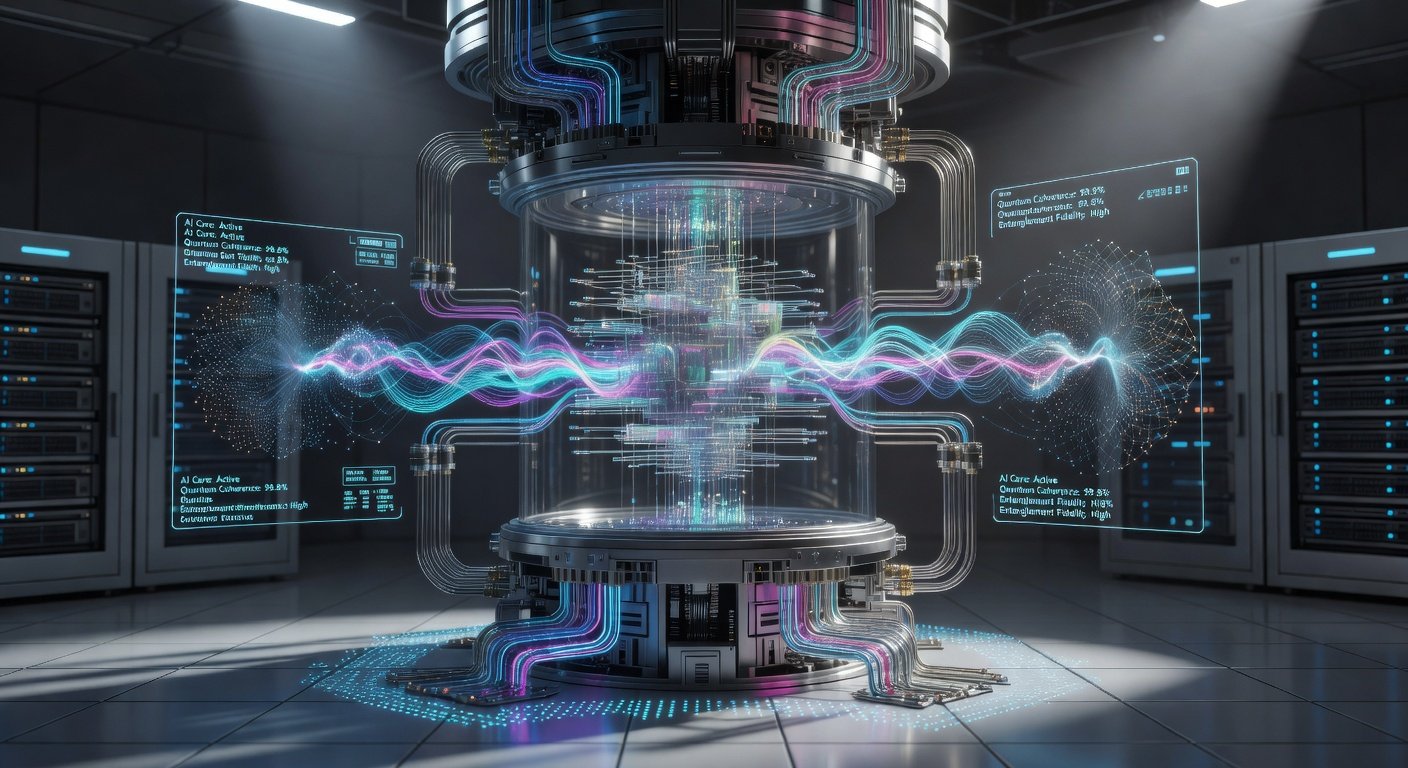
NVIDIA’s Ising models are open AI systems built to tackle one of the most persistent challenges in quantum computing: error correction. The company is leveraging its expertise in AI to enhance quantum systems, making them more reliable and efficient.
By applying machine learning techniques, NVIDIA aims to improve the performance of quantum processors, which are notoriously fragile. This convergence of AI and quantum computing is not just theoretical; it is happening now and will have profound implications for various sectors.
Implications for the Industry
As quantum computing becomes more accessible, industries ranging from finance to healthcare will benefit from enhanced computational capabilities. The ability to solve complex problems that were previously intractable will open new avenues for innovation.
Moreover, the integration of AI with quantum computing will lead to smarter algorithms that can adapt and learn from data in real-time, further accelerating advancements in technology.