Full HTML article body
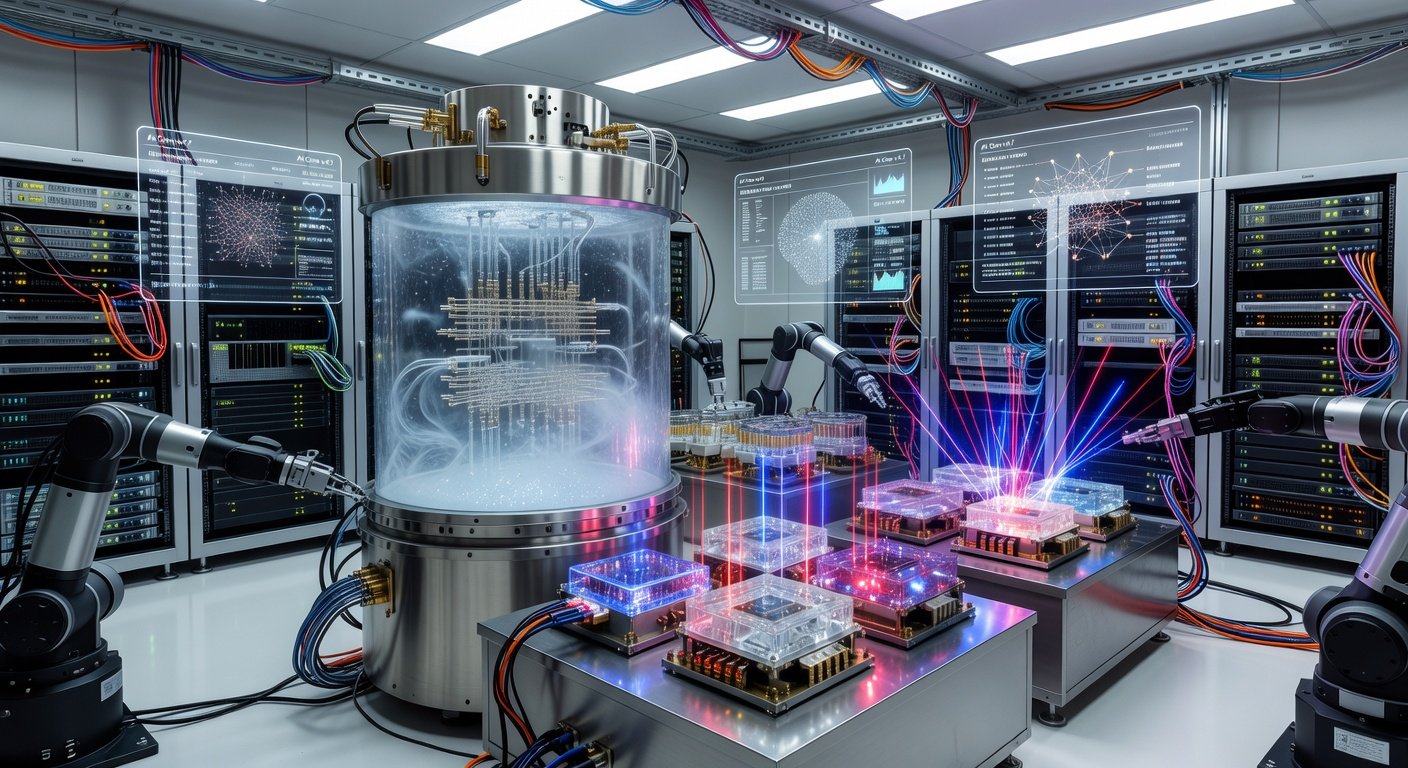
The next era of AI computing may not run on silicon alone. Across universities and research institutions, a wave of hardware breakthroughs are redefining the dominance of conventional GPUs. Optical processors, neuromorphic chips, and quantum computing are emerging as viable alternatives, each promising unprecedented speed and efficiency in machine learning tasks. Together, they signal a shift towards a more diverse and capable hardware landscape for AI applications.
Light-speed optical processors are at the forefront of this revolution. By leveraging the speed of light for data transmission, these processors can perform calculations at unprecedented rates, significantly reducing the time required for complex computations. This technology is particularly promising for applications in real-time data processing and large-scale machine learning models.
Neuromorphic chips, designed to mimic the human brain’s architecture, offer another exciting avenue for AI development. These chips can process information in a way that is more akin to human cognition, allowing for more efficient learning and adaptation. As researchers continue to explore the potential of neuromorphic computing, we may see a new generation of AI systems that can learn and evolve in real-time.
Quantum computing, while still in its infancy, holds the potential to revolutionize AI by solving problems that are currently intractable for classical computers. With the ability to process vast amounts of data simultaneously, quantum computers could unlock new possibilities in machine learning, optimization, and data analysis.
As these technologies continue to develop, the landscape of AI hardware is set to change dramatically. The integration of optical, neuromorphic, and quantum computing into mainstream AI applications could lead to breakthroughs that redefine what is possible in the field of artificial intelligence.