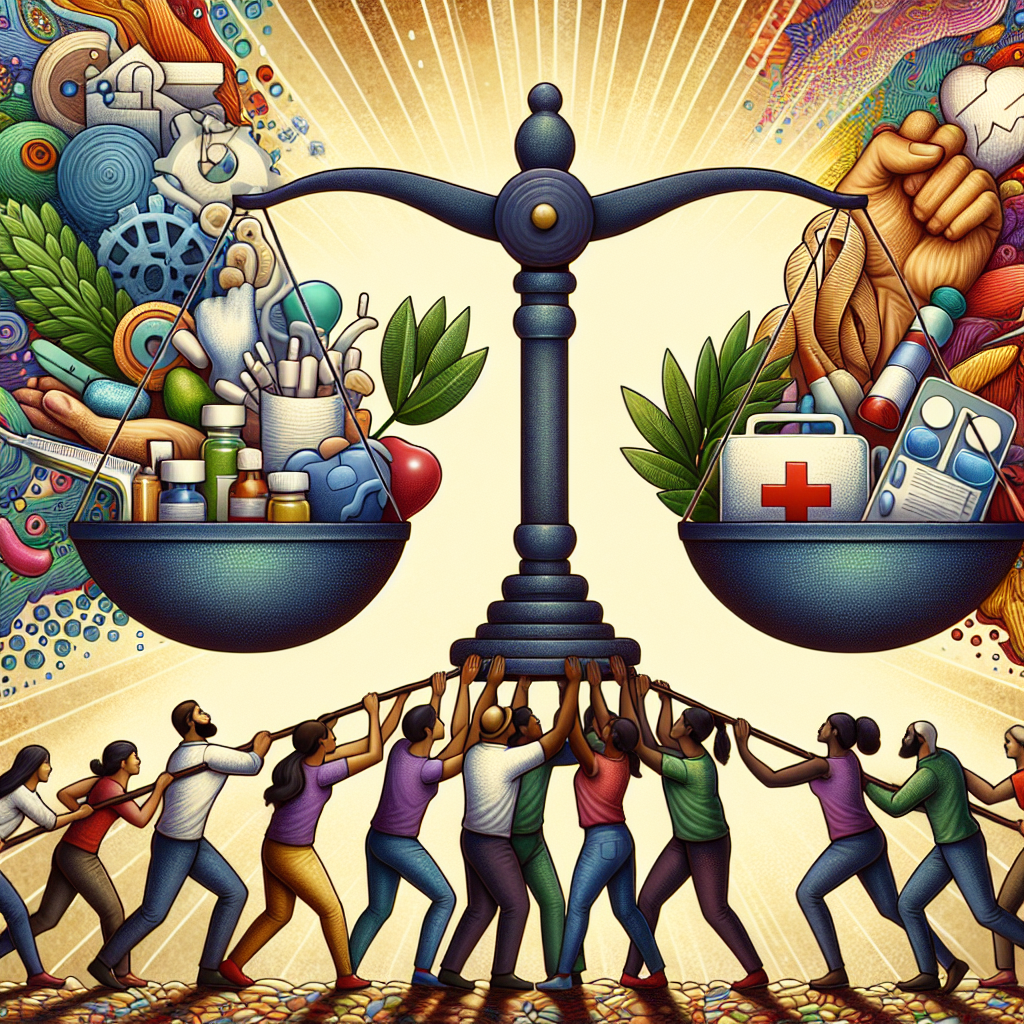
# Martin Luther King Jr. Had a Dream About Health Care
When we think of Martin Luther King Jr.’s legacy, we often recall his iconic “I Have a Dream” speech and his monumental work advancing civil rights. Yet a dimension of his vision that deserves equal recognition is his **passionate advocacy for health justice**—a dream rooted in the conviction that medical inequality represents one of the most egregious forms of human oppression.
## The Forgotten Dimension of King’s Vision
While King’s speeches on racial equality remain central to his remembered legacy, his commitment to health justice was equally fierce and uncompromising. On March 25, 1966, at a press conference in Chicago before addressing the Medical Committee for Human Rights, King articulated a statement that would become foundational to public health discourse: **injustice in health represents the most shocking and inhumane form of inequality**[1]. Yet the exact wording of this declaration—and what it reveals about King’s thinking—has been obscured by years of misquotation and reinterpretation.
The documented version of King’s words, captured by the Associated Press the day after his remarks, reads: “Of all the forms of inequality, injustice in health is the most shocking and the most inhuman because it often results in physical death.”[1][3] This precision matters enormously. King did not speak of injustice in “health care” alone, but in “health” itself—a distinction that reflects his understanding of the broader social determinants affecting well-being[1]. Poverty, racism, education, and housing were not peripheral concerns for King; they were central to his conception of health justice.
## Why Health Inequality Demanded Action
King’s focus on health injustice was not abstract philosophy. He grounded his advocacy in concrete, devastating realities. In Chicago’s Woodlawn neighborhood, the Black infant mortality rate matched that of Mississippi—a statistical indictment of how segregation and discrimination literally cost lives[3]. King understood that health inequality was not merely a policy failure or administrative oversight; it was a manifestation of systemic racism with lethal consequences.
What made King’s analysis particularly penetrating was his recognition that this injustice permeated both the South and the North[2]. While southern discrimination in hospitals was overt and undeniable, northern hospitals engaged in what scholars might call “discrimination in commission or omission”—they either actively excluded Black patients and physicians or passively denied them equal access to care and resources[3]. Federal funds, King emphasized, were being used to perpetuate “this most notorious expression of segregation.”[3]
## A Call to Direct Action
King’s dream about health care was not merely a vision of future equity; it was a **blueprint for immediate, concrete action**. He called for “direct action and creative nonviolence” to awaken the nation’s conscience[1]. This was not rhetorical flourish—King and the Medical Committee for Human Rights were planning specific interventions, including court suits against discriminatory hospitals and coordination with federal agencies to enforce civil rights compliance[3].
King’s strategy recognized that legal frameworks existed but lacked enforcement. Title VI of the 1965 Civil Rights Act forbade federal funding to discriminatory institutions, yet 220 discrimination complaints sat unaddressed in the Department of Health, Education, and Welfare[3]. King understood that rights on paper meant nothing without mobilization. He challenged civil rights leaders to “move beyond sending complaints to Washington and act directly.”[3]
## The Broader Context of King’s Health Justice Vision
King’s advocacy extended beyond immediate hospital discrimination. In a 1961 report titled “Equality Now: The President Has the Power,” he had already documented how federal health funding—for hospital construction, mental health services, maternal and child care, and disease control programs—systematically bypassed Black communities in the South[4]. This analysis revealed King’s sophisticated understanding that health injustice operated through institutional structures and resource allocation, not merely individual prejudice.
## Why King’s Words Matter Today
The distinction between what King actually said and how he is commonly quoted reveals something crucial about how his legacy is sometimes diluted. The phrase “injustice in health is the most inhuman” carries greater moral weight than the more familiar “inhumane”—the former suggests a denial of humanity so extreme it transcends normal human cruelty, while the latter merely implies a lack of compassion[1]. Similarly, King’s explicit reference to “physical death” as the consequence of health injustice cannot be omitted without fundamentally altering his argument. He was not speaking abstractly about discomfort or inconvenience; he was indicting a system that killed people.
## The Unfinished Dream
Decades after King’s 1966 call to action, health disparities rooted in racism, poverty, and geography persist across America. Black infant mortality rates remain elevated. Access to quality care varies dramatically by zip code and income. The COVID-19 pandemic starkly illustrated how health inequality continues to follow racial and economic lines.
King’s dream about health care was inseparable from his larger vision of justice. It demanded not charity or incrementalism, but structural transformation—the reallocation of resources, the enforcement of rights, and the mobilization of communities. As we reflect on King’s legacy, we must remember that his health justice advocacy was not a peripheral concern but central to his conviction that all people deserved not merely formal equality, but substantive dignity and the conditions necessary to live, thrive, and survive.
Original source: NPR News – Martin Luther King Jr. had a dream … about health care