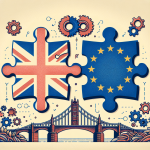

Don’t Rule Out EU Customs Union, TUC Boss Tells Starmer: A Brexit Reckoning?
As Britain grapples with post-Brexit trade woes, the Trades Union Congress (TUC) leader has urged Prime Minister Sir Keir Starmer not to dismiss rejoining the EU customs union, calling closer ties a “no brainer” amid mounting business frustrations.[1][3]
This call comes at a pivotal moment. Recent surveys reveal deepening trade barriers with the UK’s largest market. The British Chambers of Commerce (BCC) found that 54% of exporters report the EU-UK Trade and Cooperation Agreement has failed to boost sales in Europe—a sharp 13-point rise from last year. Trade frictions are “worsening,” with over half of businesses struggling to expand.[1] Senior Labour figures, including Health Secretary Wes Streeting and Justice Secretary David Lammy, have openly defied Starmer’s manifesto stance by refusing to rule out a customs union revival.[1]
The Customs Union Debate Reignited
The EU customs union eliminates tariffs and border checks between members, pooling external trade policy under Brussels’ rules. Pre-Brexit, the UK enjoyed frictionless access to a market of 450 million consumers. Leaving it meant reclaiming sovereignty over trade deals but introduced customs declarations, rules-of-origin checks, and non-tariff barriers that have hobbled exporters.[1]
Streeting’s recent comments sparked headlines, positioning rejoining “right back at the top of the political agenda” for the first time since 2016.[1] He advocates a “brand new deal” with the EU, highlighting how UK firms follow European regulations without membership benefits—like veterinary agreements or mutual recognition—leaving them “stuck in no-man’s land.”[1] Lammy echoed this, dodging questions on reversing Labour’s pledge against rejoining.[1]
Starmer, however, remains steadfast. His government’s manifesto commits to no customs union return, emphasizing independent trade policy. Post-Brexit, the UK has inked deals like one with India—superior to the EU’s—and strengthened US ties under Donald Trump, including advantages in car tariffs and aerospace.[1] A customs union would subordinate UK trade to Brussels, blocking such autonomy.[1]
Yet cracks appear. Starmer’s “reset” of EU relations progresses slowly, fueling BCC warnings. Businesses lament unfulfilled Brexit dividends: deregulation, tax reforms, and global pacts that never fully materialized.[1]
TUC’s Intervention: Workers First?
Enter the TUC, representing 5.5 million union members. Ahead of a major London summit—where Starmer is tipped to unveil an EU deal—the TUC boss declared closer ties a “no brainer.”[3] This aligns with labour’s historical pro-EU leanings, prioritizing job security over ideological purity.
The pitch? Reintegration could slash trade barriers crippling manufacturing and services. UK exporters face higher costs and red tape, exacerbating economic stagnation. A customs union might restore seamless supply chains, vital for industries like automotive and chemicals, while accessing EU funds—such as a £125 billion defence pot on the summit’s agenda.[3]
Critics counter that unions overlook sovereignty costs. Trade policy dictated by Brussels could hamstring deals with fast-growing economies like India or CPTPP members. Plus, the UK mirrors EU rules anyway—on chemicals (REACH) and food standards—without voting rights, dubbed “following the European model but getting no benefits.”[1]
Business Pain Points Driving the Push
Data underscores urgency. BCC research shows trade frictions worsening yearly, with exporters citing customs delays and compliance burdens.[1] Sectors like aerospace and autos suffer most, as divergent regulations erode competitiveness.[1] Even as Starmer eyes veterinary and youth mobility pacts, core customs issues persist.
Proponents argue a customs union isn’t full rejoin—Norway-style EEA access without single market votes offers precedent. Streeting’s defiance signals Cabinet unease; if manifesto red lines blur, it could signal Brexit’s partial unwind.[1]
Starmer’s Tightrope: Politics vs Pragmatism
For Starmer, the calculus is brutal. Labour’s 2024 landslide hinged on centrist appeal, not Remain nostalgia. U-turning risks alienating Red Wall voters who backed Brexit for control. Yet ignoring business and union pleas invites recession accusations amid stagnant growth.
The TUC summit looms large. Expectations swirl around defence funding access and trade tweaks.[3] Will Starmer budge? His team insists manifesto fidelity, but whispers of “reconsideration” persist.[2]
Broader Implications for UK plc
Rejoining a customs union could turbocharge GDP—estimates suggest 4-7% uplift via friction removal—but at sovereignty’s price. Independent deals with India and Trump-era US gains might evaporate.[1] Workers gain stability; Leave voters feel betrayed.
Alternatives? Sectoral deals (e.g., chemicals alignment) or enhanced TCA rules sidestep full union. But TUC demands boldness: don’t rule it out.[3]
As 2025 closes, this debate tests Starmer’s mettle. Brexit’s promise—global Britain unbound—clashes with reality: a UK shadowing EU rules sans perks.[1] The TUC boss’s plea spotlights the stakes: evolve or stagnate.
In politics, nothing’s ruled out forever. Watch the summit.[1][3]
(Word count: 812)
Original source: BBC News – Don’t rule out EU customs union, TUC boss tells Starmer
The post TUC Urges Starmer: Reconsider EU Customs Union Amid Brexit Trade Challenges first appeared on Limited Liability Solutions.
Source: Read More