# ‘Respect the Culture’ – FIFA Urged to Allow Pride Match
**A controversial World Cup fixture in Seattle has ignited a global firestorm, with Egypt and Iran demanding FIFA intervene over a planned LGBTQ+ Pride celebration.** As the 2026 tournament approaches, the clash between cultural sensitivities and host-city inclusivity tests FIFA’s commitment to neutrality.[1]
## The Spark: Seattle’s Pride Match Plan
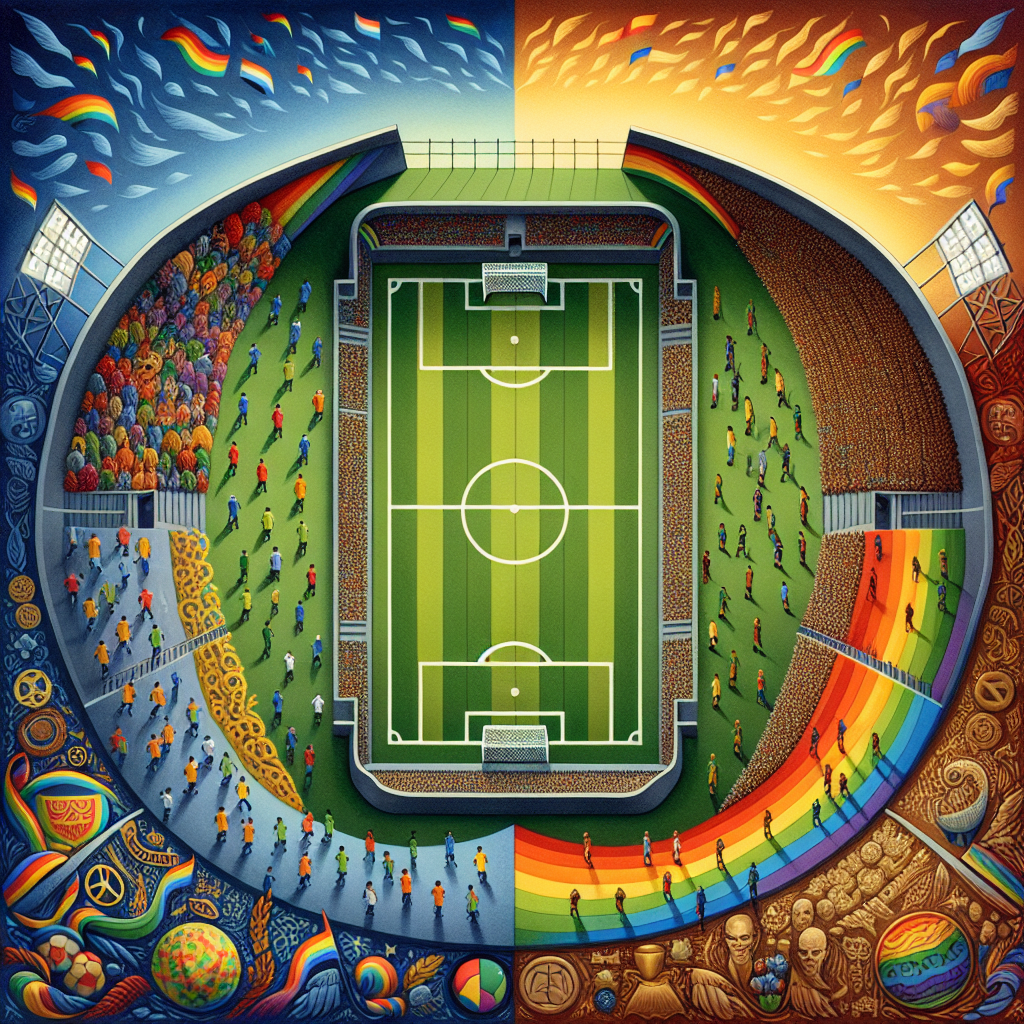
Seattle Stadium is set to host an Egypt vs. Iran group-stage match on June 26, 2026, coinciding with the city’s annual PrideFest. Local organizers, including the nonprofit behind Seattle PrideFest since 2007, designated the game a “once-in-a-lifetime moment to showcase and celebrate LGBTQIA+ communities in Washington.”[1] Promotions already feature creative entries like an art contest depicting a rainbow-flagged sun over Mount Rainier, with a crab goalie clutching a soccer ball and coffee.[1]
Seattle’s mayor-elect Kate Wilson celebrated the alignment on social media: “With matches on Juneteenth and pride, we get to show the world that in Seattle, everyone is welcome.”[1] The city’s organizing committee emphasizes its diverse communities, including large Iranian-American and Egyptian diasporas, vowing to proceed with “community programming outside the stadium” despite backlash.[1]
FIFA’s scheduling finalized the matchup in Seattle after the World Cup draw, shifting it from Vancouver where Belgium and New Zealand will play simultaneously.[1] Crucially, FIFA’s control is limited to stadiums and official fan zones, leaving external events like PrideFest beyond its direct authority.[1]
## Outrage from Egypt and Iran: ‘Respect the Culture’
Egypt’s football federation issued a vehement statement “categorically rejecting any activities related to supporting homosexuality,” urging FIFA to halt the celebration to avoid offending “cultural, religious and social values in Arab and Islamic societies.”[1] Federation leader Hany Abo Rida, a long-serving FIFA Council member, highlighted risks of “cultural and religious sensitivity” for spectators from both nations.[1]
Iran’s response was equally fierce. Football Federation president Mehdi Taj, speaking on state television, called the scheduling “unreasonable and illogical,” signaling support for a “particular group.” Iran plans to raise the issue at an upcoming FIFA Council meeting in Qatar.[1] In a nation where LGBTQ+ individuals face the death penalty, such events strike at the core of state ideology—echoing former President Mahmoud Ahmadinejad’s infamous 2007 claim that Iran has no homosexuals.[1]
Both countries have histories of severe crackdowns: Egypt prosecutes LGBTQ+ people under “debauchery” laws, while Iran’s post-1979 regime has executed thousands for sexuality.[1] Recent tensions include Iran’s threats to boycott the World Cup draw over U.S. visa denials for delegation members linked to the Revolutionary Guard.[1]
The backlash has gone viral, with CNN reporting the “outrage” from both federations pushing back against the Pride tie-in.[2]
## FIFA’s Dilemma: Double Standards?
FIFA has declined comment, leaving open whether it might swap the Belgium-New Zealand game to Seattle.[1] Critics warn of hypocrisy. At the 2022 Qatar World Cup, FIFA defended host cultural norms, blocking European teams’ rainbow “One Love” armbands as implicit criticism of Qatar’s anti-LGBTQ+ laws. Wales fans even had rainbow hats confiscated.[1]
Now, with a progressive U.S. host city, the shoe is on the other foot. Siding with Egypt and Iran could alienate Western fans; ignoring them risks accusations of cultural imperialism. An advisory committee member for the Pride Match hopes FIFA “does the right thing” by allowing it, invoking “respect the culture”—but whose culture?[3]
Seattle organizers remain defiant, stressing “warmth, respect and dignity” for all, including diasporas.[1] They frame the event as inclusive hospitality, not provocation.
## Broader Implications for 2026 World Cup
The 2026 tournament, co-hosted by the U.S., Canada, and Mexico, promises unprecedented scale with 48 teams across 16 cities. Seattle’s fixture underscores cultural fault lines in a globalized sport. **Will FIFA prioritize host rights or team objections?** The answer could redefine its neutrality stance.
Pride advocates see this as progress: a major match amplifying marginalized voices. Detractors argue it disrespects visiting nations’ values, potentially boycotting or protesting. Iran’s visa woes hint at deeper U.S.-Iran frictions spilling into soccer.
As preparations continue, the debate spotlights soccer’s power as a cultural mirror. FIFA’s silence amplifies the tension—will it enforce “respect the culture” for all, or selectively? For now, Seattle marches toward June 26, rainbow flags at the ready.[1][3]
*(Word count: 812)*
Original source: BBC News – ‘Respect the culture’ – Fifa urged to allow Pride Match