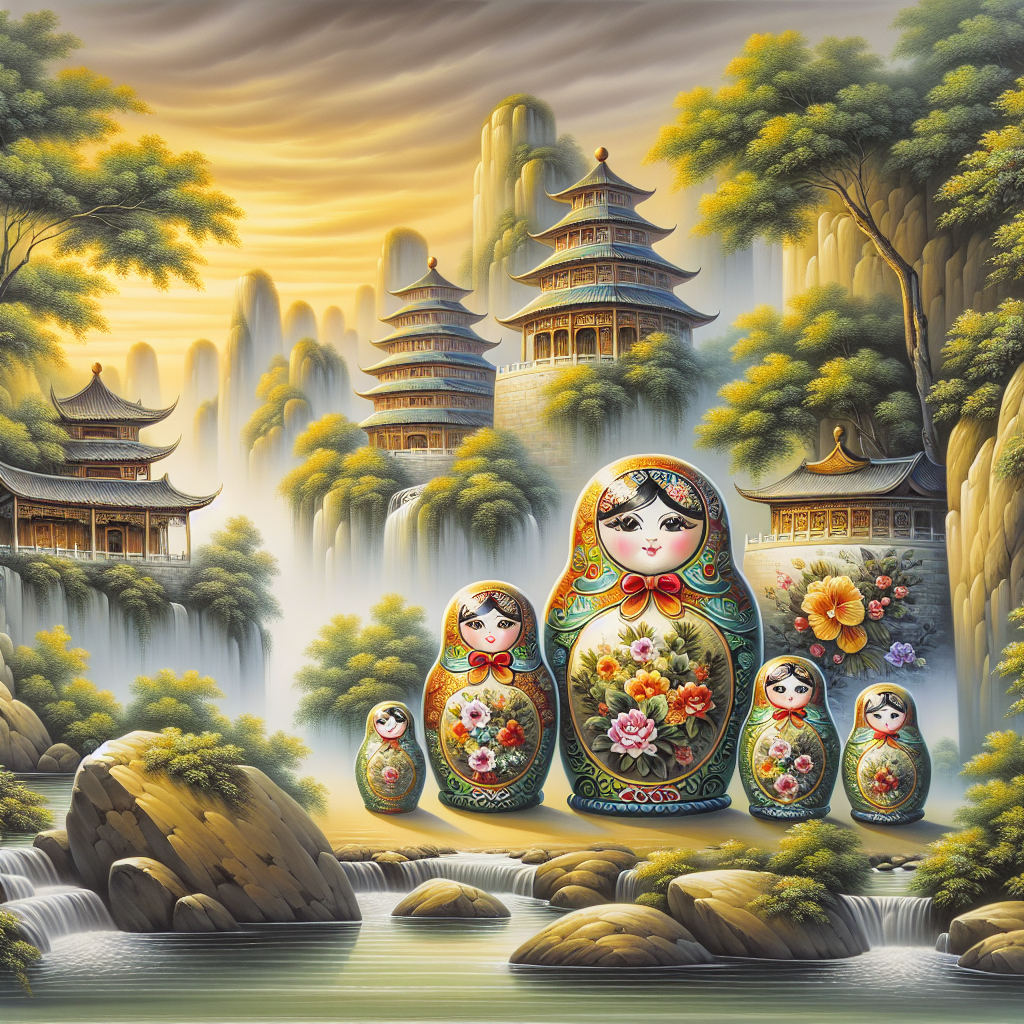
**Greetings from Yimianpo, China, where artisans carve Russian nesting dolls**
Nestled in China’s northeast, about 125 miles from the Russian border, lies **Yimianpo**, a township that has quietly become the beating heart of an unexpected craft: the creation of **Russian nesting dolls**, known worldwide as *matryoshka* and locally as *tao wa*[1][3]. While their origins are deeply Russian, the story of how these hollow wooden figurines—shaped like squat bowling pins and adorned in vibrant paint—found a home in Yimianpo is a tale of both history and artistry.
### A Craft Rooted in History
The journey begins in the late 19th century, as the Russian Empire’s ambitions pushed eastward. Rail lines cut through the vast landscapes, and Yimianpo emerged as a crucial stop along the way[1]. Not only did trade and ideas pass through, but so did cultural objects. The matryoshka dolls—symbols of Russian folk art—gradually made their way into northeastern China. Over generations, local craftsmen adopted and adapted the tradition, refining both technique and style.
Today, Yimianpo is recognized as **China’s major production base for matryoshka dolls**, with an astonishing annual output of nearly **15 million sets**[3]. What began as a foreign curiosity has been transformed into a local industry, employing hundreds of artisans and supporting the township’s economy.
### Inside the Workshop: The Art of Making Tao Wa
Stepping into a typical Yimianpo workshop, the air is thick with the scent of fresh wood and the hum of industry. Piles of wood shavings reach thigh-high, evidence of the day’s labor. Here, **linden wood**—sourced from the abundant nearby forests—serves as the raw material[1]. Artisans, surrounded by tools that resemble medieval fire pokers, transform blocks of wood into the familiar rounded silhouettes of nesting dolls.
The process is painstaking and rhythmic. Each doll is carefully shaped on a lathe, then carved and hollowed so that it can nest seamlessly within another. The outermost doll is the largest, while each succeeding piece is smaller and more delicate. Precision is paramount; the fit must be exact, or the illusion of endless nesting is lost[1].
Once the carving is complete, the dolls are sanded and painted. The designs range from traditional Russian motifs—colorful shawls, floral patterns, and rosy-cheeked faces—to more modern styles inspired by Chinese folk art. Some workshops even take custom orders, painting faces of celebrities, politicians, or cartoon characters, blending global pop culture with local craftsmanship.
### The Human Touch
The heart of Yimianpo’s matryoshka industry isn’t just the wood or the paint—it’s the artisans themselves. Many come from families who have practiced the craft for generations. Skills are passed from parent to child, ensuring continuity and innovation. The workshop owner, proud of his team, describes how each artisan brings their own flair, whether in the fine detailing of a doll’s eyes or the boldness of its colors[1].
Despite the scale of production, much of the work remains **handmade**. Machines assist with the initial shaping, but finishing, painting, and assembly rely on the careful touch of skilled workers. This blend of tradition and technology ensures that each set of nesting dolls is both uniform and unique.
### A Bridge Between Cultures
The matryoshka dolls of Yimianpo are more than souvenirs—they are symbols of cultural exchange. While their aesthetic roots are Russian, their modern incarnation reflects a distinctly Chinese touch. Locally, the dolls are cherished as gifts, decorative items, and even teaching tools for children learning about shapes and sizes.
Internationally, Yimianpo’s dolls are exported around the world, finding their way into homes from Moscow to New York. For many buyers, the origin is a curiosity: Russian dolls, made in China, painted with a blend of Eurasian motifs. It’s a testament to how art can transcend borders, adapting and thriving in new contexts.
### The Challenges and the Future
As the industry has grown, Yimianpo has faced its share of challenges. Global economic shifts, changing consumer tastes, and competition from mass-produced plastic toys all pose threats. Yet the township’s artisans remain resilient, doubling down on quality and innovation. Some have begun offering workshops for tourists, teaching visitors how to carve and paint their own dolls, hoping to foster appreciation for the craft and bring in new revenue streams.
Environmental sustainability is another concern. Linden wood is carefully sourced, with local efforts to replant and maintain the forests that supply the raw material. Artisans are increasingly aware of the need to balance production with stewardship, ensuring that Yimianpo’s legacy can continue for generations[1][3].
### A Far-Flung Postcard
On this November morning in 2025, the story of Yimianpo is one of tradition, adaptation, and artistry. The township may be small, but its impact is global. As you hold a set of matryoshka dolls—each one nestled within the next—consider the hands that shaped them, the journey they’ve made across continents and centuries, and the community that continues to carve beauty from wood in the heart of northeastern China[1][3].
Whether you visit in person or simply admire from afar, **Yimianpo** reminds us that art, in all its forms, is a bridge—connecting people, cultures, and stories, one carved nesting doll at a time.
Original source: NPR News – Greetings from Yimianpo, China, where artisans carve Russian nesting dolls