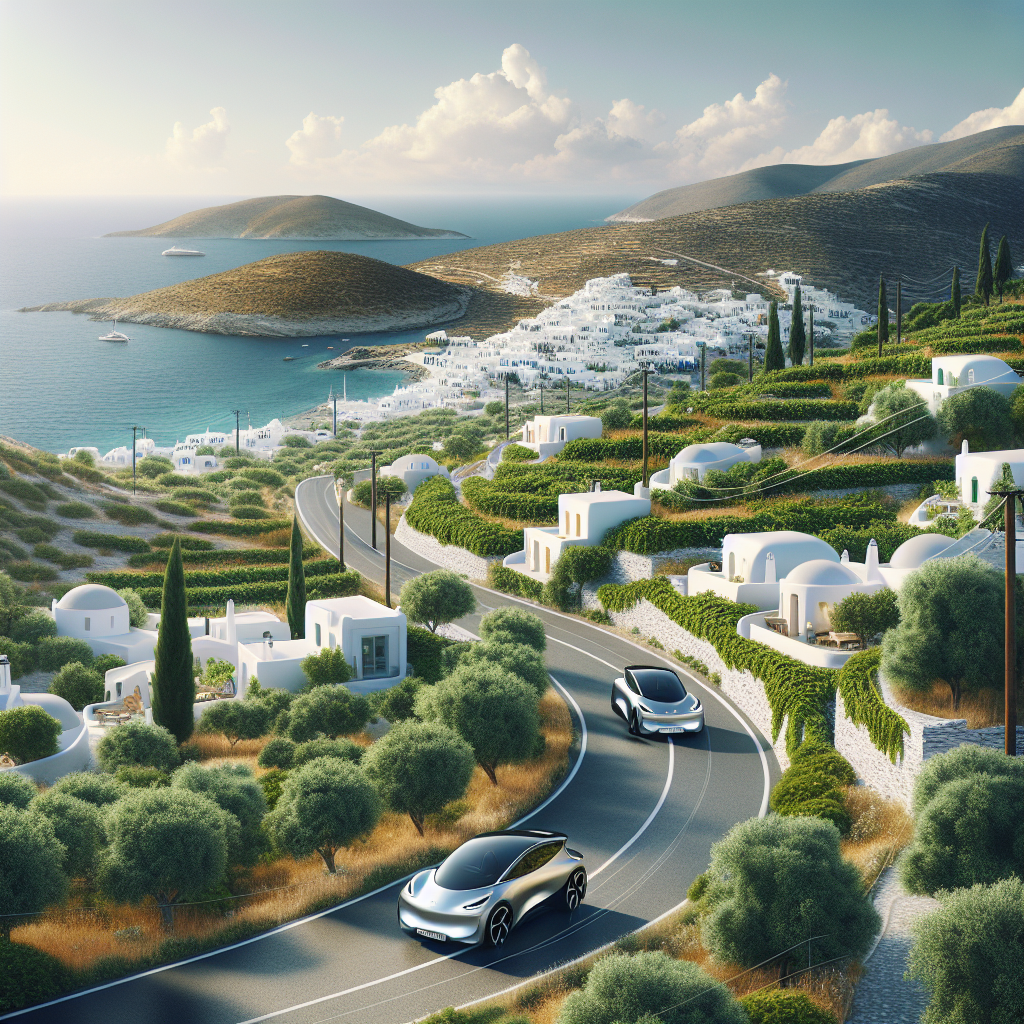
I recently spent a week on a Greek island with just **1,400 residents**, where life moves at a gentler pace and electric vehicles (EVs) are quietly transforming daily life. On this tiny speck in the Aegean, the future is quietly humming along winding coastal roads, reshaping how locals and visitors move, connect, and experience island living.
## A Place Where Time Slows Down
Greece is famous for its islands—over 6,000 by some counts, though only a couple hundred are inhabited[1][5]. Among these, there are a handful with populations between 1,300 and 1,400, such as **Astypalea** (Astipalea: 1,376) and **Fournoi Korseon** (1,343)[1]. Unlike the bustling energy of Santorini or Mykonos, islands like these offer a tranquil, authentic Greek experience. On arrival, I was greeted by the gentle lapping of waves, whitewashed houses, and a harbor dotted with small fishing boats.
The local rhythm is dictated by the sun and sea, not the clock. The main village square is where everyone gathers, and you quickly realize that on an island of this size, everyone knows everyone. Children roam freely, and elders sit beneath bougainvillea, trading stories well into the evening.
## The Quiet Revolution: Electric Vehicles on the Island
What surprised me most was how **electric vehicles** have become a common sight. Unlike the roaring scooters and dusty pickup trucks that define transport on many Greek islands, here, you see compact EVs gliding silently through narrow lanes. The shift to electric has been gradual but steady, driven by a mix of government incentives, European sustainability funds, and a growing environmental consciousness among islanders.
Charging infrastructure, once a concern, is now well established. Small solar-powered charging stations dot the main roads and even some rural paths. The island’s modest size—most can be crossed in under 30 minutes—makes it an ideal testbed for EV adoption. Locals have adapted quickly, with many trading in their old petrol cars for zippy, maintenance-light electrics. For visitors, several hotels now offer e-scooters and compact EVs for rent, making it easy to explore without leaving a carbon footprint.
## Why EVs Work So Well on Small Islands
The **advantages of EVs** on islands of this scale are clear:
– **Short travel distances**: With just a handful of villages and beaches, daily commutes rarely exceed 10-15 km.
– **Limited road infrastructure**: Narrow, winding roads favor smaller, lighter vehicles.
– **High fuel costs**: Importing petrol to remote islands is expensive, making electricity—especially from solar—more attractive.
– **Environmental protection**: Many Greek islands are UNESCO-listed or have protected ecosystems. EVs help keep air and noise pollution low.
As a visitor, this means your trip is not only quieter and cleaner but also far more pleasant. The air smells of wild thyme and salt, not exhaust fumes. The only sound on the road is the gentle whir of tires on warm tarmac and the distant songs of cicadas.
## Daily Life in a Community of 1,400
Living among so few people means every encounter matters. The local baker greets you by name after your second visit. The grocer knows which tomatoes you prefer. The sense of community is powerful and immediate.
Yet, this small population also means resources are precious. Water is carefully conserved, and recycling is a community effort. The island’s single health clinic is staffed part-time, so residents rely on each other in emergencies. The arrival of an EV ambulance—quiet, fast, and reliable—has been transformative for the elderly and families with young children.
## How the Island Is Adapting
The adoption of EVs has spurred other changes:
– **Solar panels now cover many rooftops**, providing both household power and feeding the EV chargers.
– **Local businesses have adapted**, offering EV rentals, solar-powered boat excursions, and eco-friendly tours.
– **The school uses an electric minibus** for student transport, teaching a new generation the value of sustainability.
Festivals and traditions remain unchanged, but now they’re powered a little differently. During the summer’s St. George’s feast, the processional music floats through air unbroken by engines. Locals joke that the only thing missing is the sound of the old mopeds.
## What Travelers Should Know
If you’re drawn to **authentic Greek culture**, small islands like these offer a unique window into the country’s past and future. Here’s what to expect:
– **Limited but high-quality accommodation**: Family-run guesthouses and boutique hotels, many with EV chargers on site.
– **Simple, fresh food**: Locally caught fish, garden vegetables, and the island’s own olive oil.
– **A slower pace**: Ferries arrive a few times a week, and life follows their schedule.
– **A deep connection to nature**: Empty beaches, hiking trails, and star-filled nights.
## The Future Is (Quietly) Here
As the world debates how best to tackle climate change, this small Greek island shows one way forward. By embracing **electric vehicles** and renewable energy, even a tiny community of 1,400 can lead by example, preserving its way of life while protecting the natural beauty that makes it special.
If you’re planning your next Greek adventure, consider skipping the crowds and heading to a lesser-known island where the future is already quietly taking charge. On these shores, you’ll find not just sun and sea, but a glimpse of how tradition and innovation can thrive together.
Original source: CNBC Business – Population 1,400: I stayed on a tiny Greek island where EVs take charge