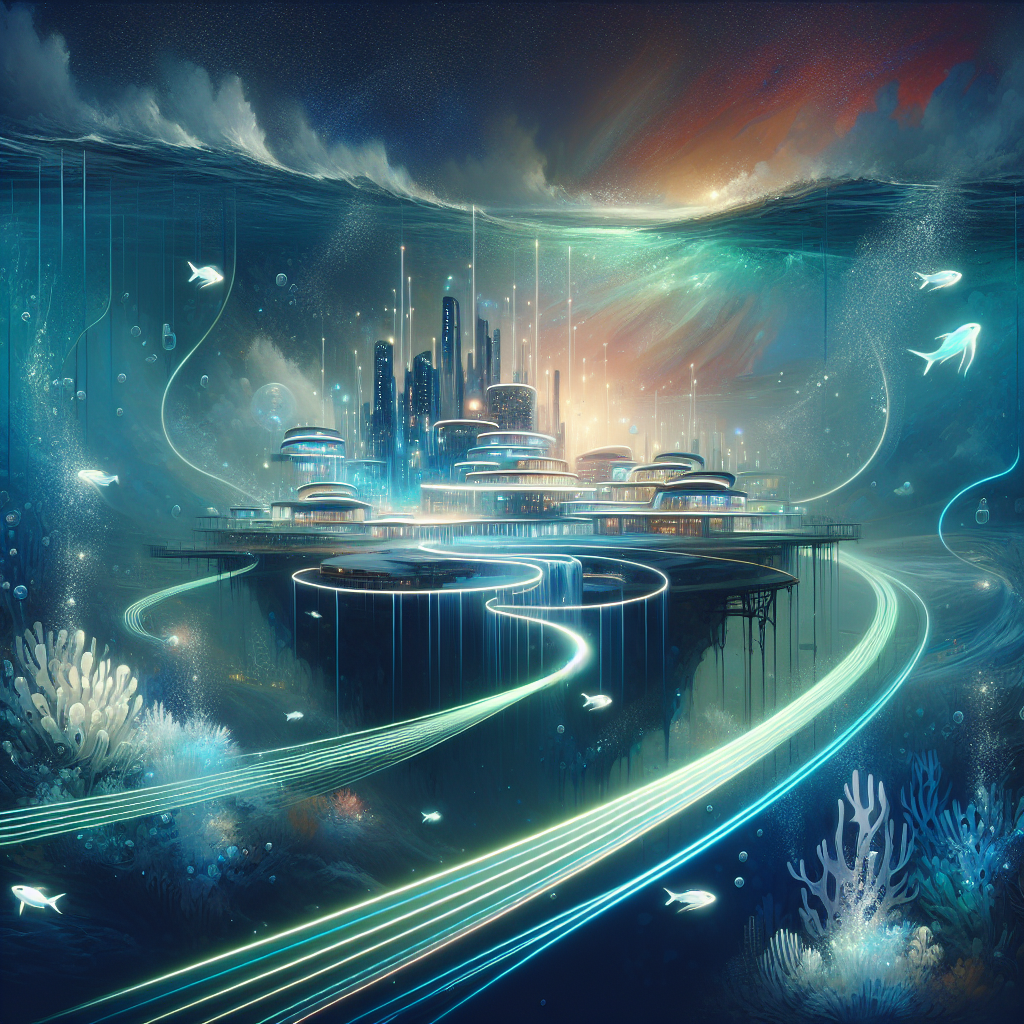
After a four-decade hiatus, the world is on the brink of a new era in undersea exploration. In 2025, the unveiling of the **Vanguard pilot habitat** in Miami marked the first major advancement in underwater human habitation since the 1980s[1]. This innovative project, spearheaded by the company DEEP, promises not only to reignite our fascination with ocean exploration but also to transform how scientists, conservationists, and explorers interact with the marine world.
## The End of a 40-Year Wait
For nearly 40 years, the field of undersea habitats remained largely unchanged. Early pioneers like Jacques Cousteau’s Conshelf and the Aquarius Reef Base set the stage for underwater research, but technological, financial, and logistical challenges stalled further progress. As a result, ocean exploration lagged behind the rapid developments seen in space travel and terrestrial science.
The unveiling of Vanguard signals a decisive break from this stagnation. **Vanguard is the first new subsea human habitat of its kind to be constructed in almost four decades**, representing a leap forward in both ambition and technology[1]. This project is not just another research outpost—it is a bold declaration that humanity is ready to embrace the ocean as a domain for sustained presence and study.
## What Makes Vanguard Different?
The **Vanguard habitat** is designed to support a crew of four, allowing them to live and work underwater for **seven days or more**[1]. This extended submersion time is a game-changer for marine research: traditional diving limits scientists to short, shallow excursions, but with Vanguard, teams can conduct **continuous, real-time observation** of marine ecosystems without the constant need to surface[1].
Key features of Vanguard include:
– **Advanced Life Support Systems:** Ensuring crew safety and comfort during prolonged stays.
– **Comprehensive Research Facilities:** Equipped for marine biology, ecology, and climate science.
– **Strict Safety Standards:** Vanguard will be the first underwater habitat classed by Det Norske Veritas (DNV), a global authority on subsea safety and engineering[1].
– **Versatility:** Suitable for scientific research, conservation, and even astronaut training, simulating the isolation and pressure challenges of space missions[1].
## Why Now? The Importance of Ocean Habitats
Our oceans remain one of Earth’s least understood frontiers. Less than 20% of the seafloor has been mapped in detail, and vast swathes of marine biodiversity remain undocumented. **Permanent undersea habitats like Vanguard allow for unprecedented access to these ecosystems**, enabling scientists to monitor coral reefs, study climate change impacts, and develop new conservation strategies in ways never before possible[1].
The ability to **live underwater for extended periods** also opens up new opportunities for collaboration across disciplines, from marine biology and geology to robotics and environmental science. As climate change intensifies and ocean health becomes increasingly critical to the planet’s well-being, the insights gained from such habitats could prove invaluable for global sustainability efforts.
## A Vision for the Future
Vanguard is more than a standalone project—it is the **first step in DEEP’s broader vision**. The company aims to create a **network of underwater habitats** around the globe, giving humans a **permanent presence beneath the waves**[1]. Each mission will build on the last, refining the technology and operational protocols necessary for safe, routine underwater living.
This vision extends beyond pure science. By making underwater habitation more accessible and routine, DEEP hopes to inspire a new generation of explorers, engineers, and ocean advocates. The lessons learned from living in such challenging environments could also inform future missions to other extreme frontiers, such as deep space.
## Challenges and Opportunities
Deploying a new undersea habitat after such a long hiatus is not without its challenges. Engineering a structure to withstand the immense pressure and corrosive conditions of the ocean is a formidable task. Ensuring the health and psychological well-being of crew members during extended missions requires robust support systems and careful planning.
However, the **potential rewards are immense**. Vanguard’s success could revolutionize:
– **Coral reef restoration:** By enabling longer, more detailed studies of reef ecosystems, scientists can develop more effective interventions.
– **Climate monitoring:** Continuous observation allows for better tracking of ocean currents, temperature changes, and their effects on global weather patterns.
– **Training for space exploration:** The isolation and pressure of underwater habitats provide an ideal analog for preparing astronauts for long-duration missions.
– **Ocean resource management:** Permanent habitats can serve as platforms for monitoring and protecting vital marine resources.
## A New Chapter in Ocean Exploration
As of November 2025, the world stands at the threshold of a renaissance in undersea research. **Vanguard’s deployment marks the revival of a dream that has lain dormant for 40 years**—the dream of humans living, working, and thriving beneath the ocean’s surface[1]. With advances in technology, safety, and vision, this new generation of habitats could finally unlock the mysteries of the deep, fostering a connection with the ocean that is both profound and necessary for the future of our planet.
The journey to make humans aquatic has only just begun, but with Vanguard, we are taking the first bold steps into a blue frontier that holds the keys to understanding—and preserving—our world.
Original source: NPR News – After 40 years, plans to deploy a new undersea habitat are in progress