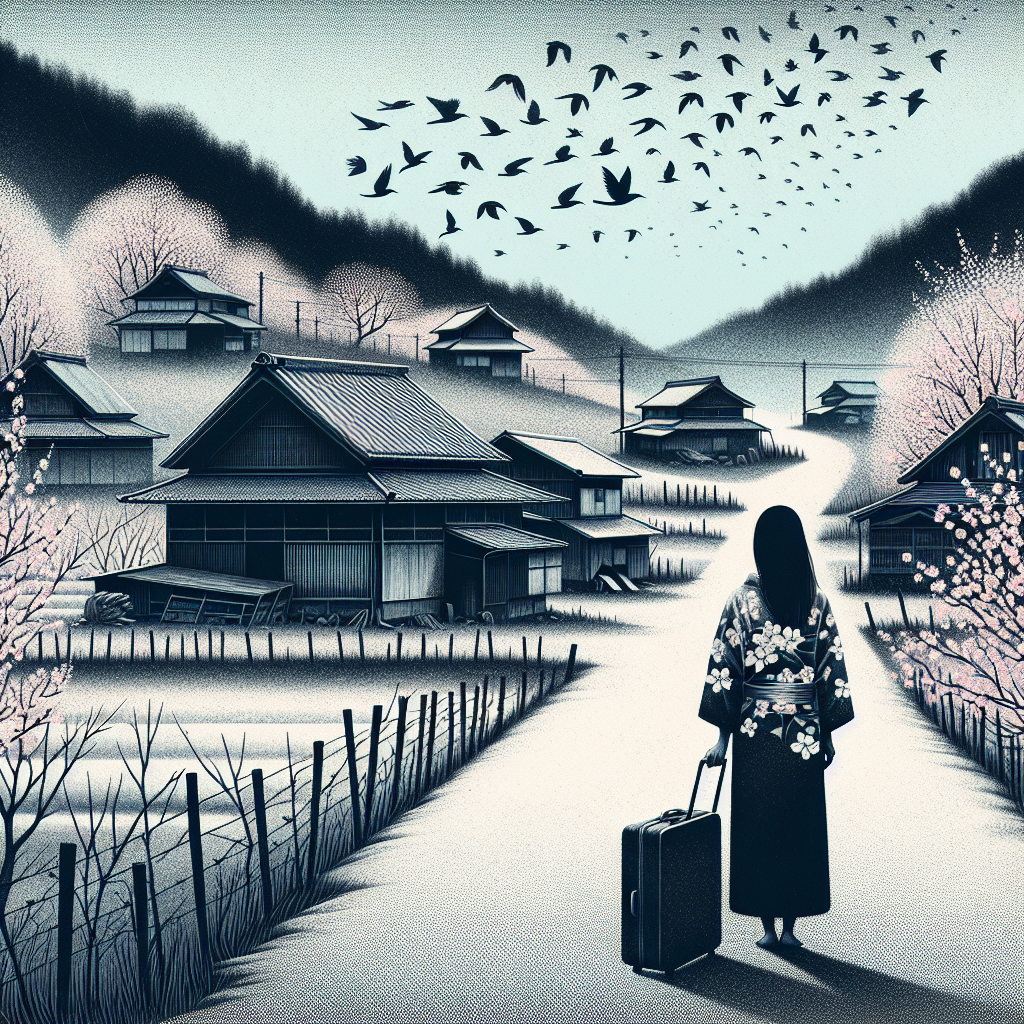
Rigid gender roles are increasingly driving young women away from rural Japan, intensifying the demographic and economic challenges these communities already face. As of 2025, government reports and social research reveal that despite a sense of attachment to their hometowns, many young women are choosing not to return to rural areas after moving to cities. The primary reason: entrenched expectations about what women’s lives should look like, and the limited opportunities for agency, diversity, and equality in rural settings[1][3].
## The Landscape: Gender Roles in Rural Japan
Japanese society has long been shaped by traditional gender roles, but these norms are especially pronounced in rural regions. Women are typically expected to shoulder the major responsibilities for housework, childcare, elder care, and even community hospitality—such as preparing meals and serving tea at public gatherings[1][2]. While modernization and urbanization have challenged these assumptions in cities, rural communities often lag behind, maintaining the view that a woman’s highest value lies in domesticity and motherhood[4].
A 2025 government white paper on gender equality found that many young women who leave for cities do not wish to return, citing a “fixed sense of gender roles” as a psychological barrier. These women report feeling constrained by their communities’ unwillingness to accept diverse values, and by the pressure to conform to expectations that prioritize family roles over personal ambition or professional advancement[1][3].
## Why Women Are Leaving
A 2024 Cabinet Office survey of 10,000 men and women aged 18 to 39 highlighted several reasons for rural-to-urban migration, but the divide between men and women was stark. While both genders left for education and employment, 26.8% of women—compared to just 15% of men—said they wanted to leave simply to escape their hometowns[1][3]. For these women, the desire to flee was linked to:
– **Parental and community meddling**: Many women cited frustration with intrusive oversight from both family and neighbors, feeling their lives were scrutinized and judged according to traditional expectations.
– **Community resistance to diverse values**: Women who might wish to pursue careers, remain single, or live independently often find their choices stigmatized in rural areas.
– **Codified gender roles**: Explicit beliefs about women’s work—such as the expectation that only women should manage domestic duties—remain common[1][2].
These factors combine to produce an environment where young women feel their futures are constrained, leading them to seek autonomy and broader opportunities in urban centers.
## The Impact on Rural Communities
The continued outflow of women from rural Japan has far-reaching consequences. Local governments warn that as women leave, communities become weaker, the number of unmarried people increases, and the birthrate falls[1][3]. Rural depopulation is already a pressing issue across Japan, and the loss of young women—who are central to both family and economic life—compounds the problem.
Women themselves are not indifferent to the fate of their hometowns. The same survey found that 58% of women reported feeling a sense of attachment to their rural origins, even higher than the percentage for men[1]. Yet affection is not enough to overcome the psychological and practical barriers posed by rigid gender roles.
## The Broader Social Context
Japan’s struggle with gender equality is not limited to rural areas. Nationwide, the country ranks among the lowest in the developed world for gender parity, according to the World Economic Forum and other international benchmarks[4]. Deeply internalized beliefs about “natural” gender differences are reinforced from childhood and across all aspects of society—including the workplace, education, and family policy.
For instance, women returning from maternity leave are often offered “jitan” (reduced hours and salary), which limits career progression and reinforces the perception that motherhood and professional life are incompatible[4]. In cities, alternative lifestyles and dual-income households are more common, but in rural areas, tradition holds greater sway.
Women who challenge or opt out of these traditions often face social isolation or are seen as failing to fulfill their “purpose.” As a result, even women who might wish to stay or return to rural communities often feel compelled to leave in order to pursue lives that align with their values and ambitions.
## Addressing the Challenge
Recognizing the urgency of the issue, the Japanese government’s 2025 white paper on gender equality calls for a transformation of rural communities into places “to which those who have left would want to return”[1][3]. This means not only increasing opportunities for education and employment but also fundamentally reevaluating and updating local attitudes about gender roles.
Policy solutions include:
– **Promoting gender equality in community life and decision-making**
– **Supporting diverse family and career choices**
– **Creating economic incentives for women to return and thrive in rural areas**
Yet, as research and testimony from young women show, changing deep-seated cultural norms is as important as changing policy[2][4]. Until rural Japan is seen as a place where women can live freely and equally according to their own values, the outflow is likely to continue.
## Conclusion
Rigid gender roles are prompting a generational exodus of women from rural Japan, undermining community vitality and deepening demographic decline. The path forward requires both structural reforms and a cultural shift—one that values women’s autonomy, talents, and ambitions as central to the future of rural Japan.
Original source: NPR News – Rigid gender roles are prompting women to leave rural Japan