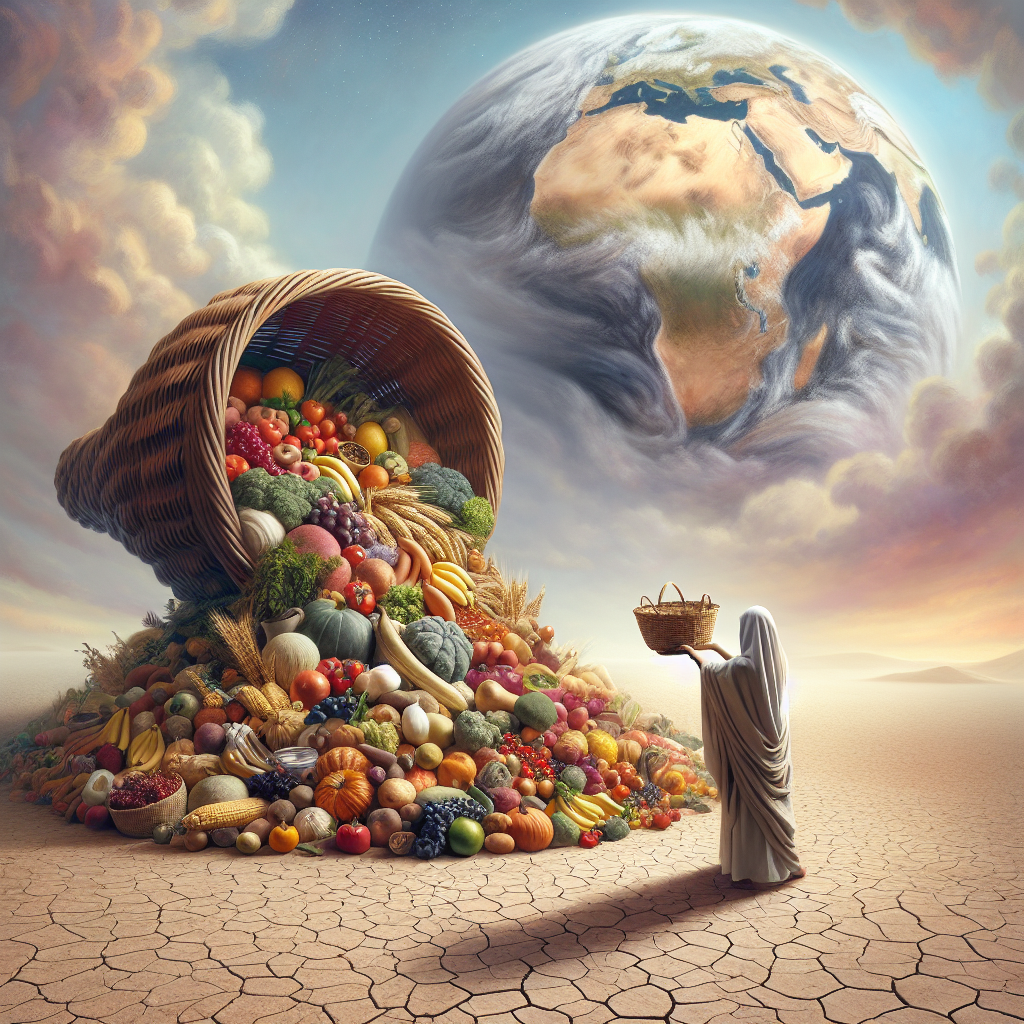
**While SNAP Battle Leaves Americans Fearing Hunger, Nearly $400 Billion in Food at Risk of Waste Every Year**
As millions of Americans anxiously watch the political battle over the Supplemental Nutrition Assistance Program (SNAP), the nation faces a troubling contradiction: while families fear empty plates, nearly $400 billion worth of food is at risk of being wasted in the United States each year[2][4]. This paradox exposes deep flaws in the food system and highlights urgent opportunities for reform.
**SNAP in Crisis: Millions at Risk**
SNAP is the single largest nutrition assistance program in the U.S., serving more than 41 million people monthly in 2024 and accounting for about 70% of federal nutrition spending[1][5]. For many, it is the difference between having food on the table and going hungry. The program offers an average benefit of $187 per person per month, a modest sum that must stretch across daily meals[1][5].
Yet, in recent months, SNAP recipients have faced unprecedented uncertainty. Political gridlock and government shutdowns have threatened funding, disrupting benefit distributions and leaving families unsure how they will afford groceries[2]. In November 2025, millions faced a lapse in benefits as the government failed to agree on continued funding. Legal battles ensued, with federal courts ordering emergency measures to restore payments, but the disruption left vulnerable households fearful and scrambling for alternatives[2].
**Food Waste: An Unforgivable Surplus**
At the same time, the United States discards an astounding amount of food. In 2025, estimates indicate that nearly 60 million tons—or 120 billion pounds—of food are wasted annually, representing almost 40% of the entire U.S. food supply[4]. The monetary value of this waste is staggering: Americans throw away over $408 billion in food each year, enough to provide 130 billion meals[4].
This waste comes from all corners: farms, manufacturers, grocery stores, restaurants, and, most of all, households. For example, consumers spent $261 billion on food they never ate in 2023 alone[2]. The average family of four discards $1,600 worth of produce annually—money that could make a profound difference for those struggling to feed their children[4].
**The Human Cost: Food Insecurity Amid Abundance**
Food waste is not just an environmental or economic issue—it is a moral one. Nearly 35 million Americans, including 10 million children, live with food insecurity, uncertain where their next meal will come from[4]. This hardship is especially acute among those who rely on SNAP. When benefits are delayed or reduced, families often skip meals, cut portions, or turn to food banks, which themselves are stretched thin.
The painful irony is clear: while one segment of the population is forced to make impossible choices between food and other essentials, another segment discards massive quantities of edible food due to confusion over expiration labels, overbuying, or simply not valuing surplus[4]. Over 80% of Americans report throwing away perfectly good food because they misunderstand labels like “sell by,” “use by,” or “best before”[4].
**Environmental Toll: Wasted Food, Wasted Resources**
The consequences of food waste extend far beyond landfills. Food is the single largest component of U.S. municipal solid waste, accounting for 22% of landfill content[4]. As food decomposes, it releases methane, a greenhouse gas many times more potent than carbon dioxide. In total, food waste accounts for 11% of global greenhouse gas emissions, with the U.S. share equating to the pollution from 37 million cars every year[4].
Wasted food also means wasted water, energy, and labor. The resources used to produce, transport, and store food that is never eaten have a substantial environmental footprint, contributing to climate change and water scarcity.
**Connecting the Dots: Bridging Hunger and Waste**
The juxtaposition of hunger and food waste demands a systemic response. Addressing this crisis requires:
– **Policy Reform**: Ensuring stable, adequate funding for SNAP and other nutrition programs must be a national priority. Policymakers should explore ways to link surplus food distribution with hunger relief more directly[2].
– **Food Recovery Initiatives**: Expanding programs that redirect surplus food from farms, stores, and restaurants to food banks and community organizations can make a tangible impact. Many such initiatives exist but need greater support and coordination.
– **Consumer Education**: Educating the public about expiration labels, meal planning, and food storage could drastically reduce household waste[4].
– **Business and Retail Accountability**: Grocers, restaurants, and manufacturers should adopt best practices to minimize waste and facilitate donation of unsold but safe food.
– **Technological Solutions**: Tools that connect food donors with organizations in need, track inventory, and optimize supply chains can prevent waste before it happens.
**The Path Forward**
The disconnect between food insecurity and food waste in America is not a problem of scarcity but of distribution, access, and priorities. As the fate of SNAP hangs in the balance, the nation must confront the uncomfortable reality that while millions fear hunger, vast quantities of food are discarded each day. Bridging the gap will require commitment, innovation, and compassion—from policymakers, businesses, and individuals alike.
Every meal saved from the landfill is a step toward a more just, sustainable, and nourished America. The challenge is urgent, but the solutions are within reach.
Original source: CNBC Business – While SNAP battle leaves Americans fearing hunger, near $400 billion in food at risk of waste every year