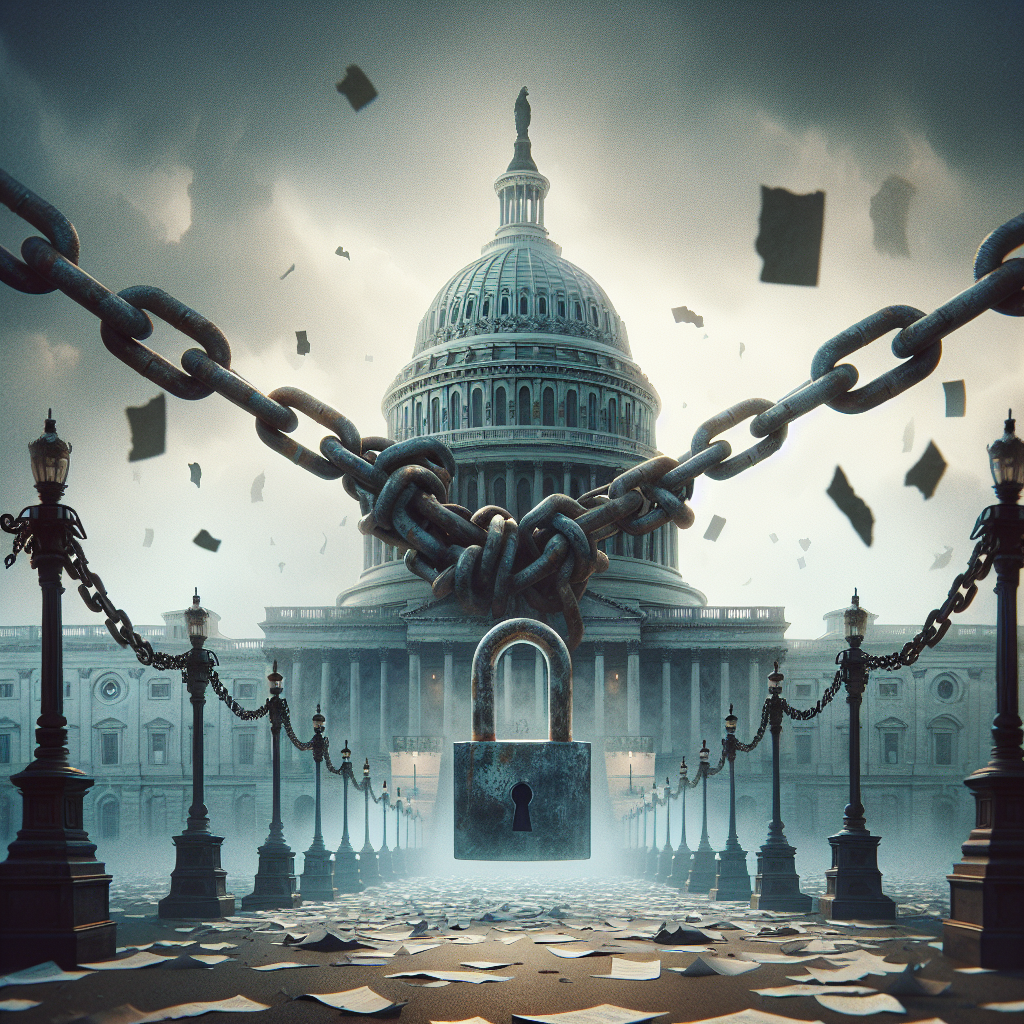
The federal government remains shut down as of October 22, 2025, marking the second-longest closure in U.S. history and impacting millions of Americans across the country[1][2]. As this shutdown continues past three weeks, its effects are being felt in every sector and community—from federal employees and families relying on government assistance, to travelers, researchers, and the broader economy.
**Why Is the Federal Government Shut Down?**
The 2025 shutdown began at 12:01 a.m. EDT on October 1, triggered by Congress’s failure to agree on funding for the new fiscal year[2]. This impasse is rooted in deep partisan disagreements over federal spending levels, proposed cuts to foreign aid, and disputes about health insurance subsidies[2]. Despite multiple votes and negotiations—most recently a series of failed Senate proposals—no consensus has been reached, leaving the government unable to operate at full capacity[2].
**Who Is Most Directly Affected?**
– **Federal Employees:** Nearly 900,000 federal workers have been furloughed, meaning they are not working and not being paid[2]. About 2 million more are considered essential and must continue working without pay, including TSA agents, air traffic controllers, and members of the military[2][1].
– **Government Assistance Recipients:** Programs like the Supplemental Nutrition Assistance Program (SNAP) are still running for now, but officials warn that benefits may be disrupted if the shutdown continues into November[1]. The Special Supplemental Nutrition Program for Women, Infants, and Children (WIC) is already experiencing partial suspension of operations in some regions[2].
– **Travelers and Airports:** Staffing shortages in the Transportation Security Administration (TSA) and air traffic control are causing delays at airports nationwide[1][2]. While essential services continue, travelers are facing longer wait times and reduced support.
– **National Parks and Public Lands:** Many national parks have closed, though some—like the Great Smoky Mountains National Park—remain open temporarily using state and local funding[1]. Most sites, however, are shuttered, affecting tourism and local economies.
– **Researchers and Students:** Research grants have been frozen, and agencies like the National Institutes of Health (NIH) and Centers for Disease Control and Prevention (CDC) have suspended many of their activities[2]. This affects scientific progress and public health initiatives.
**Essential Services: What’s Still Running?**
Despite the shutdown, some government functions deemed essential remain operational:
– **Medicare and Medicaid:** These health insurance programs continue to process claims and provide services[2].
– **Social Security:** Benefits are still being distributed, though customer service and some administrative processes are delayed[4].
– **National Security and Public Safety:** Law enforcement, the military, and emergency response units remain on duty, but many are working without pay[2].
**Ripple Effects Across the Country**
– **Economic Impact:** The shutdown is expected to slow economic growth as federal spending stalls and consumer confidence wanes. Furloughed workers are spending less, and contractors who depend on government business are losing income.
– **State and Local Governments:** Some states are diverting their own funds to keep critical services running, such as operating certain national parks or processing safety net benefits[1]. However, many lack the resources to sustain these efforts for long.
– **Political Fallout:** The standoff has become a fierce partisan battle, with each side blaming the other for the impasse[2][3]. President Trump and Republican leaders insist they have already compromised on spending levels, while Democrats demand policy changes in exchange for their support[3]. Several attempts at passing a continuing resolution—a short-term funding bill—have failed, mostly along party lines[2].
**How Did We Get Here? A Timeline of Key Events**
– **October 1:** Shutdown begins after failed Senate negotiations[2].
– **October 3–10:** Multiple failed votes and an extended House recess delay progress[2].
– **October 16–21:** Senate continues to deadlock as the shutdown becomes the second-longest in history[1][2].
– **October 22:** No resolution in sight, with party leaders entrenched in their positions[2].
**What Happens If the Shutdown Continues?**
If Congress does not reach an agreement soon, the consequences will worsen:
– **SNAP and WIC could halt benefits, affecting millions of low-income families[1][2].**
– **Federal contractors and grant recipients may face layoffs and project cancellations.**
– **More national parks, museums, and public services could close indefinitely.**
– **A prolonged shutdown could trigger broader economic disruption, including a potential impact on financial markets and credit ratings.**
**What Can Americans Do?**
While the situation is largely out of the public’s hands, citizens can:
– **Contact their congressional representatives** to share their views and urge a resolution.
– **Monitor official government websites** for updates on services and benefits.
– **Seek support from state and local agencies** if they are affected by loss of federal services.
**Final Thoughts**
This shutdown, now the second-longest in U.S. history, highlights the significant role the federal government plays in daily American life[1][2]. As negotiations drag on, the uncertainty and disruption grow, underscoring the urgent need for bipartisan compromise to restore normalcy for federal workers, families, and communities across the country.
Original source: NPR News – The federal government is still shut down. Here’s what that means across the country