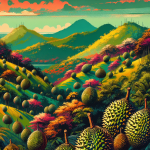

High atop the lush hillsides of Puerto Rico, a subtropical paradise unfolds—one where the air is tinged with salt, earth, and, at certain times of year, something far less subtle: the unmistakable, pungent scent of durian[5]. Often called the “king of fruits,” durian’s infamous aroma is a subject of fascination, dread, and even celebration among adventurous eaters and local growers alike.
The Hills: A Haven for Exotic Fruit
Puerto Rico’s mountainous interior is not only a tapestry of verdant coffee farms and banana groves but also a place where exotic fruits—from rambutan to mangosteen—flourish in commercial quantities[1]. Yet among these treasures, durian stands apart, both for its divisive reputation and its singular role in feasts that bring together communities of growers, chefs, and curious visitors.
The hills offer a unique microclimate: humid, with well-drained soils and erratic rainfall that can sometimes challenge fruit production. Hurricane Maria, and the increasingly unpredictable climate, have left their mark on local farms, reducing fruit yields and forcing growers to innovate and adapt[1]. Despite these setbacks, the tradition of fruit feasting continues, with durian season drawing a crowd each year.
The Durian Experience: Aroma, Taste, and Ritual
To the uninitiated, encountering durian is a test of courage. Its odor has been described as “cloying,” “onion-like,” or even “raw sewage,” an affront to the senses that lingers long after the fruit has been opened[5]. Yet for fans, the scent is a herald of creamy, custard-like flesh inside—a complex flavor that combines almond, vanilla, and a faint suggestion of chives.
The ritual begins with the careful splitting of the thorny husk. Locals, well-practiced in the art, wield knives with a deftness that betrays years of experience. Inside, the pale golden segments are revealed, ready to be scooped out and savored. For many, the first bite is transformative: rich, sweet, and almost savory, the taste is unlike anything else in the tropical fruit world.
Social Feasting: Bringing People Together
Durian feasts in Puerto Rico’s hills are more than gustatory adventures—they are social events. Farmers welcome guests to their orchards, sharing stories of resilience after hurricanes and the challenges of cultivating temperamental trees[1]. Tasting durian becomes an initiation, a shared experience that elicits laughter, grimaces, and, for some, lifelong devotion.
Children dart between trees while adults debate the merits of this year’s crop. Some compare the fruit to cheese or caramel, others wrinkle their noses and pass plates on. Yet the communal table always fills, and conversations turn to the quirks of the island’s climate, the future of sustainable agriculture, and the hope of rebuilding after disaster.
The Challenges of Growing Durian
Durian trees require patience and care. Growers must contend with climate change, erratic rainfall, and the ever-present threat of hurricanes[1]. In recent years, hotter temperatures and shifting weather patterns have made harvests unpredictable. Where once trees yielded reliably, now farmers watch the skies and count the weeks, wondering if this year will bring bounty or disappointment.
Despite these hurdles, the hills remain a sanctuary for rare fruits. Farms that once counted thousands of trees have lost much to storms, but the dedication to replant and restore is strong[1]. The smelly feasts continue, a testament to the resilience of both fruit and farmer.
Why Durian Matters
Beyond its taste and notoriety, durian is a symbol of biodiversity and agricultural persistence in Puerto Rico. Its cultivation supports local economies, offers new flavors to global markets, and helps maintain the ecological balance of the hills. The fruit’s strong scent may deter the casual eater, but it also attracts pollinators and dispersers, playing a unique role in the landscape.
For those who brave its aroma, durian is a reminder: the world’s greatest flavors often lie just beyond our comfort zone. In Puerto Rico, feasting on a very smelly fruit is both a celebration of the senses and an act of faith in the land’s ability to recover and thrive[1][5].
An Invitation to Taste
If you find yourself in Puerto Rico’s hills as the summer wanes, let curiosity lead you to an orchard at dusk. Follow the scent—however daunting—and join a table where laughter and storytelling soften the edges of durian’s reputation. You may discover a new favorite, or simply a memory to carry home: the taste of resilience, community, and the wild, smelly bounty of the tropics[5][1].
Original source: The New York Times – In the Hills of Puerto Rico, Feasting on a Very Smelly Fruit
The post Durian Delights: Puerto Rico’s Hills Host Smelly Fruit Feasts Amid Climate Challenges first appeared on Limited Liability Solutions: Navigating Business Excellence in a Digital World.
Source: Read More