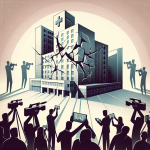

The double strike on Gaza’s Nasser Hospital on August 25, 2025, marked a harrowing escalation in the ongoing conflict, drawing international condemnation and intensifying scrutiny on Israel’s military actions in the southern Gaza Strip. This incident, which resulted in the deaths of at least 20 people, including five international journalists, has become a focal point for discussions about press freedom, the safety of civilians during wartime, and the ethical responsibilities of military forces in conflict zones[1][2].
What Happened at Nasser Hospital?
On August 25, 2025, the Nasser Hospital in Khan Younis was struck twice by Israeli airstrikes. The first attack reportedly killed several people near the hospital’s main entrance. As rescue workers, medical staff, and journalists rushed to assist the injured and document the aftermath, a second strike followed within minutes, compounding the devastation and resulting in further casualties[1][2].
Among the dead were five journalists from major international media outlets, including a Reuters cameraman, an Associated Press journalist, and an Al Jazeera photographer. The affiliations of the remaining two journalists have not been confirmed publicly, but all were reportedly covering the impact of the conflict on healthcare infrastructure and civilian life in Gaza[1].
Immediate Responses and Investigation
The Israel Defense Forces (IDF) acknowledged the strike and stated that an internal investigation was underway. The IDF emphasized that it “does not target journalists as such,” but did not provide detailed justification or operational context for the attack at the time of reporting[1]. Israeli Prime Minister Benjamin Netanyahu expressed regret, referring to the deaths as a “tragic mishap,” and said that Israel was committed to investigating the incident[2].
The Hamas-run health ministry in Gaza, which provided initial casualty figures, accused Israel of deliberately targeting a protected medical facility and those responding to the initial blast. These allegations fueled widespread outrage among local residents and humanitarian organizations[1].
International Reaction and Condemnation
News of the double strike triggered swift and widespread condemnation:
- United Nations Secretary-General António Guterres described the killings as “unacceptable” and called for a thorough, independent investigation[2].
- International media organizations demanded accountability and better protections for journalists operating in conflict zones.
- Humanitarian charities working in Gaza labeled the attack a violation of international humanitarian law and called for immediate measures to safeguard medical facilities and aid workers[2].
This incident came just two weeks after another Israeli strike outside a different Gaza hospital killed six journalists, further amplifying concerns about the safety of the press in the region and the apparent pattern of lethal incidents involving media personnel[2].
The Broader Context
Since the onset of the war in Gaza in October 2023, the number of journalists killed in the region has approached 200, making it one of the deadliest conflicts for media workers in recent history[1]. The risks are exacerbated by Israel’s restrictions on access: international journalists, including those from the BBC and other major outlets, have been barred from independent reporting inside Gaza, forcing them to rely on local journalists and fixers for coverage[2].
This lack of independent access has raised concerns about transparency, accountability, and the reliability of information emerging from the conflict zone. Many global newsrooms have called for Israel to lift these restrictions to allow for direct, unfiltered reporting on the ground.
The Human Toll and the Role of Hospitals
Hospitals like Nasser have become crucial lifelines for civilians, offering not only medical care but also shelter for displaced families. Strikes on medical facilities have a devastating ripple effect—destroying essential infrastructure, overwhelming already stretched medical staff, and deepening the humanitarian crisis[1][2].
The targeting of hospitals is explicitly prohibited under international law except under strictly defined circumstances. The double strike at Nasser Hospital thus raises urgent legal and ethical questions, with many international observers calling for independent investigations to determine whether the attack constituted a war crime.
The Challenge of Verifying Attacks
BBC Verify and other investigative units face significant hurdles in establishing the full facts in such incidents. The ongoing conflict, communication blackouts, and lack of independent access to Gaza complicate efforts to verify the sequence of events, identify those responsible, and assess the actual impact on civilian populations.
Nevertheless, by corroborating eyewitness accounts, medical records, satellite imagery, and video evidence from survivors and journalists, organizations like BBC Verify help piece together a clearer picture of what transpired—even amid an environment of uncertainty and chaos.
Conclusion
The double strike on Nasser Hospital stands as a grim reminder of the dangers faced by both civilians and journalists in times of war. The deaths of five journalists and at least 15 others have intensified calls for accountability, transparency, and the protection of those who risk their lives to bear witness to unfolding tragedies[1][2]. As investigations proceed, the world continues to watch, demanding answers and insisting that the rules of war—and the people caught in its crossfire—are not forgotten.
Original source: BBC News – BBC Verify: How the double strike on Gaza’s Nasser Hospital unfolded
The post “Double Strike on Gaza Hospital Kills 20, Including 5 Journalists, Sparks Global Outcry” first appeared on Limited Liability Solutions: Navigating Business Excellence in a Digital World.
Source: Read More