According to data compiled by Pierre-Alexandre Metral, a PhD student at Grenoble University, 168 of the 584 ski resorts built in France since the 1930s have been abandoned, many in the last 20 years. Most of the closed resorts are tiny, operating five chairlifts or less, yet they still represent about 30 per cent of all French resorts, posing a significant socio-economic threat to local communities as well as the ski industry, and country as a whole.
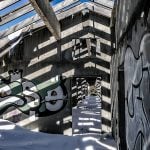
For small communities in particular, the closure of a resort not only represents the loss of jobs and income but a loss of identity as well. Once thriving Alpine towns are now scarred by the rusting remains of disused chairlifts, abandoned snow groomers and derelict buildings. In the case of one abandoned resort, Saint-Honoré 1500, this friche industrielle (industrial wasteland) has become a living art gallery: the vast concrete shells of unfinished holiday apartments now serving as a canvas for graffiti artists.
Once thriving Alpine towns are now scarred by the rusting remains of derelict buildings
Credit: Pierre-Alexandre Metral/@stationdeskiabandonnee
It’s inevitable that more French resorts will fall prey to the changing climate and times, requiring locals and the tourism industry to get innovative in regenerating these Alpine destinations. Boosted in part by rising temperatures in cities and urbanites seeking rural escape from the pandemic lockdowns, many resorts are reinventing themselves as year-round wellness escapes that offer a multitude of outdoor activities, from cross-country skiing and snowshoeing to mountain biking and rock climbing. However, as one resort official asked me: “How do we erase the negative terminology of an ‘ex-ski resort’?”
Beaufils’ futuristic vision might sound utopian, but only time will tell. In the meantime, spare a thought for the resorts whose last ski day has come. As one particularly poignant graffiti inscription says on the disused Gare de la Para mid-station in Chamonix: “Je suis un témoin, j’ai une histoire, sauvez-moi svp” – “I am a witness, I have a story, please save me.”
Col de l’Arzelier
The climate change victim
The resort of Col de l’Arzelier opened in 1967 with two lifts offering skiing on both sides of a quiet road located 30 minutes from Grenoble. Set at the foot of the striking Two Sisters peaks, part of the mighty Vercors massif, the resort consisted of a car park, timber reception chalet serving refreshments and Soldanelle mountain refuge.
These basic amenities were added to over subsequent years, with Col de l’Arzelier reaching its zenith in the early 1980s with six ski lifts, nine pistes, some cross-country ski and snowshoe trails and a toboggan run. The village claimed the Two Sisters hotel and restaurant, three bars, six apartment blocks, 80 individual chalets and a ski hire shop.
However, the Isère region suffered an extended snow drought in the 1990s which, combined with the southern exposure of Arzelier’s western sector, led to the abandonment of one of its six lifts in 1998. Five years later, the Two Sisters hotel went bankrupt, and a second chairlift was abandoned in 2008.
The abandoned lifts, snow groomer and buildings still litter the resort of Col de l’Arzelier
Credit: Pierre-Alexandre Metral/@stationdeskiabandonnee
Gap Céüze 2000
A divided community
The horseshoe shaped Céüse mountain has been popular with Hautes-Alpes skiers since the 1920s. It was only in 1938, however, that the enterprising Monsieur Gaillard, who owned a local hotel and transport service, decided to install a 185m-long ski lift on the hill and drive visitors to it from Marseille by bus.
Lack of snow rendered Gap Céüze 2000 impossible to reopen
Credit: Pierre-Alexandre Metral/@stationdeskiabandonnee
Gap Céüze flourished through the decades, benefitting from increased investment when it was taken over by a new intermunicipal group in 1986, boasting nine ski lifts, 25 runs and a snowpark at its peak.
However, successive years of snow drought in the 1990s led Gap to withdraw from the syndicate in 1996. A decade later, plans for an artificial snow system stalled as local municipalities questioned the impact of it on their local water supplies. The mayor of Manteyer announced the closure of the resort in May 2007, only to reverse the decision in October following the creation of Céüze Passion, an association that campaigned against the closure with a petition signed by 1,700 fans of the resort.
The future of Gap Céüze 2000’s site remains bitterly contested by local officials and residents
Credit: Pierre-Alexandre Metral/@stationdeskiabandonnee
Drouzin-le-Mont
The small fish in the big pond
The foundations for the resort of Drouzin-le-Mont were laid in 1966, when the enterprising Henri Teninge installed a 200m-long generator-powered ski lift opposite his restaurant, Chez L’Henri, on the Col du Corbier pass. Set 1,230m above the village of Le Biot, the Col du Corbier is set on the fringes of today’s sprawling Portes du Soleil ski area, near the villages of Abondance and Châtel.
In February 1994, the electricity to Drouzin-le-Mont was cut off due to unpaid bills dating to 1986
Credit: Pierre-Alexandre Metral/@stationdeskiabandonnee
However, in February 1994, the electricity to Drouzin-le-Mont was cut off due to unpaid bills dating to 1986. The resort was in debt to the tune of 10 million francs. The lifts were sold in 1998 to the property developer Michel Vivien with the stipulation that they be operated and maintained for at least 18 years.
Col du Corbier has returned to its original name and operates as a family-friendly ‘easy mountain’
Credit: Pierre-Alexandre Metral/@stationdeskiabandonnee
Today, Col du Corbier has returned to its original name and operates as a family-friendly ‘easy mountain’ with a gentle nursery slope serviced by a magic carpet, toboggan rides, snowshoe and cross-country ski trails and activities like ski-joëring and snowshoe archery.
Saint-Honoré 1500
Chasing dreams of white gold
When the coal mines of the Matheysin plateau closed in the 1960s, local councils moved from the pursuit of black gold to white gold, hoping to profit from France’s flourishing love affair with skiing. Grand plans were set in motion to create a ski resort linked to the existing Alpe du Grand Serre ski area on a beautiful spot above the town of Saint-Honoré, with panoramic views of the Vercors massif and Mure valley.
Saint-Honoré 1500 has become a living art gallery
Credit: Pierre-Alexandre Metral/@stationdeskiabandonnee
In the meantime, a new property developer had taken over the resort’s stalling real estate portfolio, announcing ambitious plans for plush chalets and hotels with swimming pools, saunas and bowling alleys. However, work ground to a halt in 1993 when he was declared bankrupt and subsequently imprisoned for fraud and embezzlement of €2.3 million (£1.9 million).
As the hulking concrete structures fell into disrepair, becoming a living graffiti art museum, Saint-Honoré’s ski lifts continued to turn, albeit only on weekends and school holidays, snow permitting, until 2003. One by one, the lifts were then dismantled and sold to other resorts.
Vast concrete shells of unfinished holiday apartments now serve as an artist’s canvas
Credit: Pierre-Alexandre Metral/@stationdeskiabandonnee
Puigmal
A glimpse of the future
When it closed in 2013, Puigmal was the largest ski resort in France to have been forced into closure. Since opening in the Pyrénées-Orientales region in 1970, the Puigmal ski area attained legendary status in southern France, boasting at its peak 13 lifts, 32 pistes, a snowpark, two cross-country ski trails, two mountain restaurants, a ski school and ski hire shops.
Major investments were made in the early noughties to renew the ageing ski lift fleet and extend the ski area up to 2,660m, opening a large freeride ski area, known as the Gates of Paradise. However, a series of disastrous snow years forced the resort to close in 2013 with debts in excess of €9 million (£7.5 million).
When it closed in 2013, Puigmal was the largest ski resort in France to have been forced into closure
Credit: Pierre-Alexandre Metral/@stationdeskiabandonnee
Puigmal 2900 is on track to attain Flocon Vert (green snowflake) status within its first year of operation in recognition of its wide-ranging responsible tourism credentials. These range from capping daily skier numbers at 1,500 to minimise environmental impact to testing groundbreaking methods of sustainable snow making, piste preparation and lift management. The resort is, perhaps, a glimpse of the future of ski resorts: decarbonised mountain areas that actively encourage people to learn to love the mountains as they are, all year round.
social experiment by Livio Acerbo #greengroundit #travel #tours – original source here